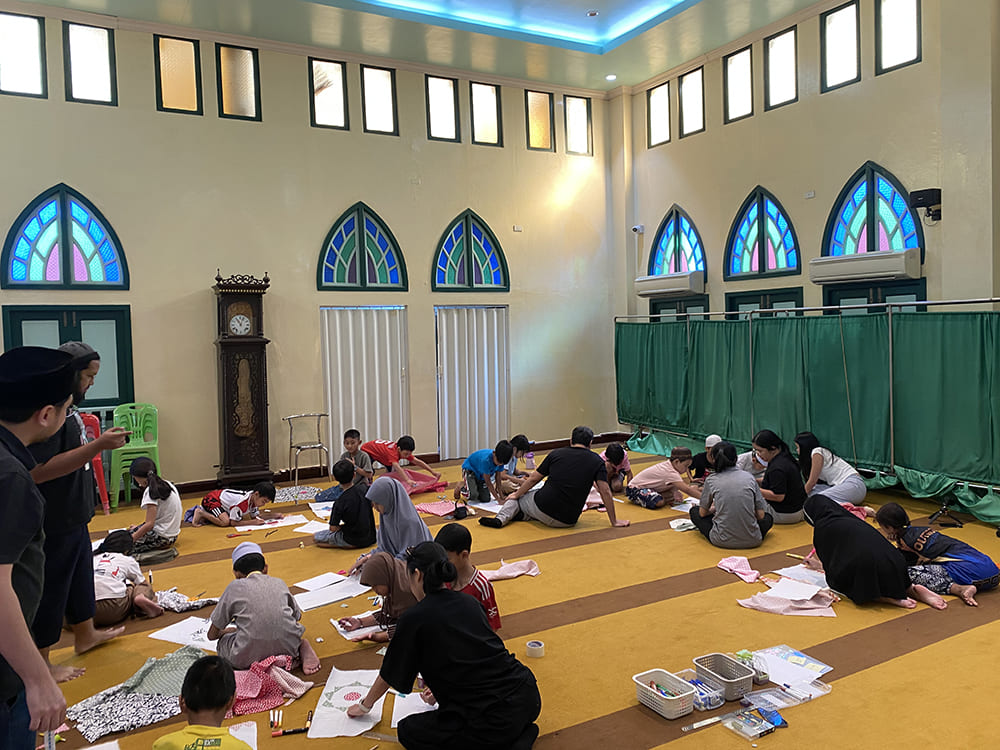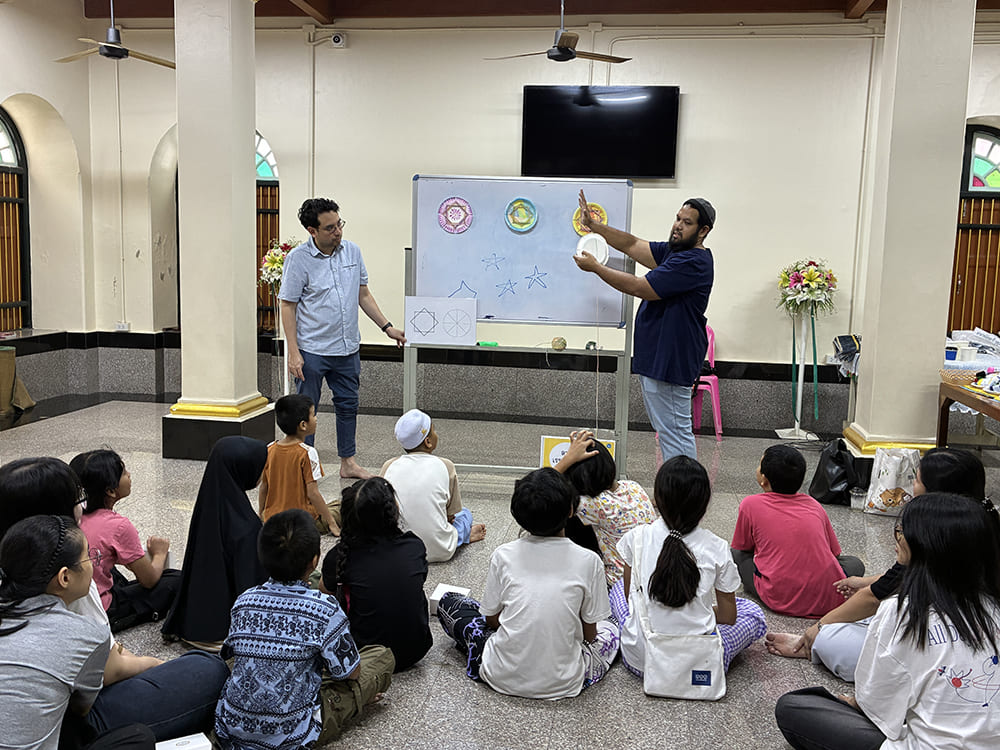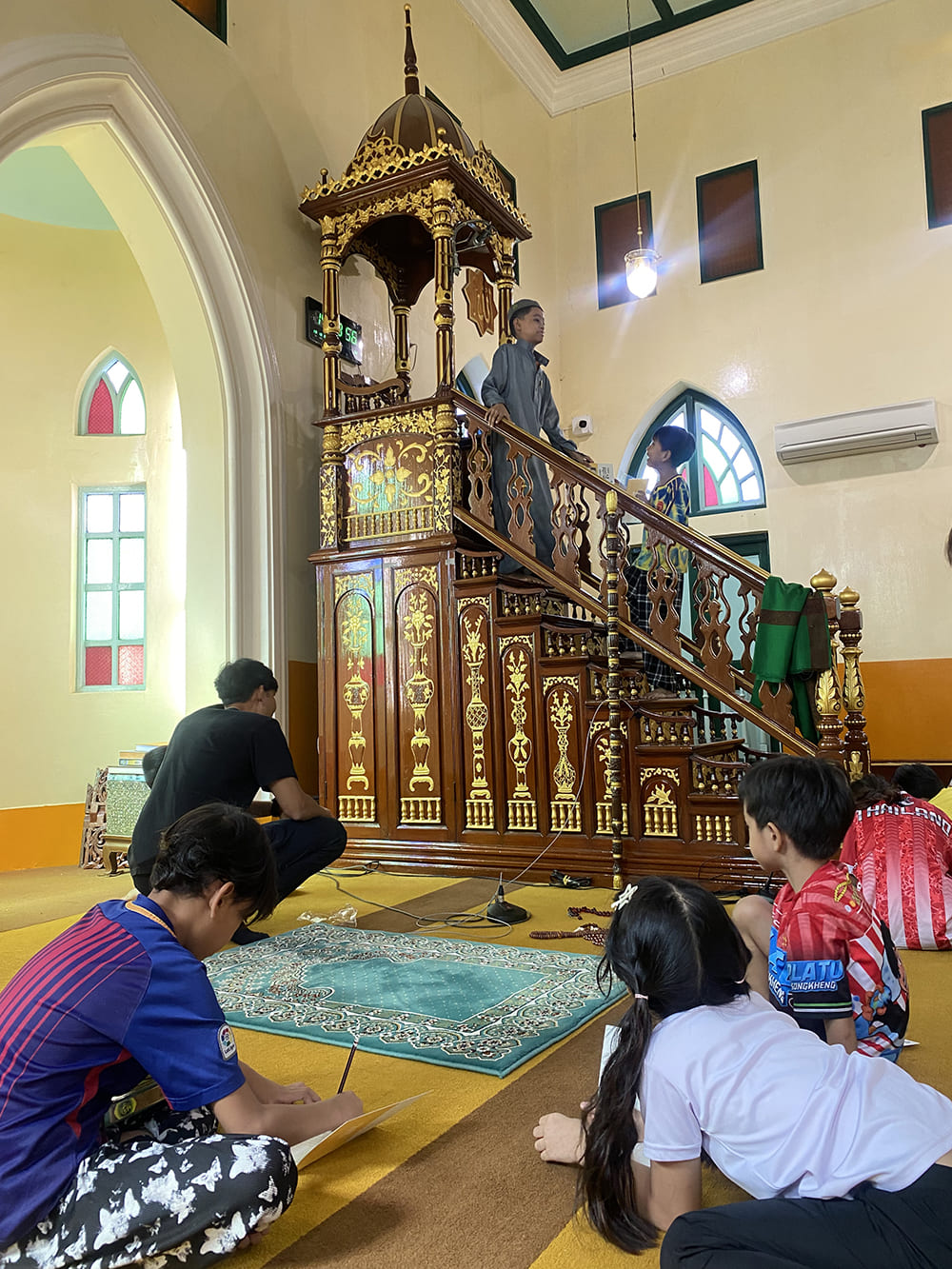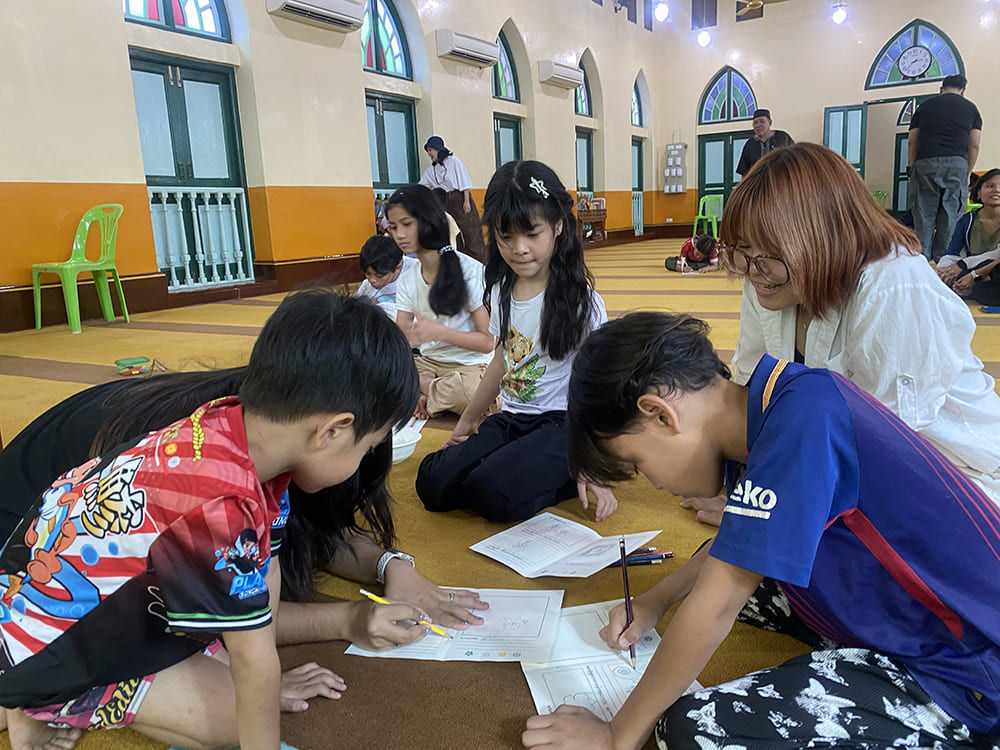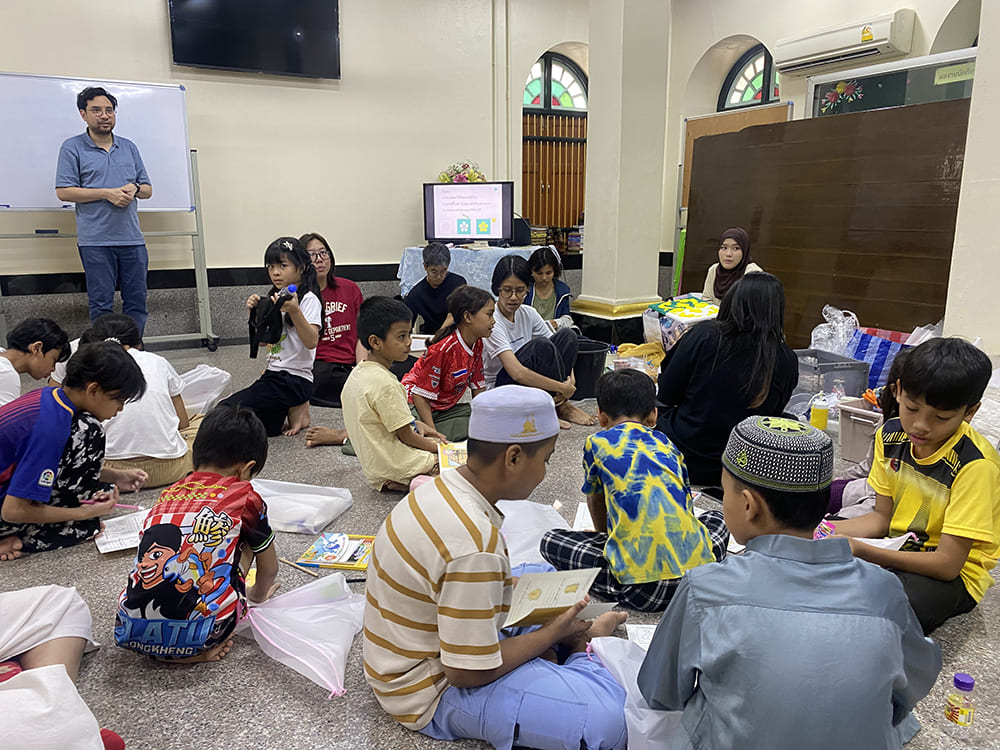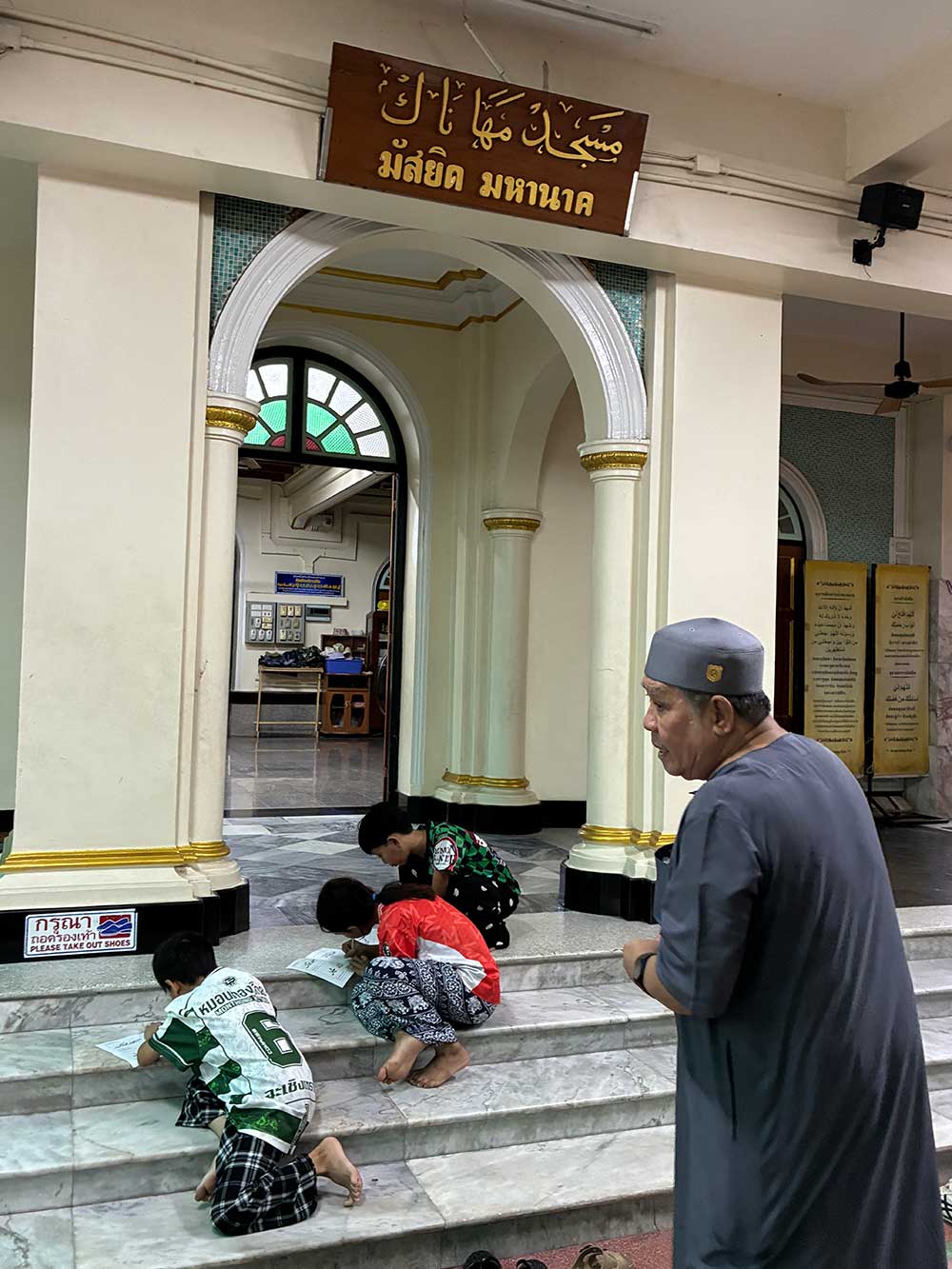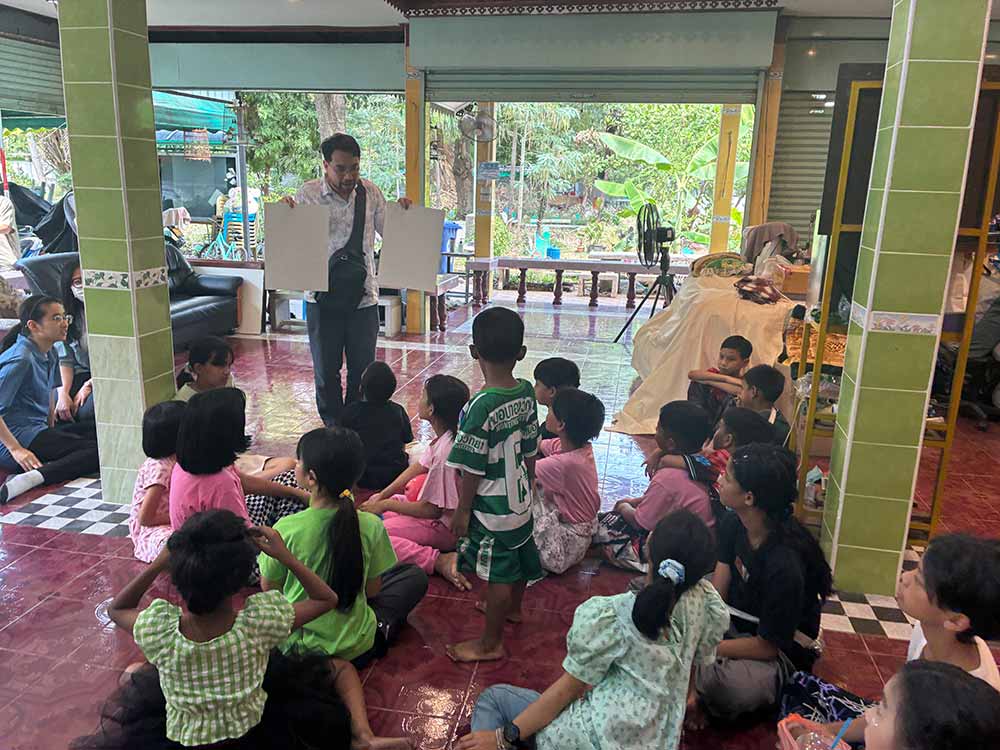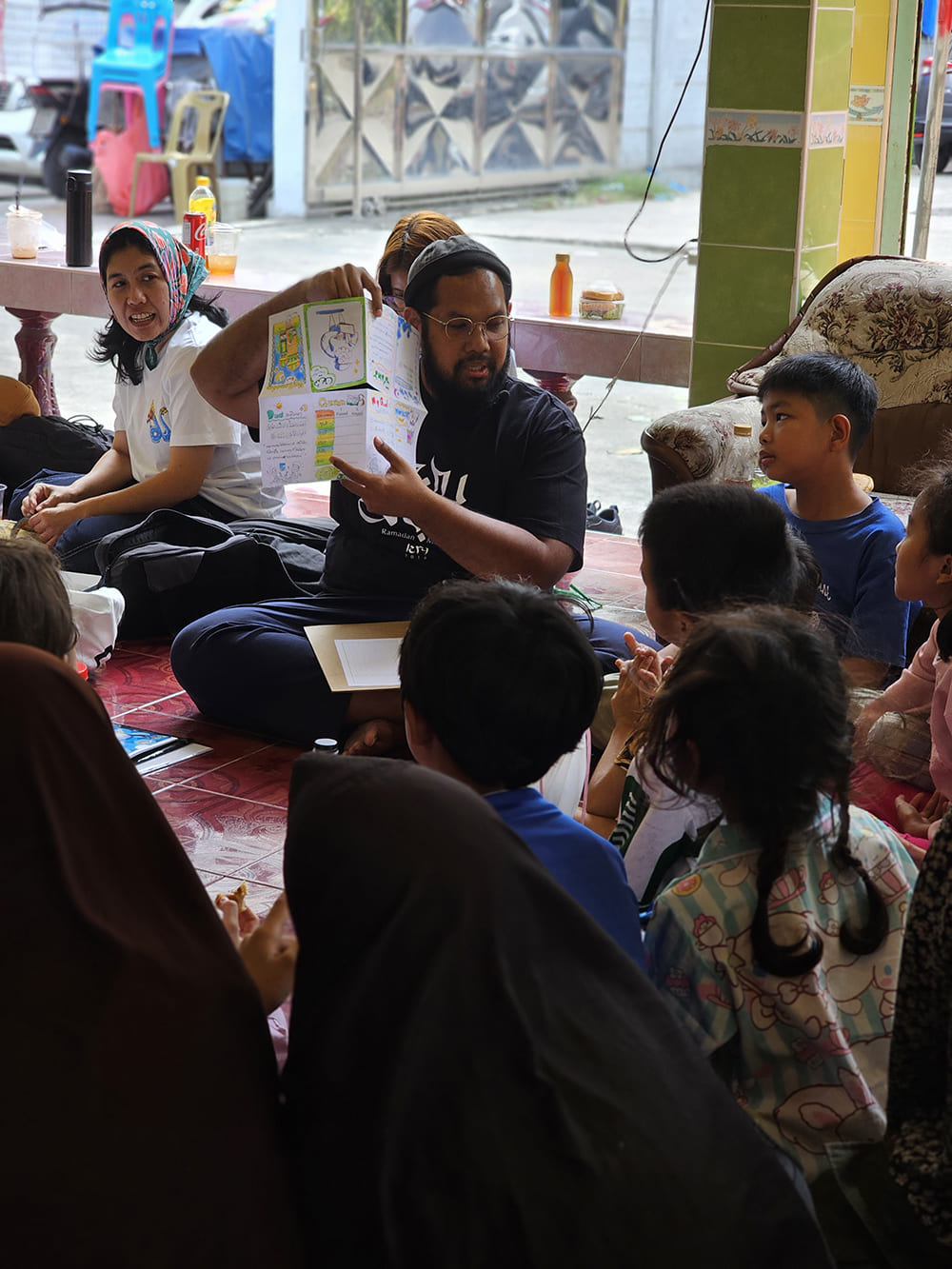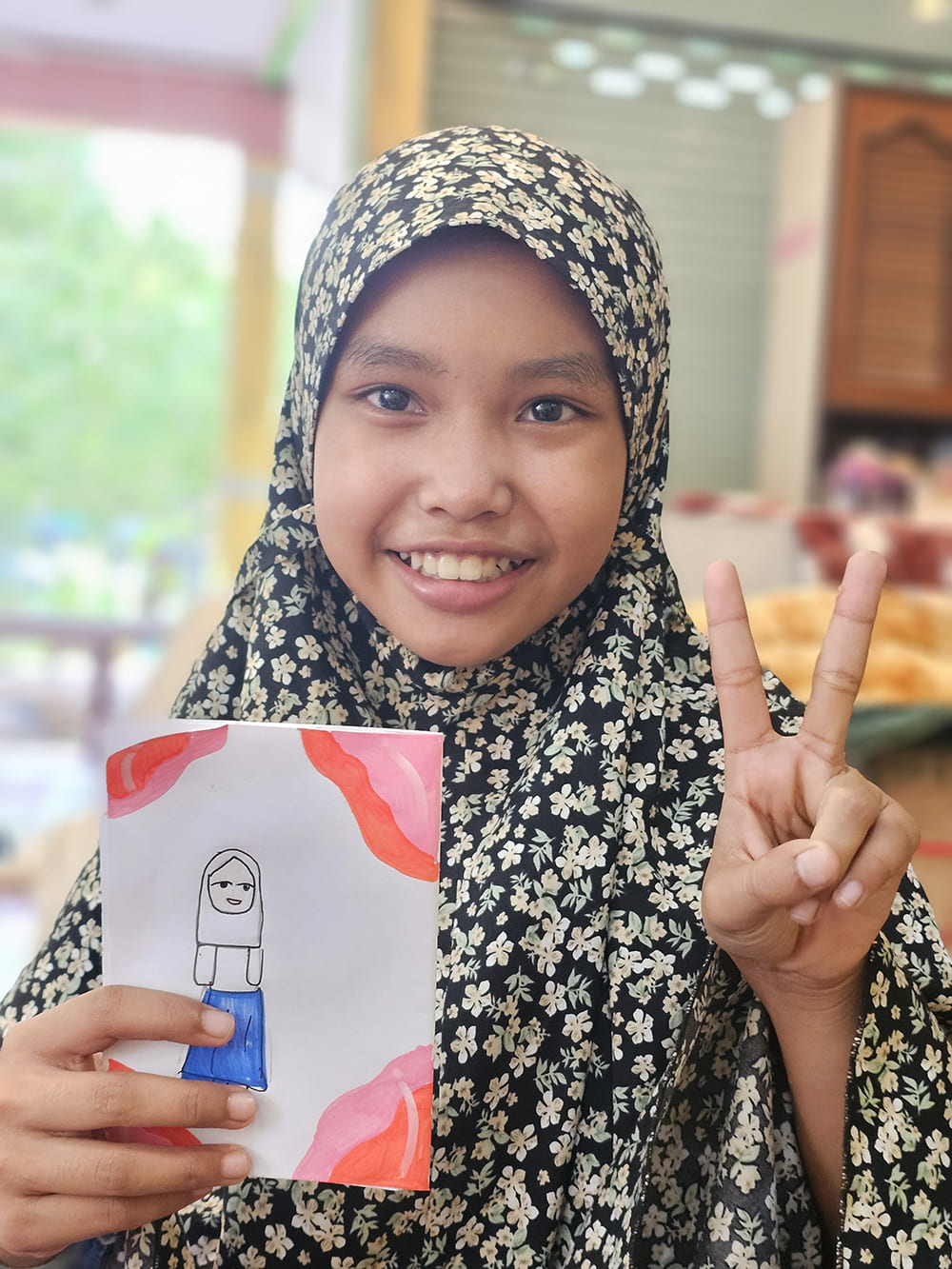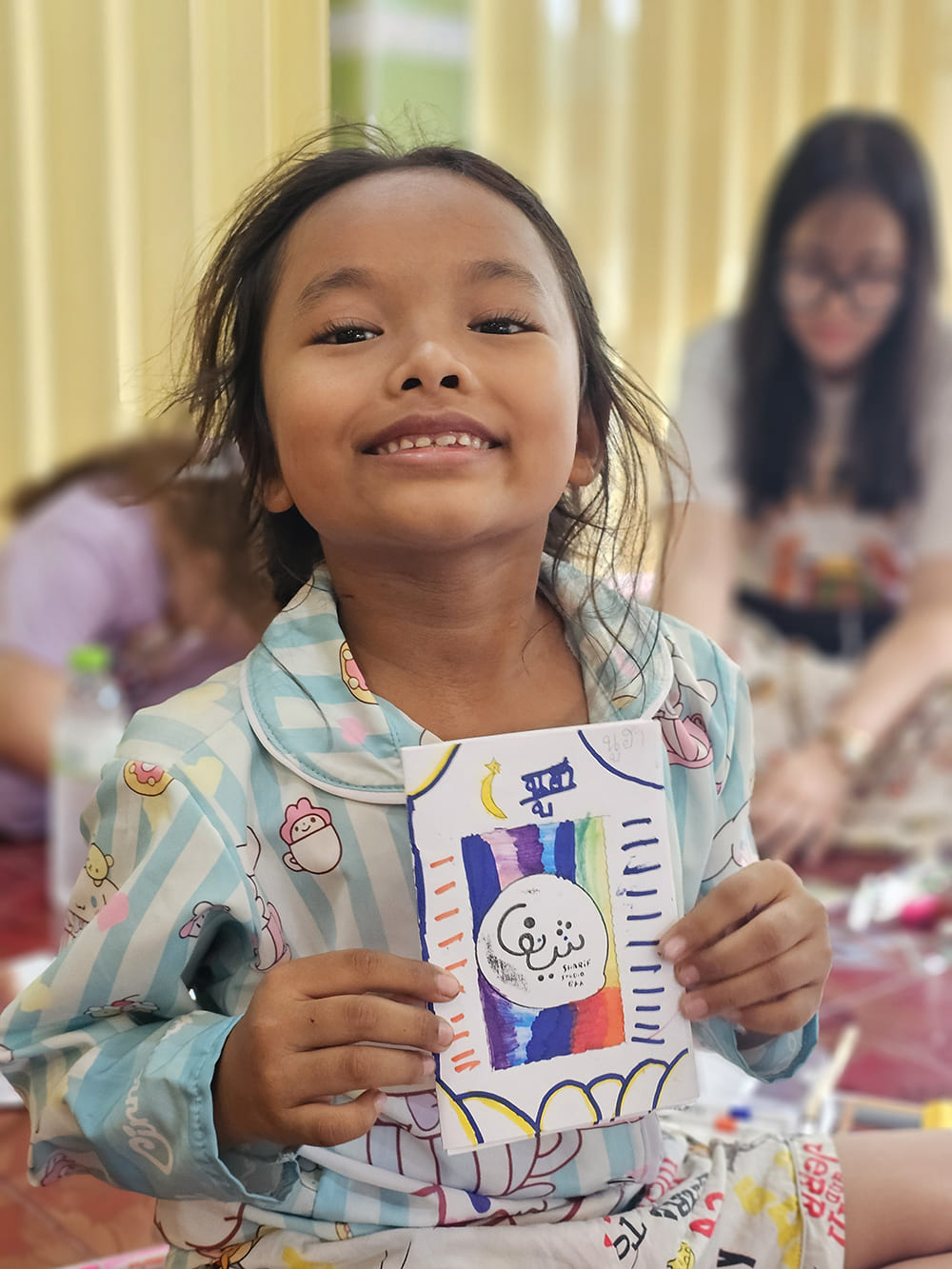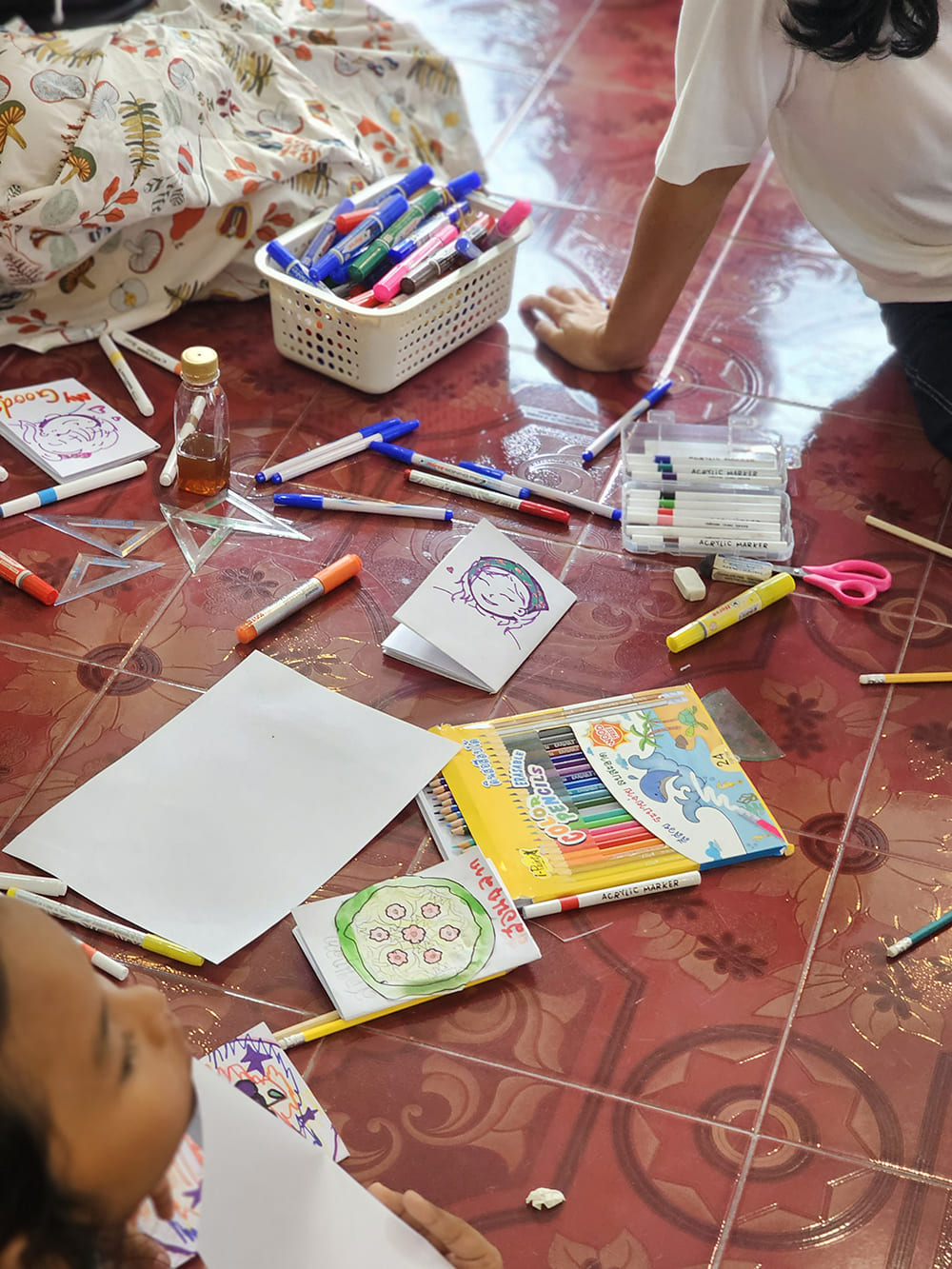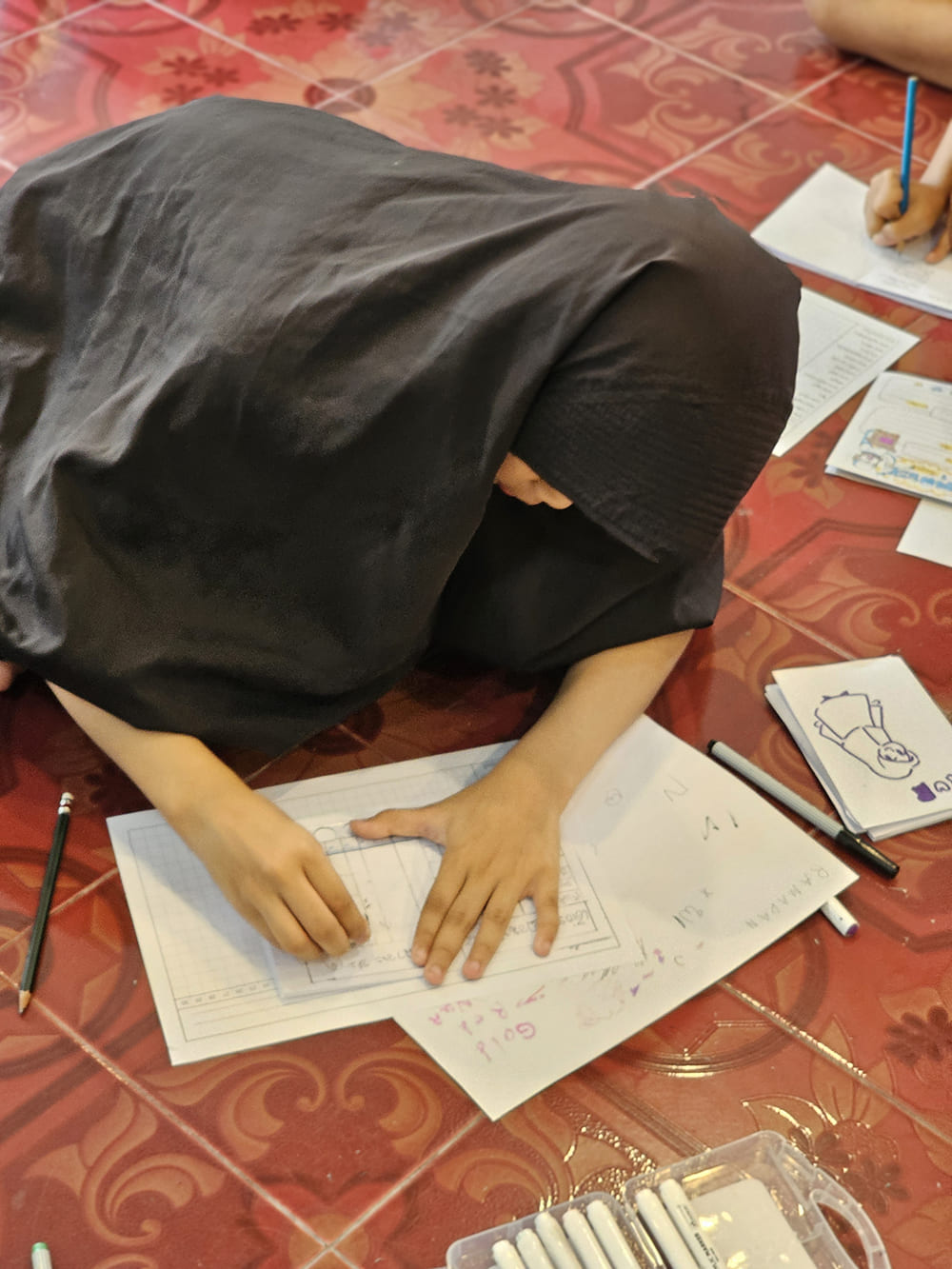
Mahanak Ally invites youth from Al-Islamiyah at Masjid Mahanak to come play, create, and explore faith through art—together. Open to ages 6–18, our Saturday sessions (13:30–15:00) are a space for curiosity, creativity, and connection.
Students dive into the beauty of Islamic art—from geometric patterns to calligraphy—and remix these traditions into their own contemporary pieces. It’s hands-on, experimental, and full of self-expression, where art becomes a way to share stories of belief and identity.
More than a classroom, this is a safe and welcoming space to try, ask, and grow. As students create, they begin to connect more deeply with the history, culture, and community of Khlong Mahanak. It’s a shared journey—where creativity builds confidence, and pride begins with understanding your own roots.
| Week | Activity Topic | Learning Objective | Main Activity | Output |
|---|---|---|---|---|
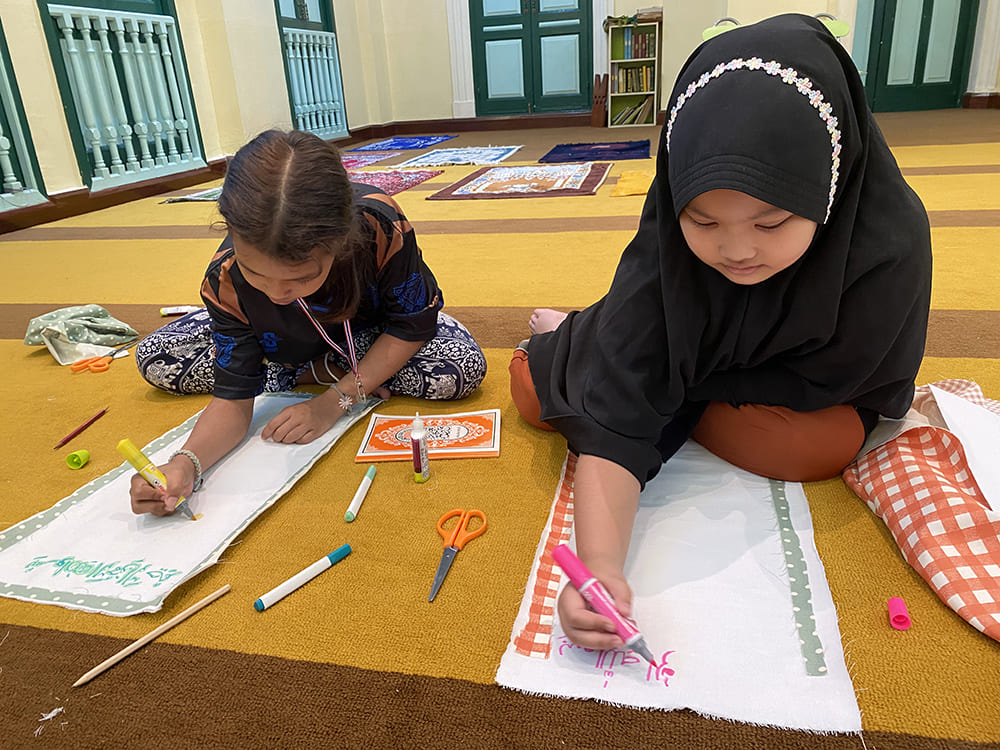
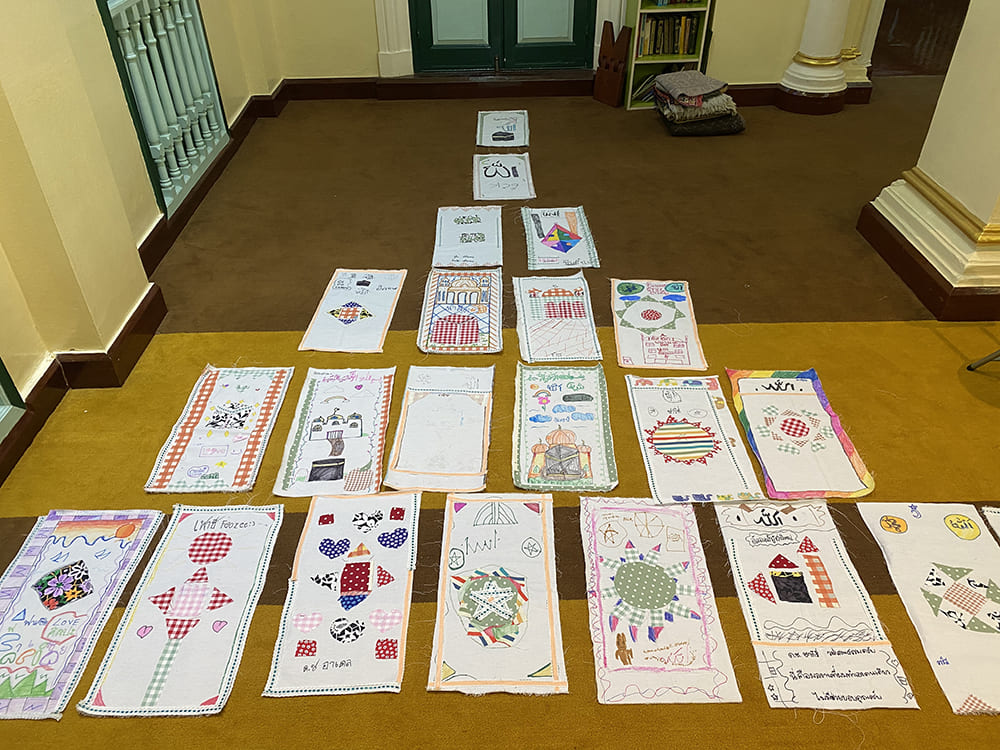
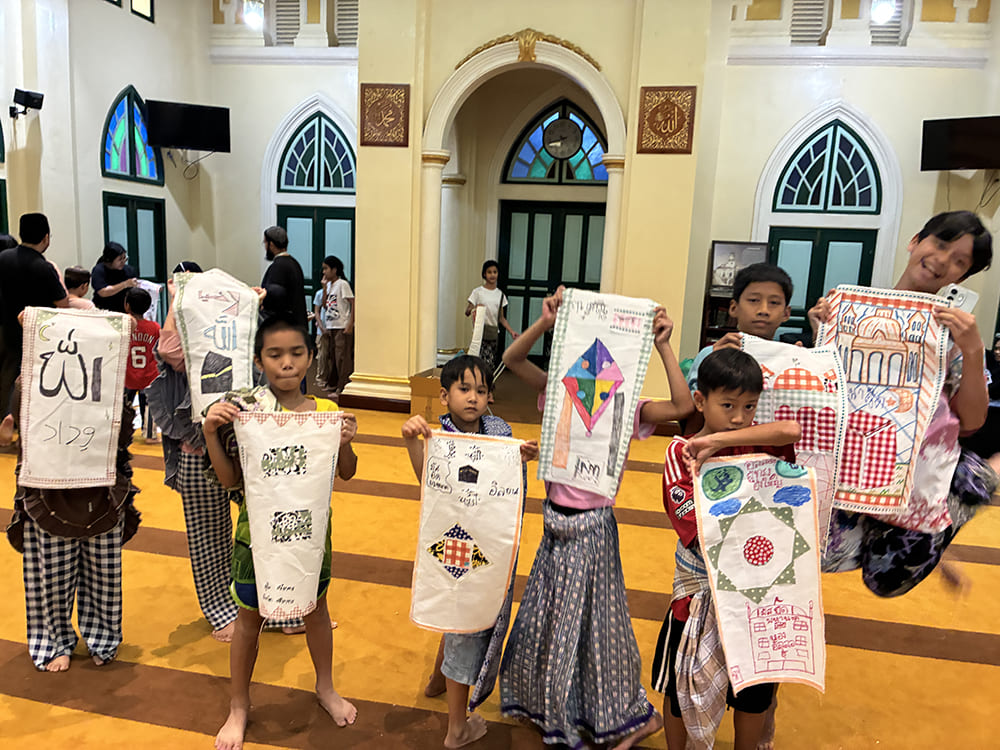
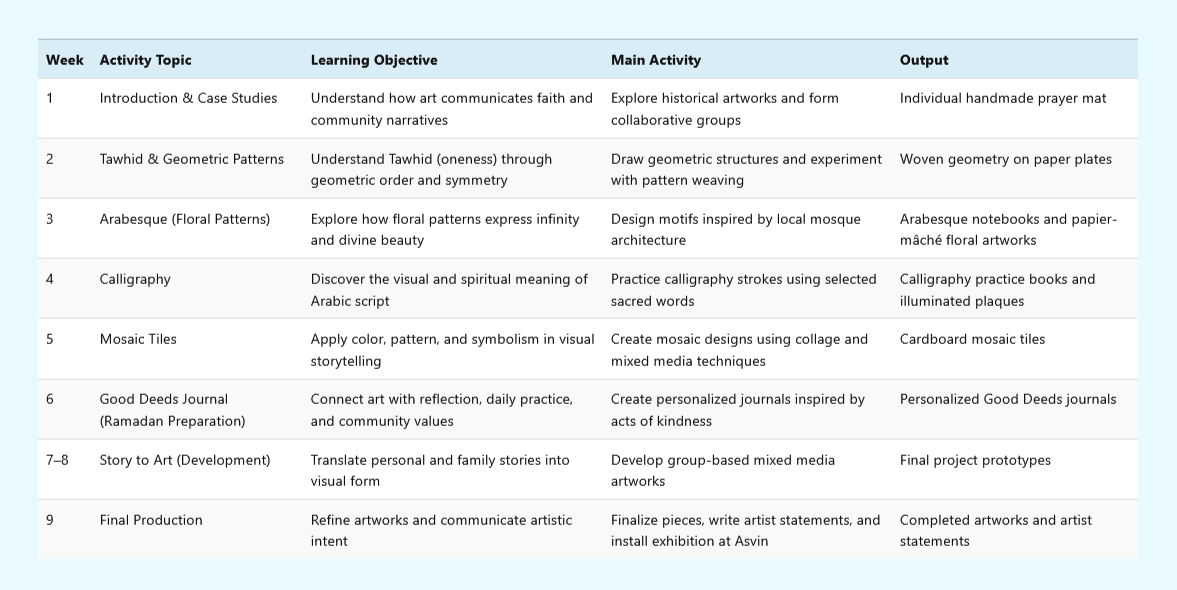
| 1 | Introduction & Case Studies | Understand how art communicates faith and community narratives | Explore historical artworks and form collaborative groups | Individual handmade prayer mat |
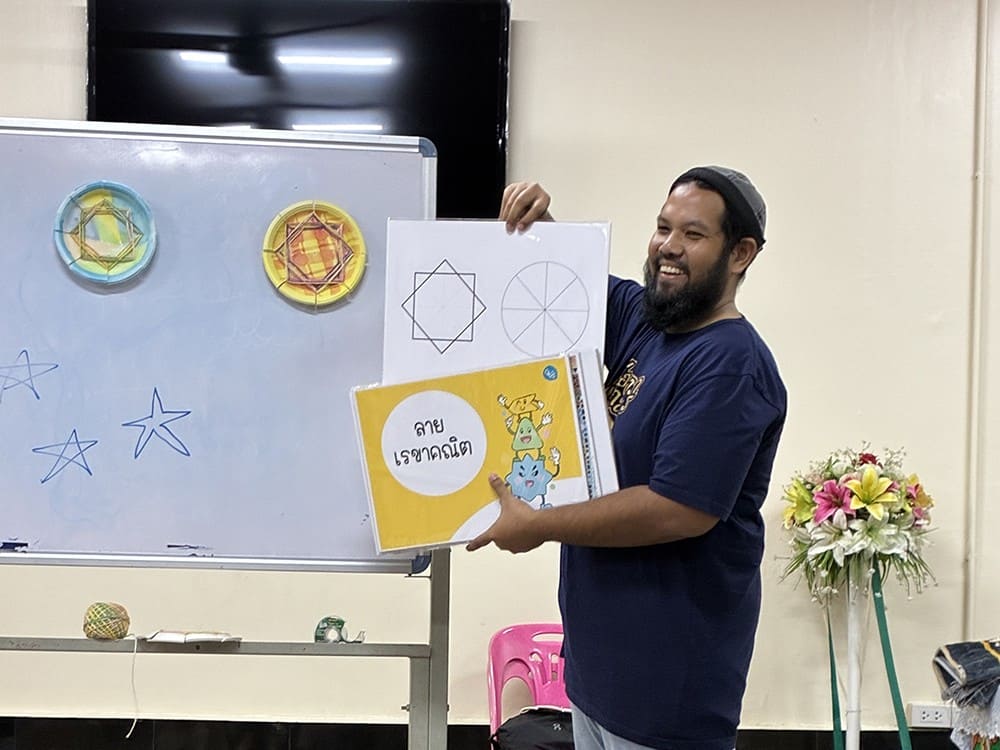
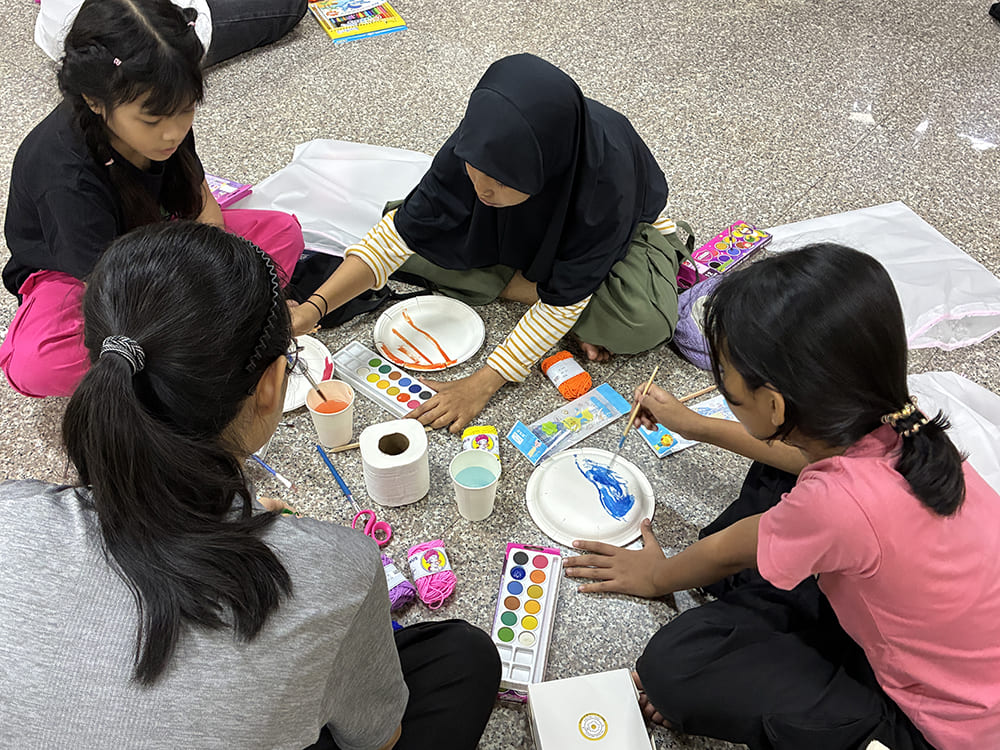
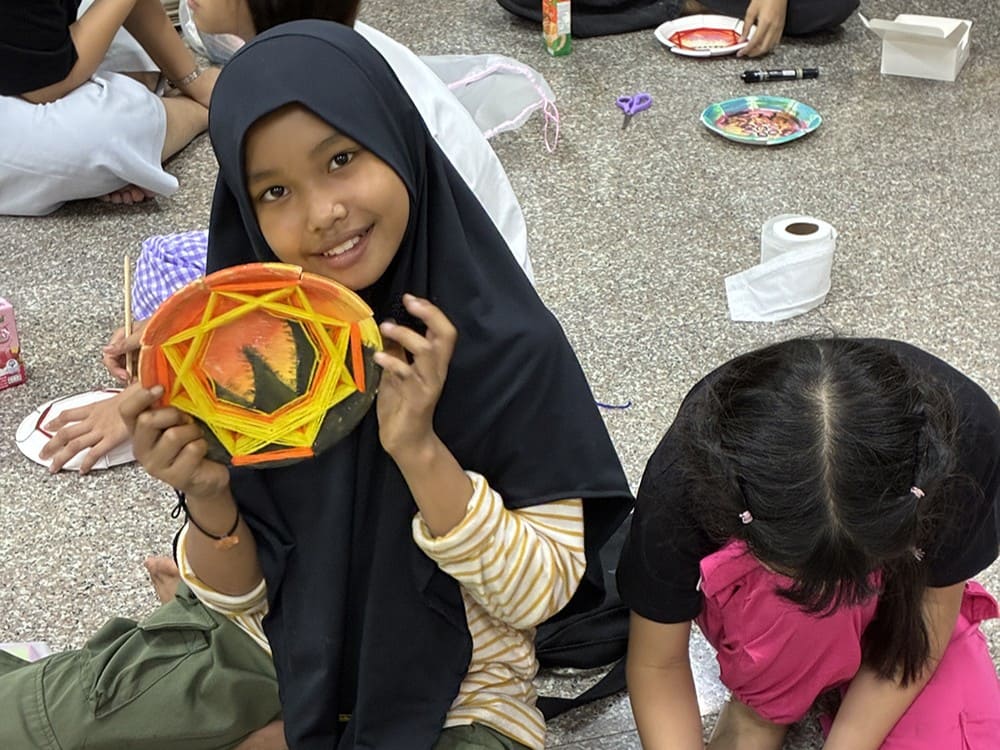
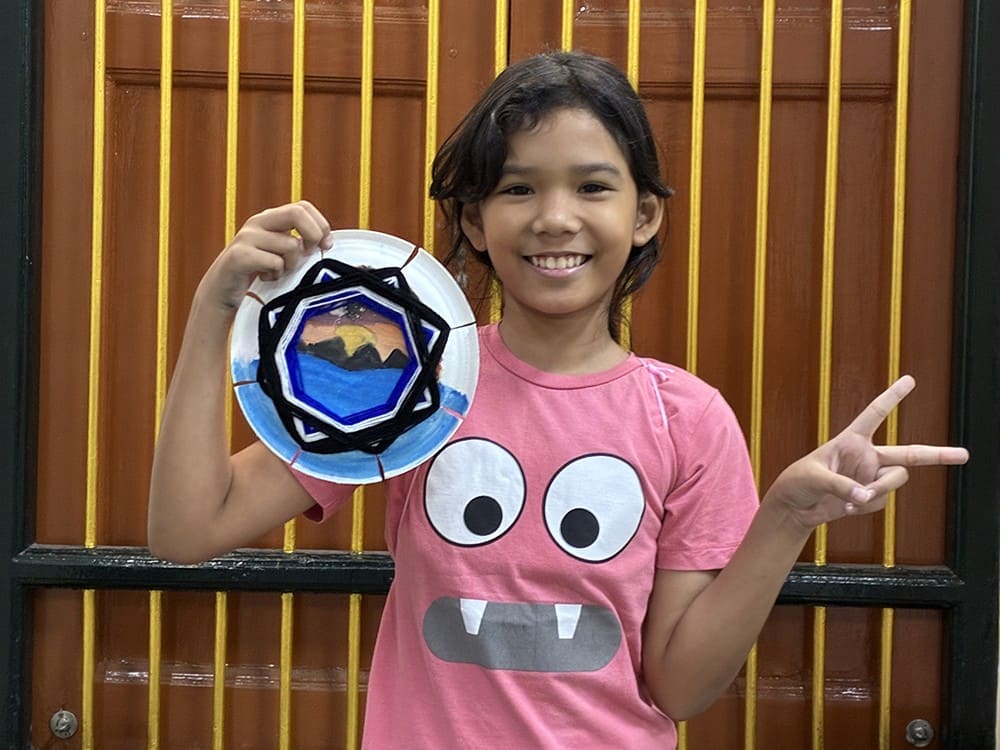
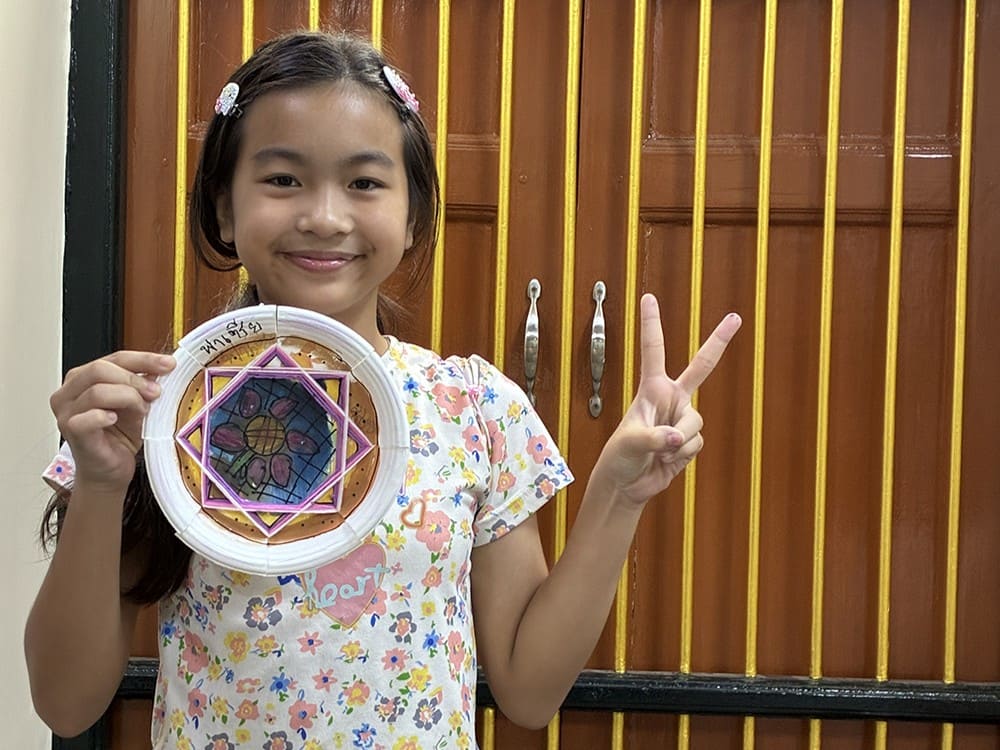
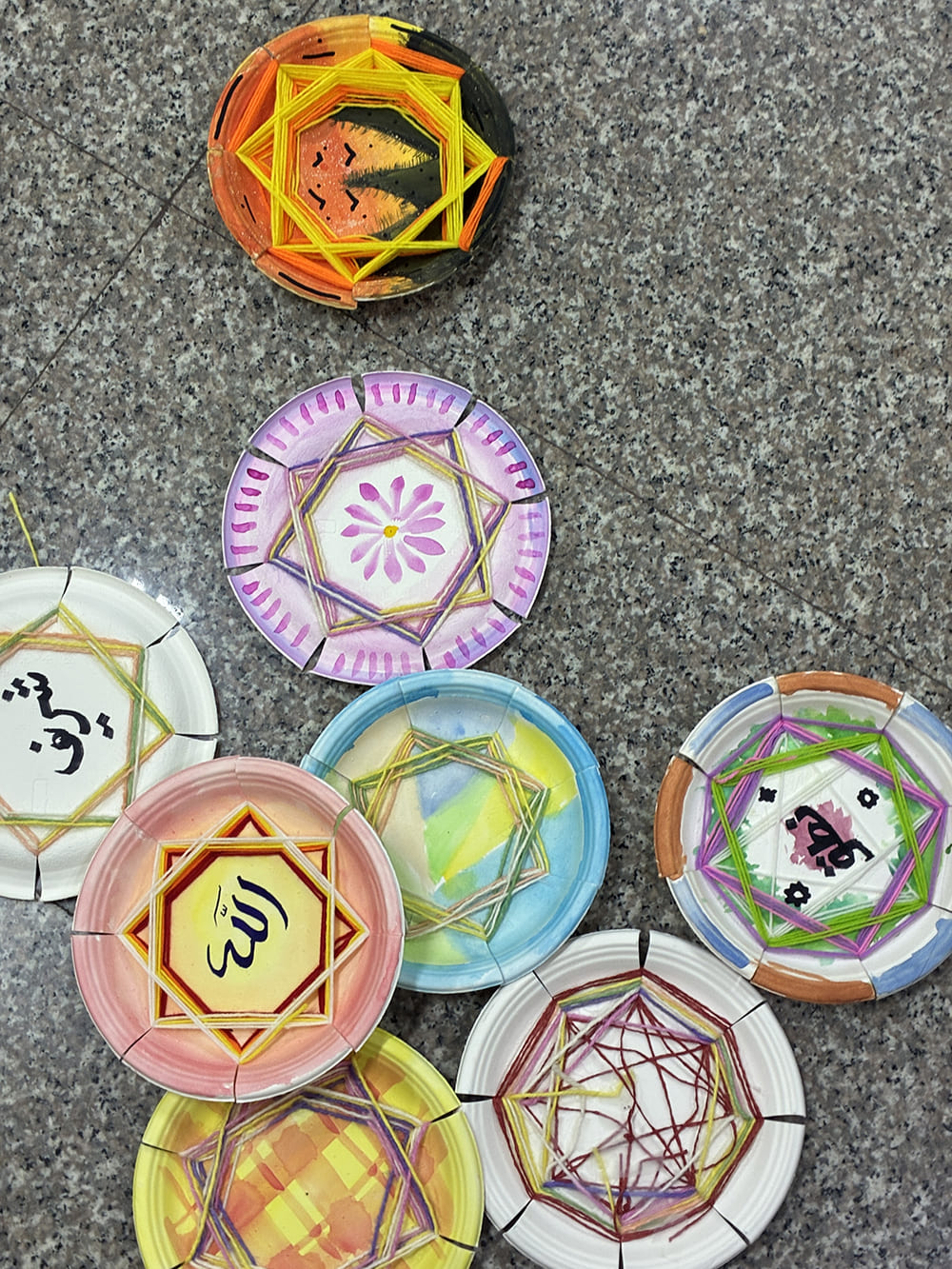
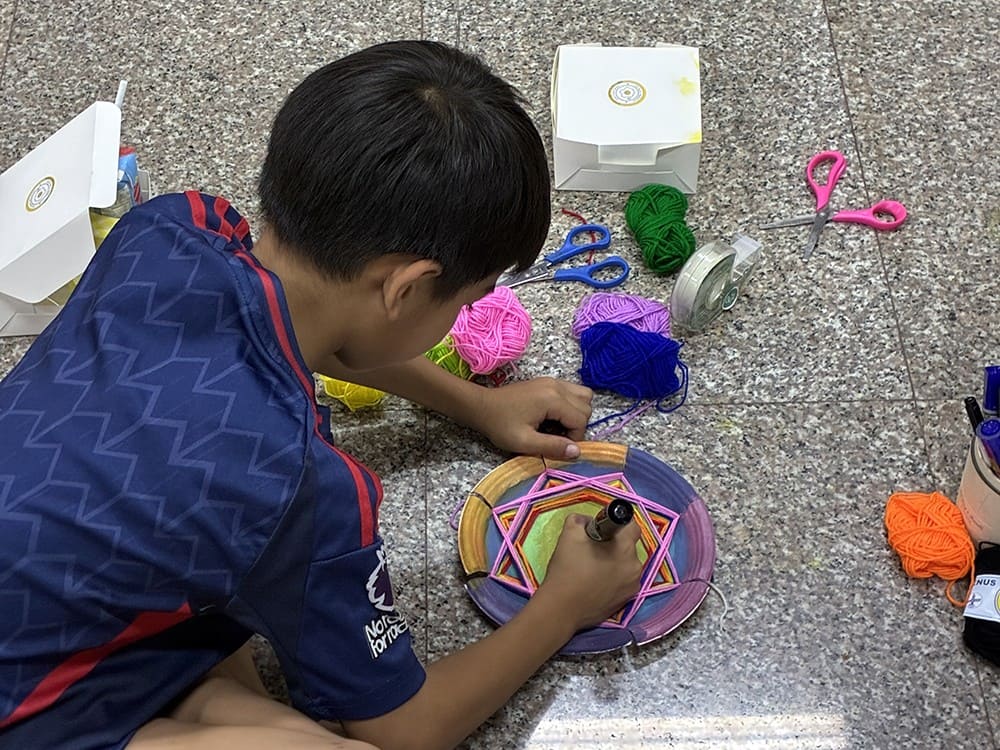
| 2 | Tawhid & Geometric Patterns | Understand Tawhid (oneness) through geometric order and symmetry | Draw geometric structures and experiment with pattern weaving | Woven geometry on paper plates |
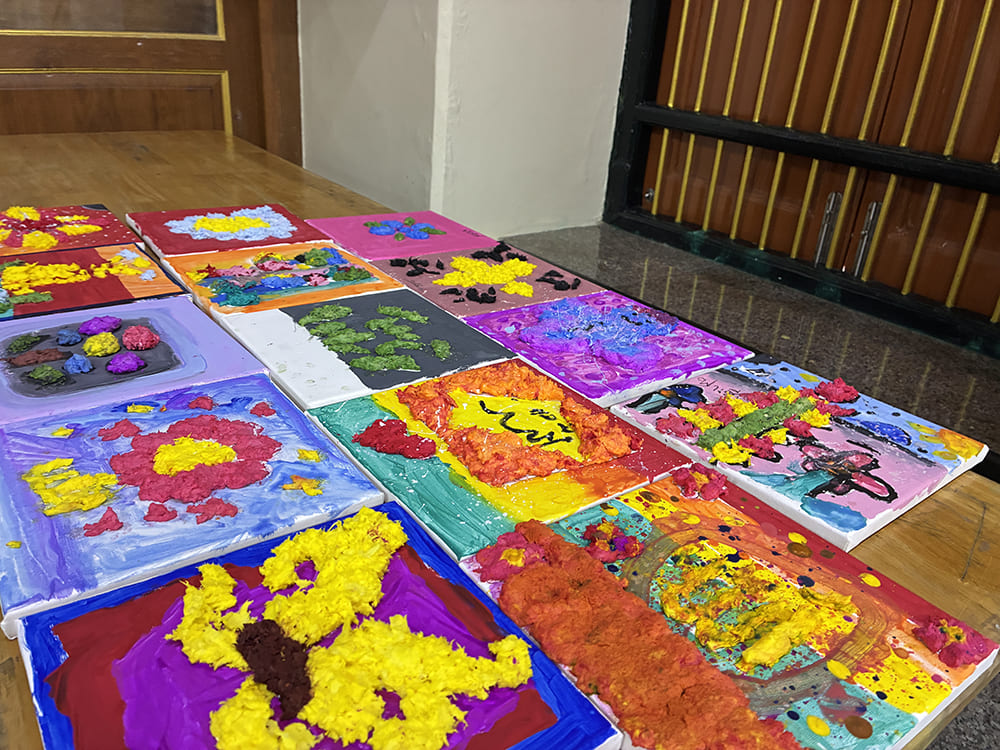
| 3 | Arabesque (Floral Patterns) | Explore how floral patterns express infinity and divine beauty | Design motifs inspired by local mosque architecture | Arabesque notebooks and papier-mâché floral artworks |
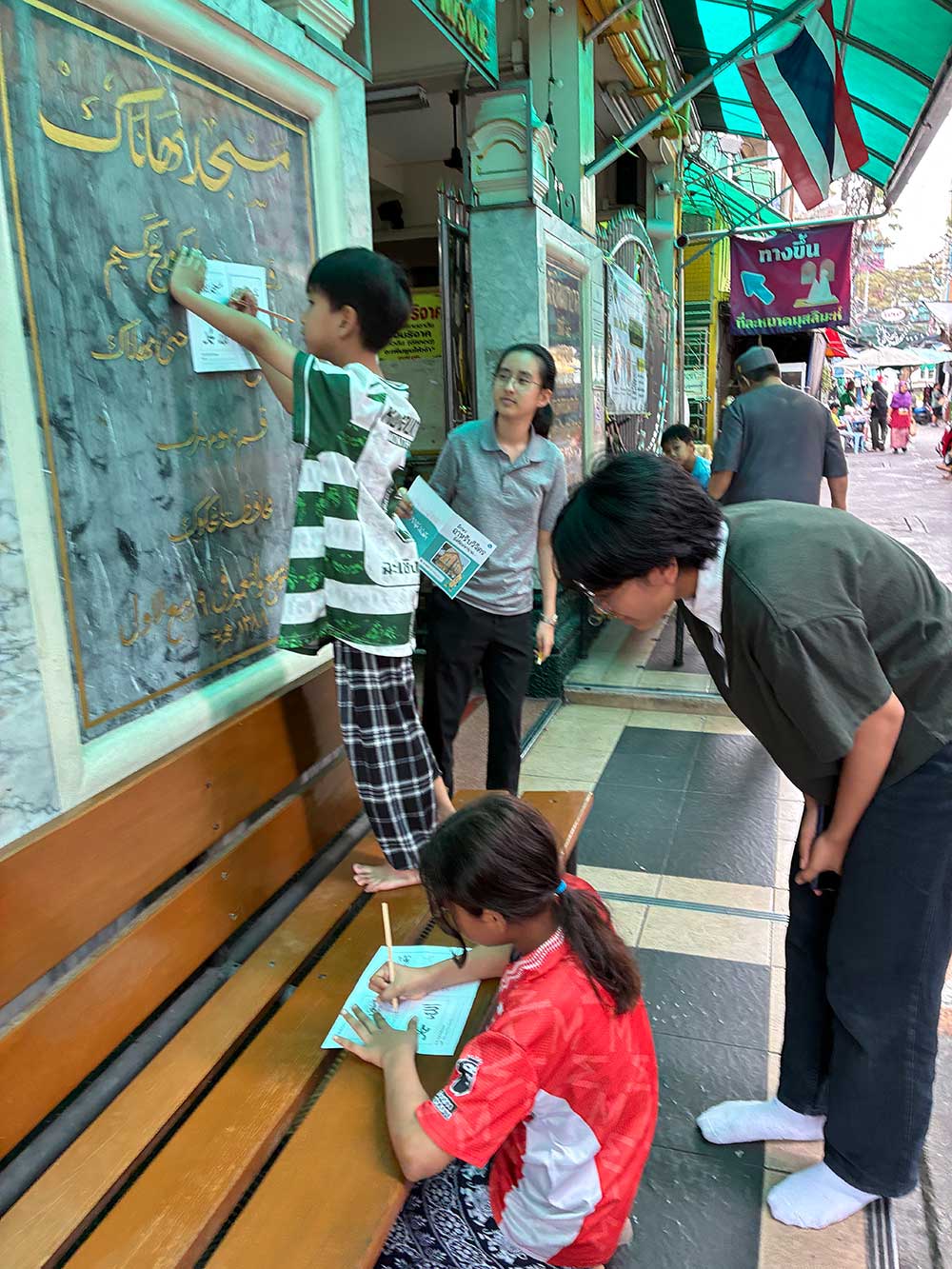
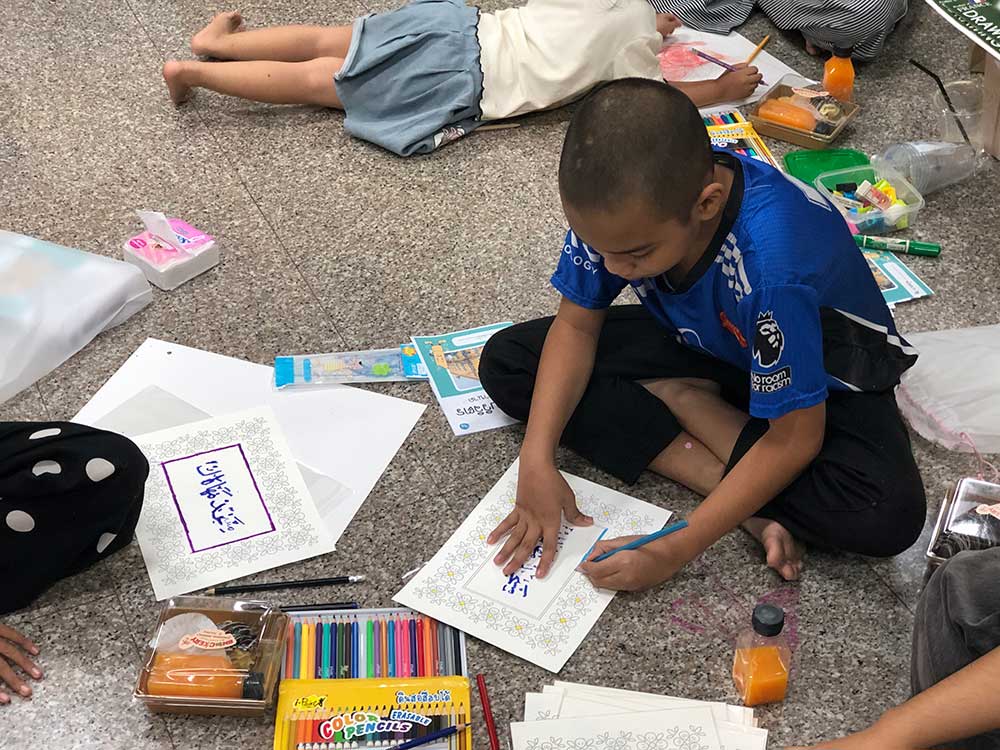
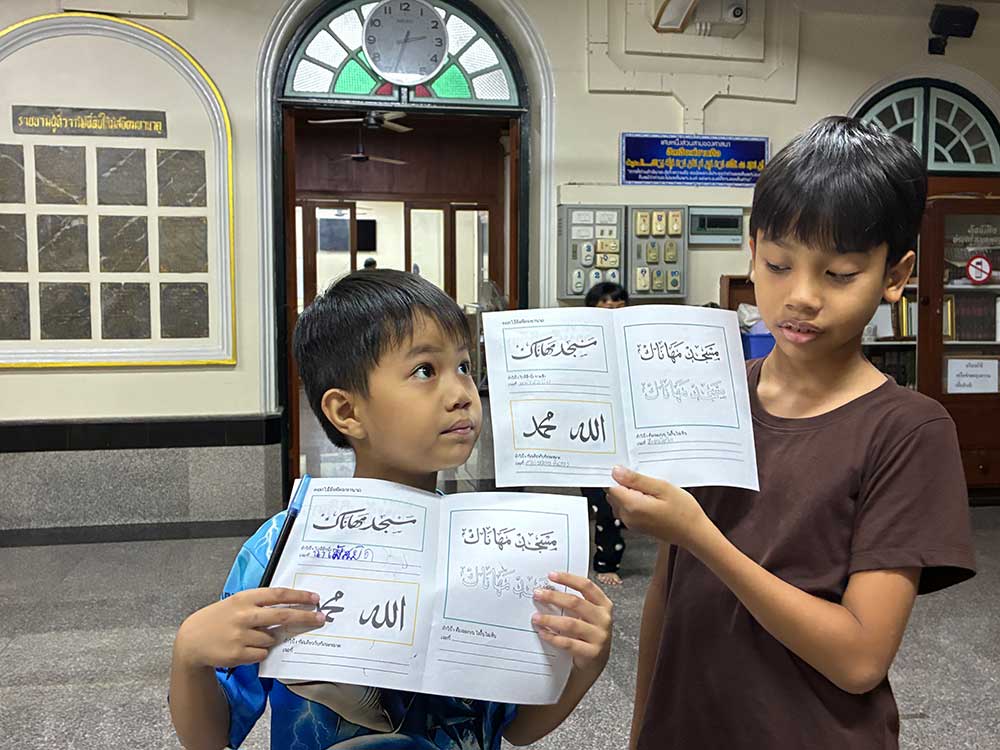
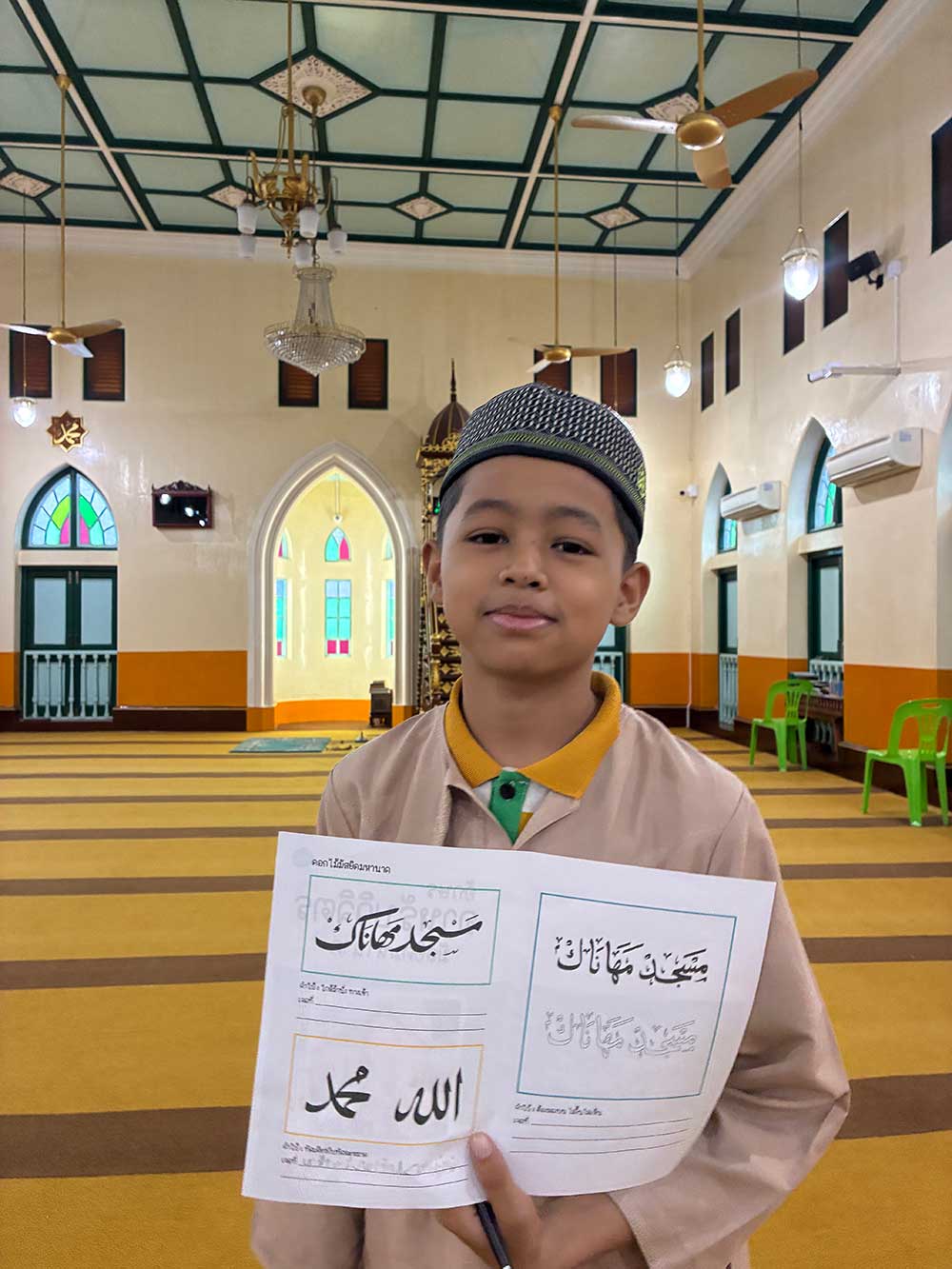
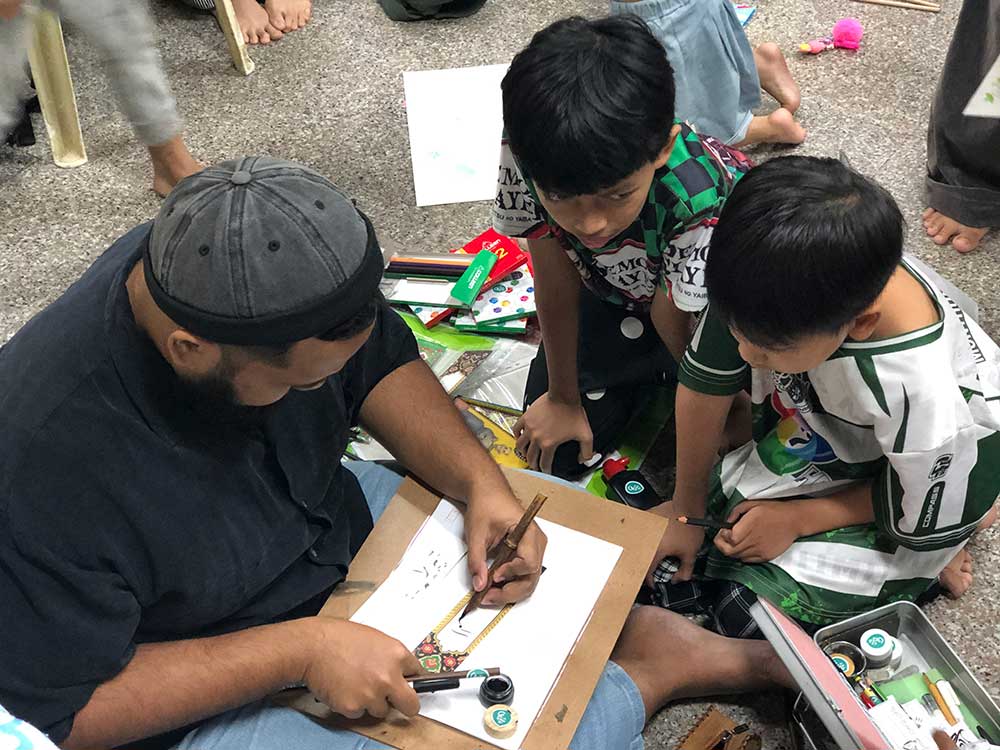
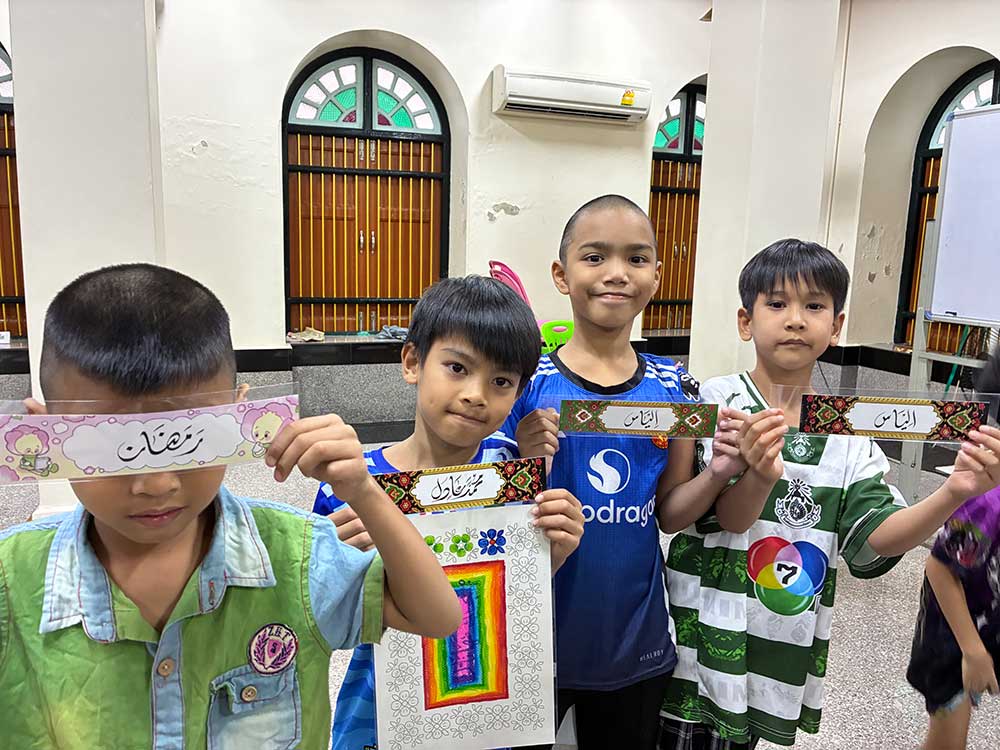
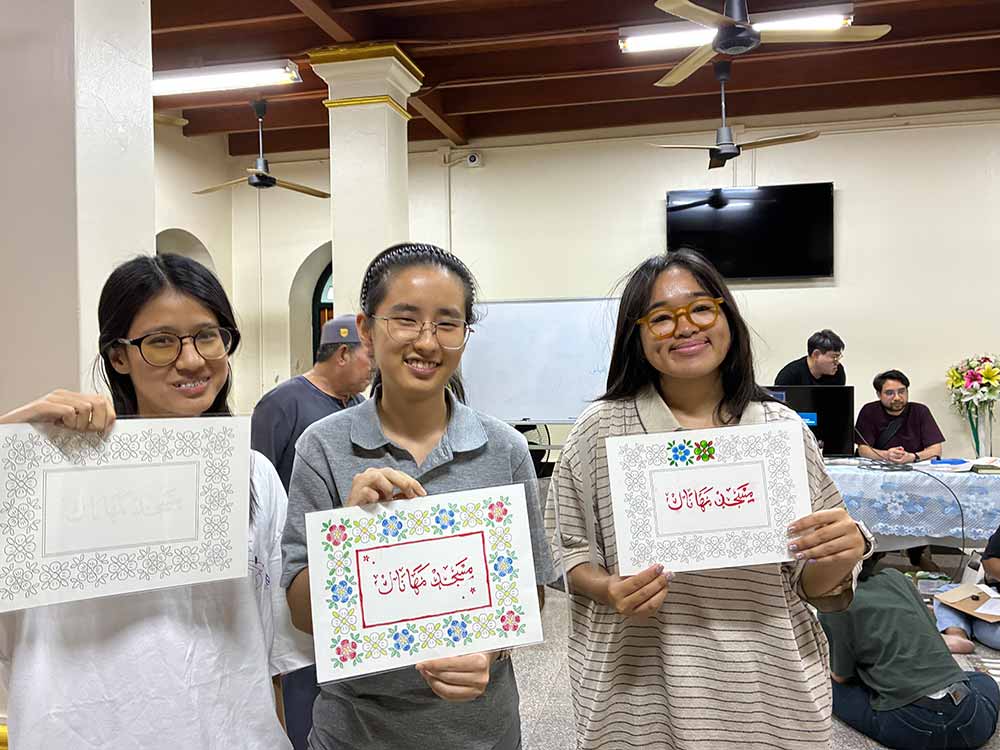
| 4 | Calligraphy | Discover the visual and spiritual meaning of Arabic script | Practice calligraphy strokes using selected sacred words | Calligraphy practice books and illuminated plaques |
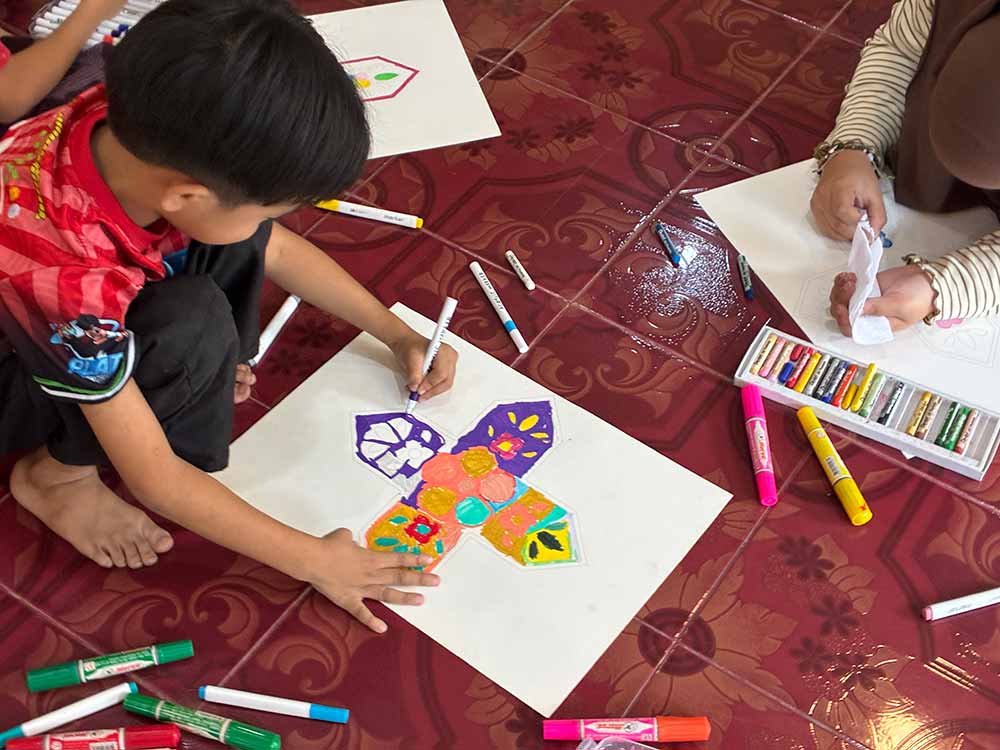
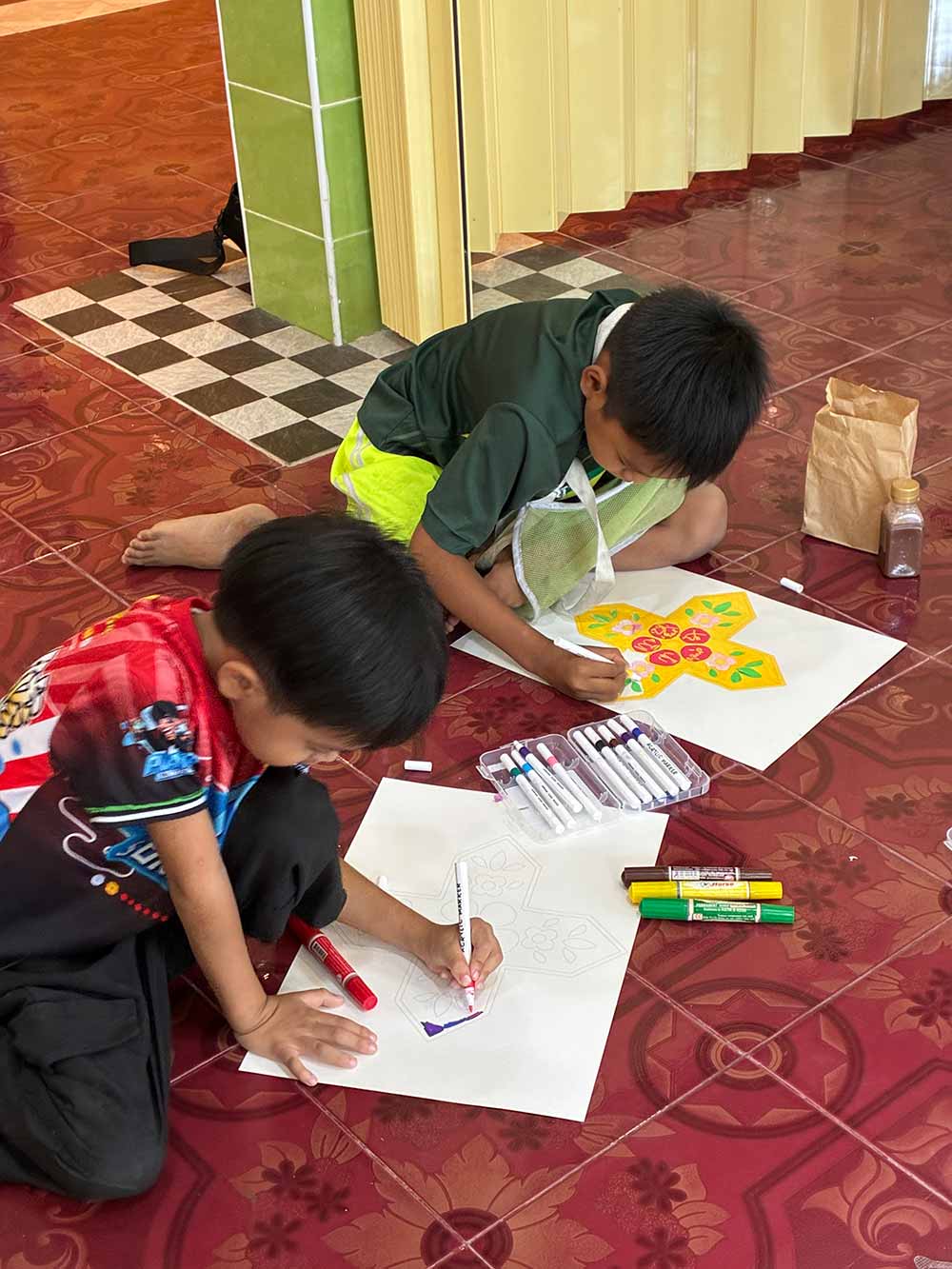
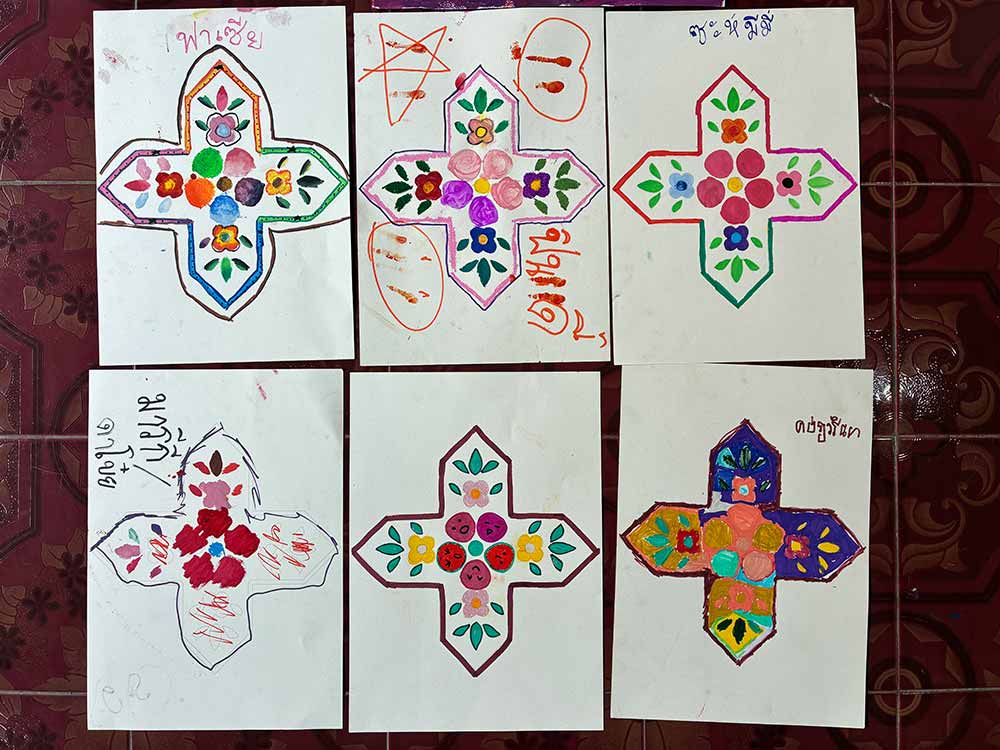
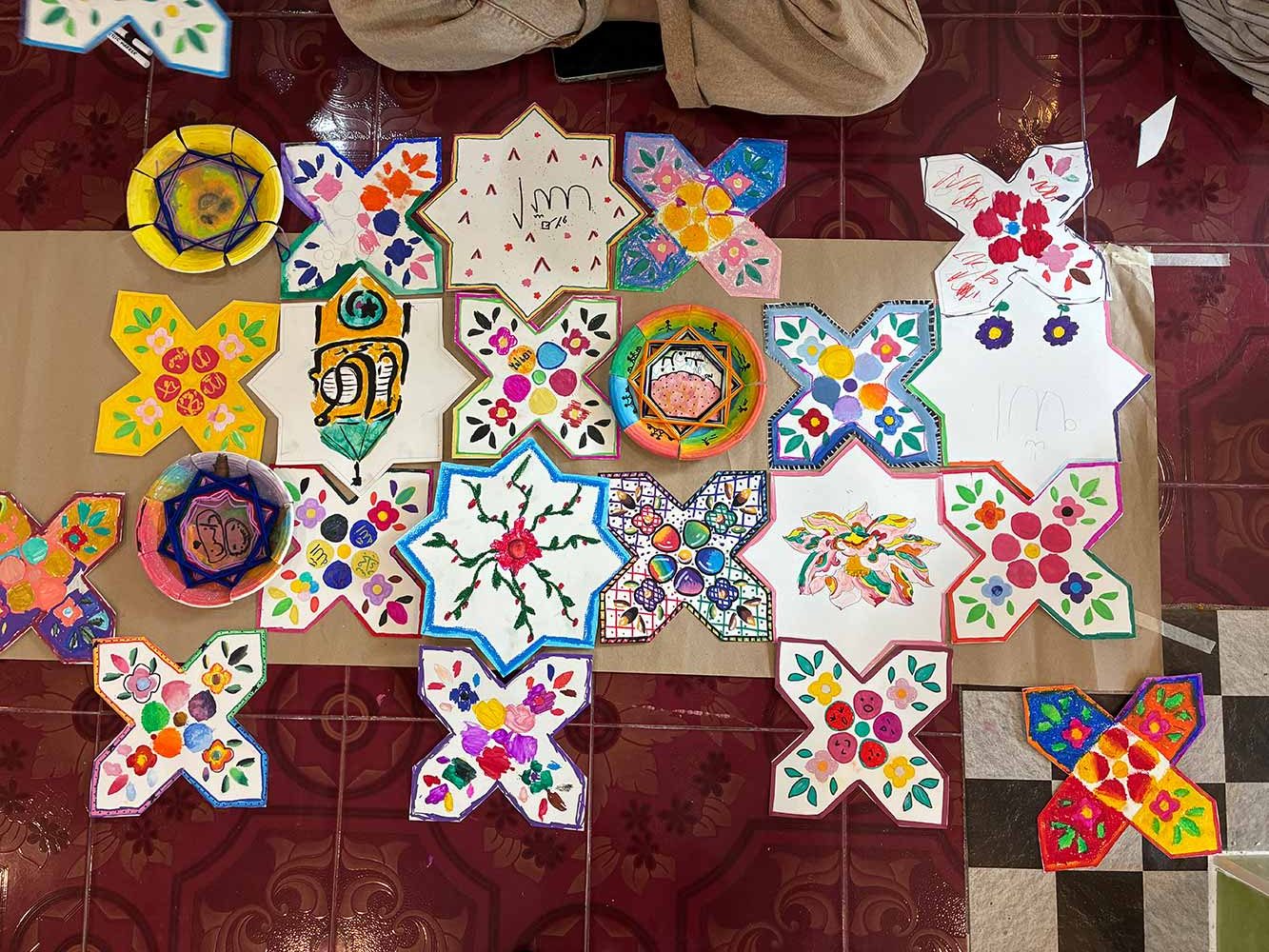
| 5 | Mosaic Tiles | Apply color, pattern, and symbolism in visual storytelling | Create mosaic designs using collage and mixed media techniques | Cardboard mosaic tiles |
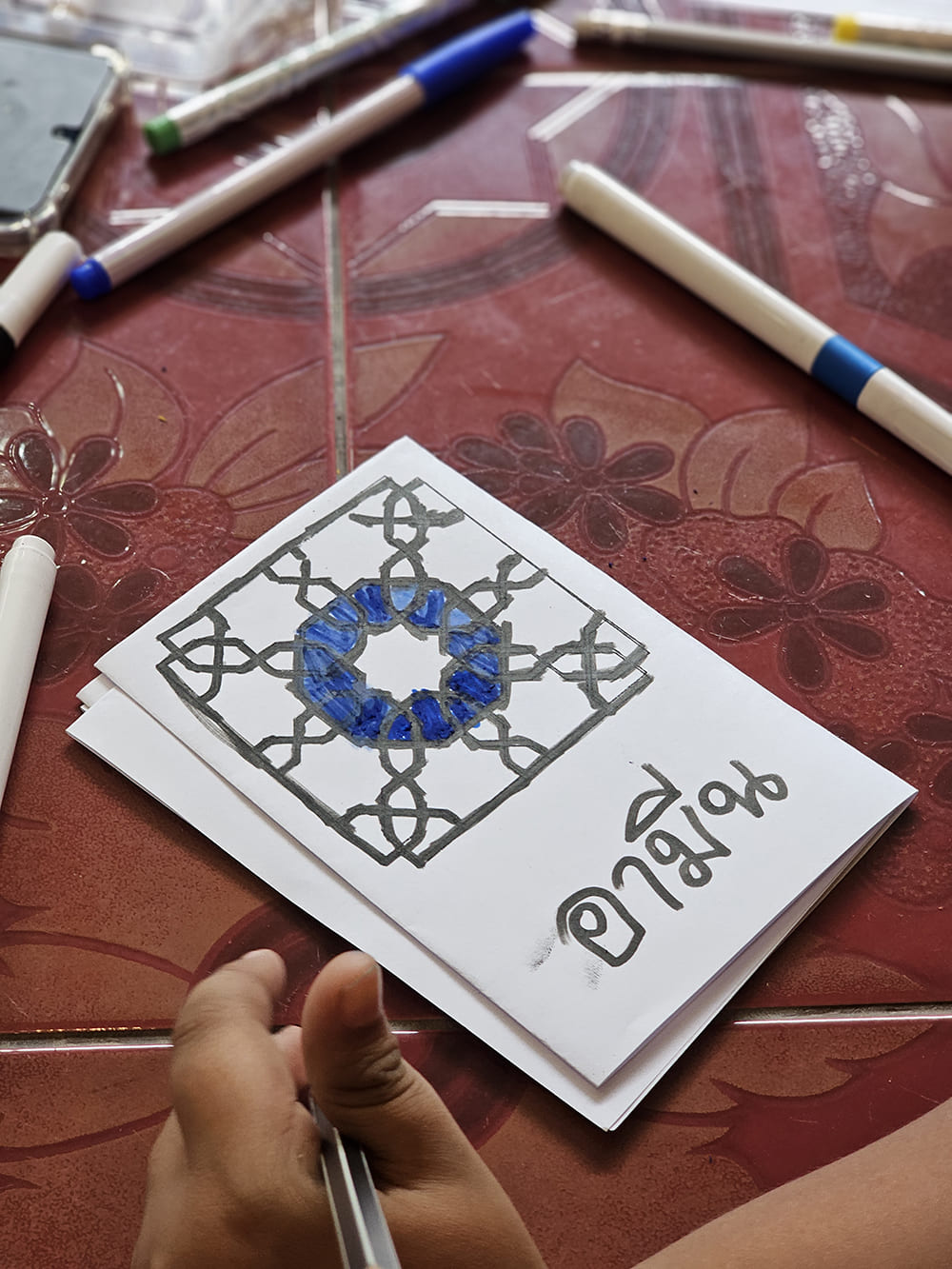
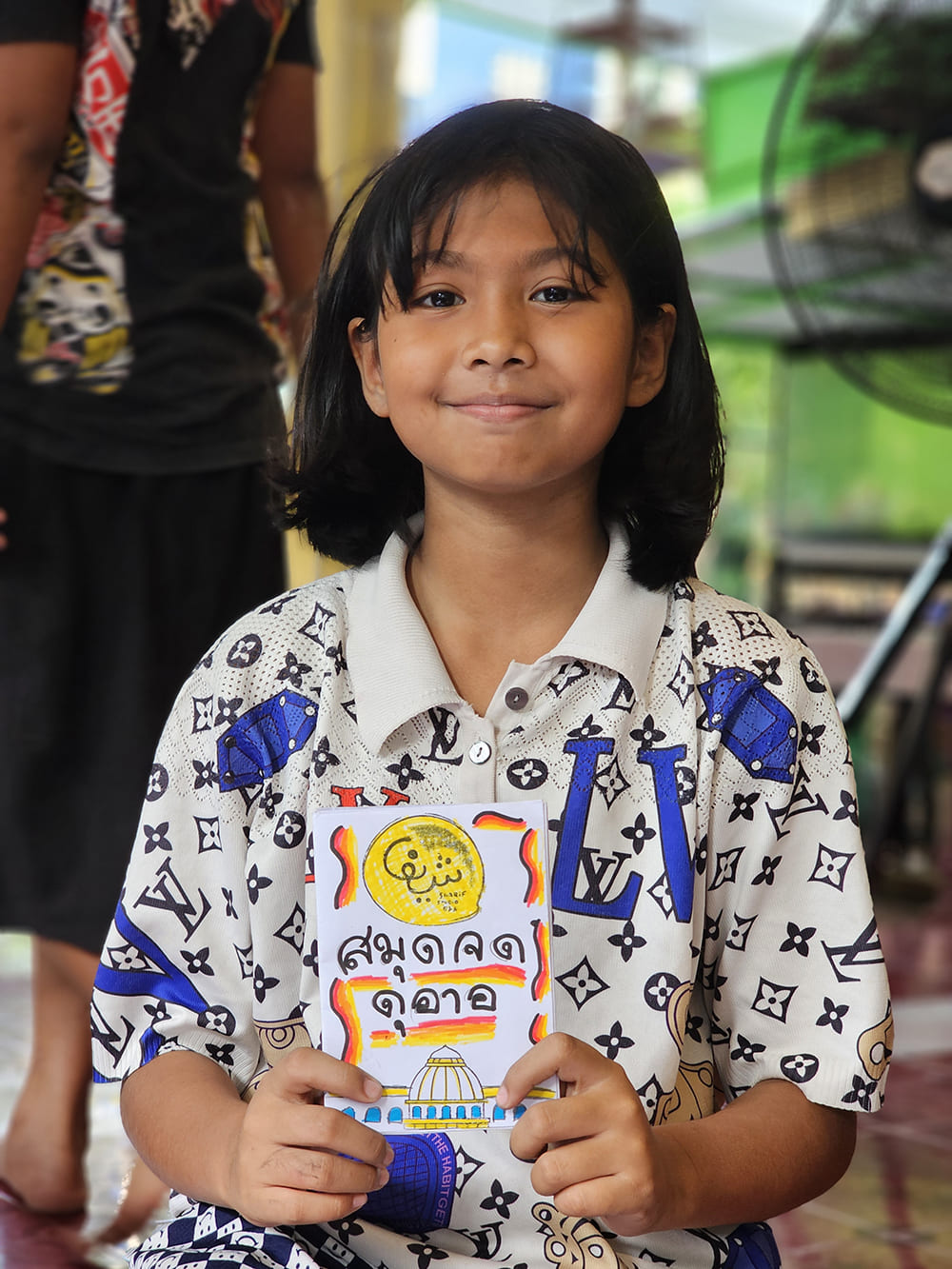
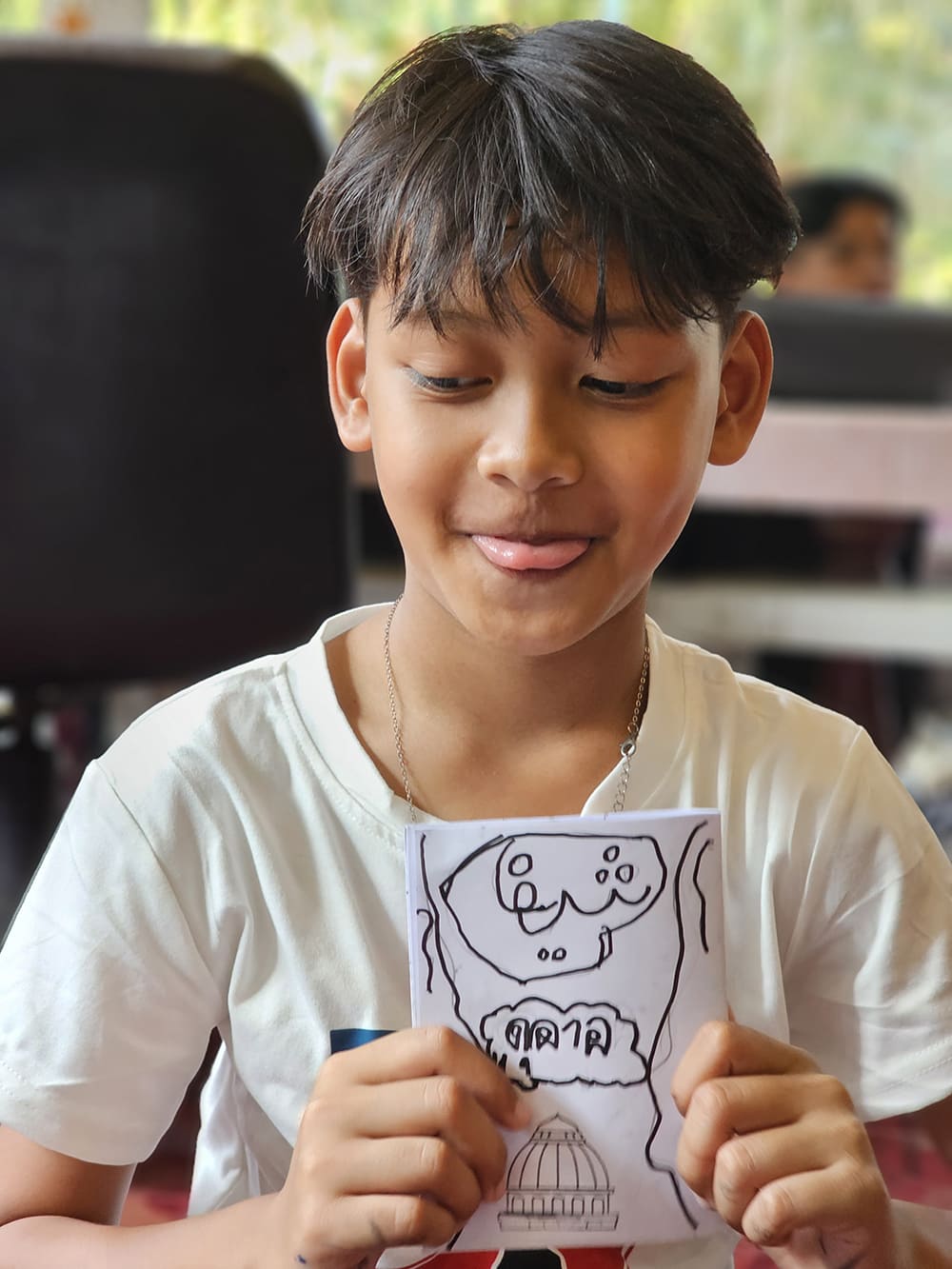
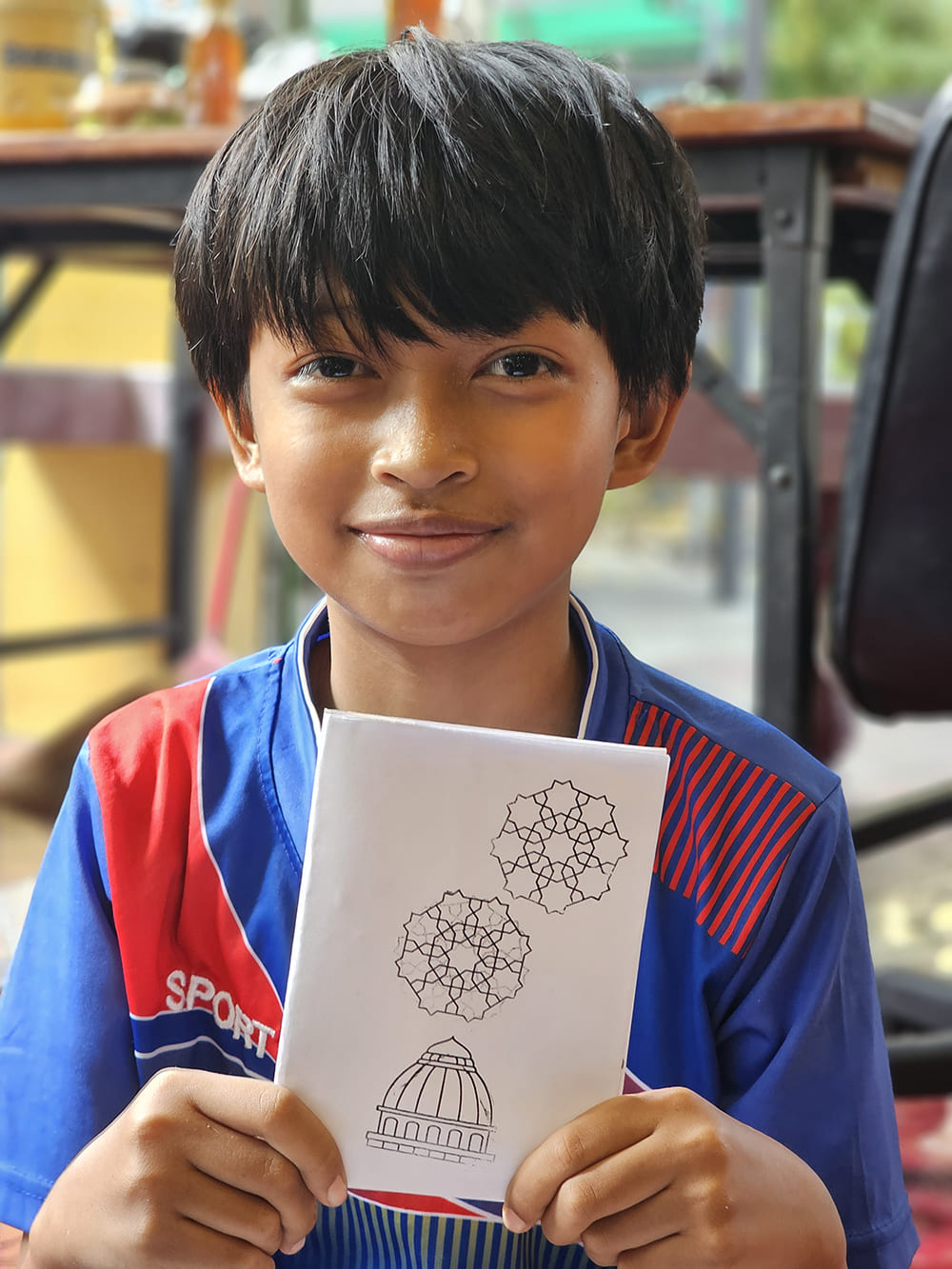
| 6 | Good Deeds Journal (Ramadan Preparation) | Connect art with reflection, daily practice, and community values | Create personalized journals inspired by acts of kindness | Personalized Good Deeds journals |
| 7–8 | Story to Art (Development) | Translate personal and family stories into visual form | Develop group-based mixed media artworks | Final project prototypes |
| 9 | Final Production | Refine artworks and communicate artistic intent | Finalize pieces, write artist statements, and install exhibition at Asvin | Completed artworks and artist statements |
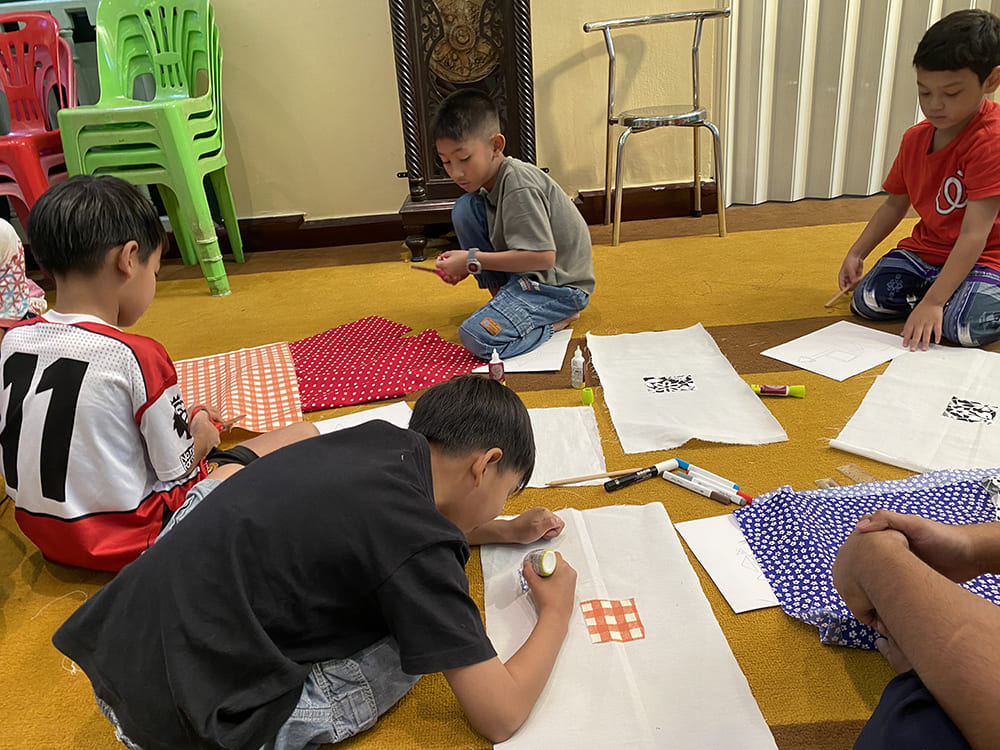
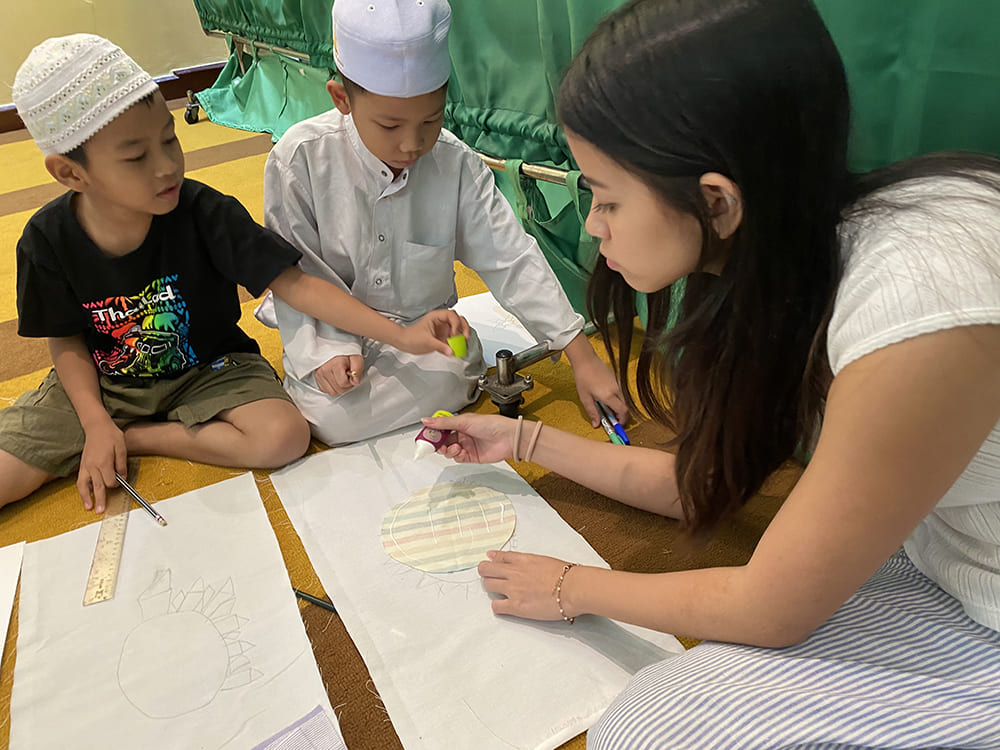
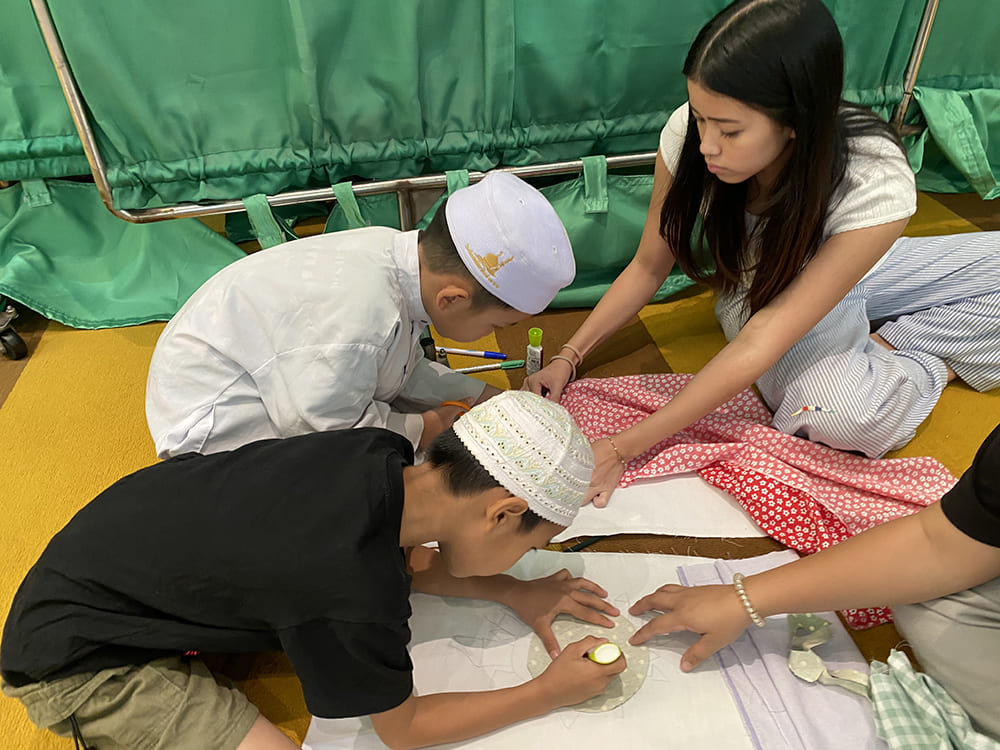
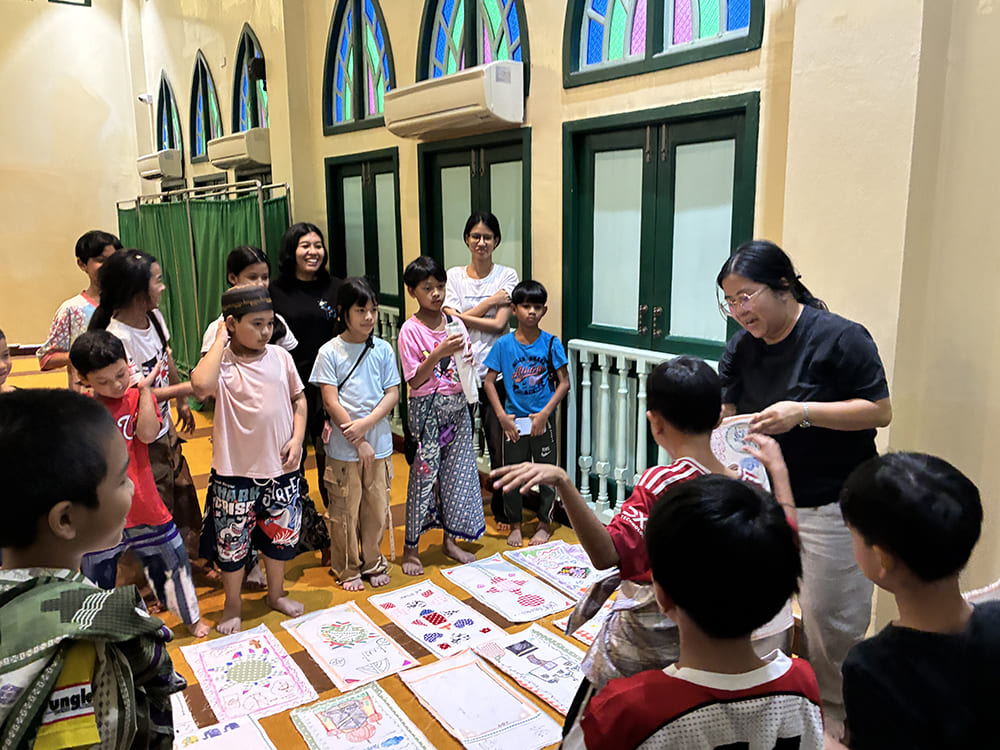
Kick things off by exploring how art tells stories of faith and community. Through engaging case studies and a special session with Kru Bang Shari, students discover how patterns, paintings, and calligraphy carry meaning across time. Then it becomes hands-on: using fabric scraps from Bo Bae Market and drawing from the identity of the Masjid Mahanak community, students design their own prayer mats—personal, life-sized works that connect creativity, belief, and everyday life.
This week, students explore Tawhid—the idea of oneness—through pattern and design. They discover how repetition and symmetry express unity in Islamic art, then translate these ideas through hands-on making. Using yarn weaving on paper plates and mosaic tile sheets, they work with circular and square forms, transforming simple shapes into geometric patterns. Through brushwork and watercolor, their designs come to life, developing a sense of rhythm, line, and structure while expressing belief through repetition and continuity.
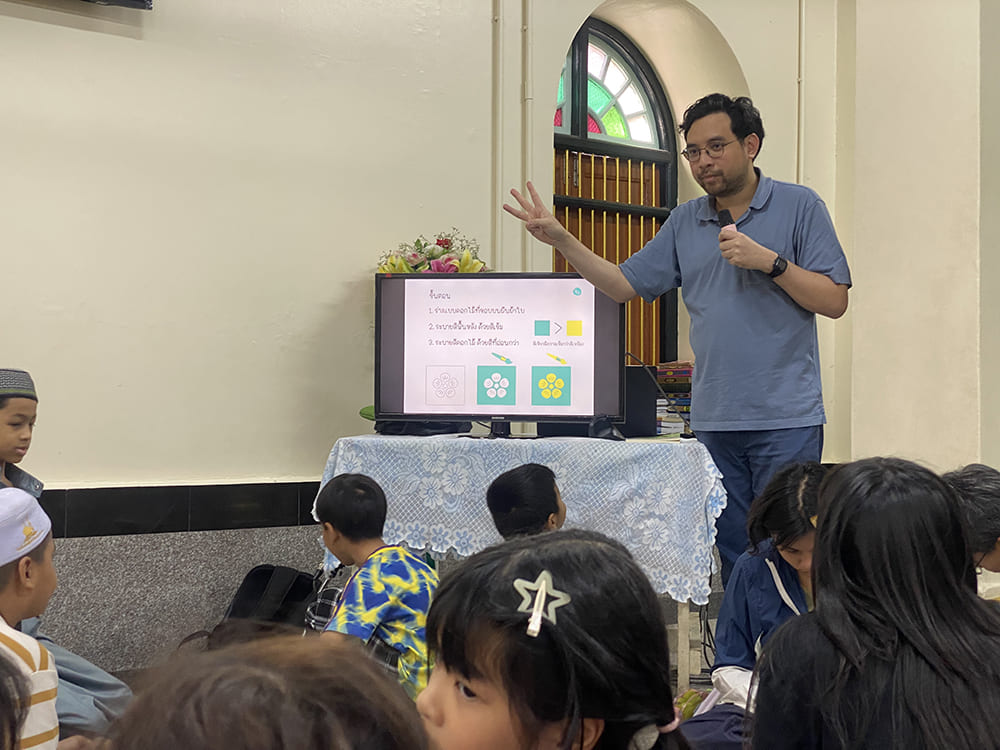
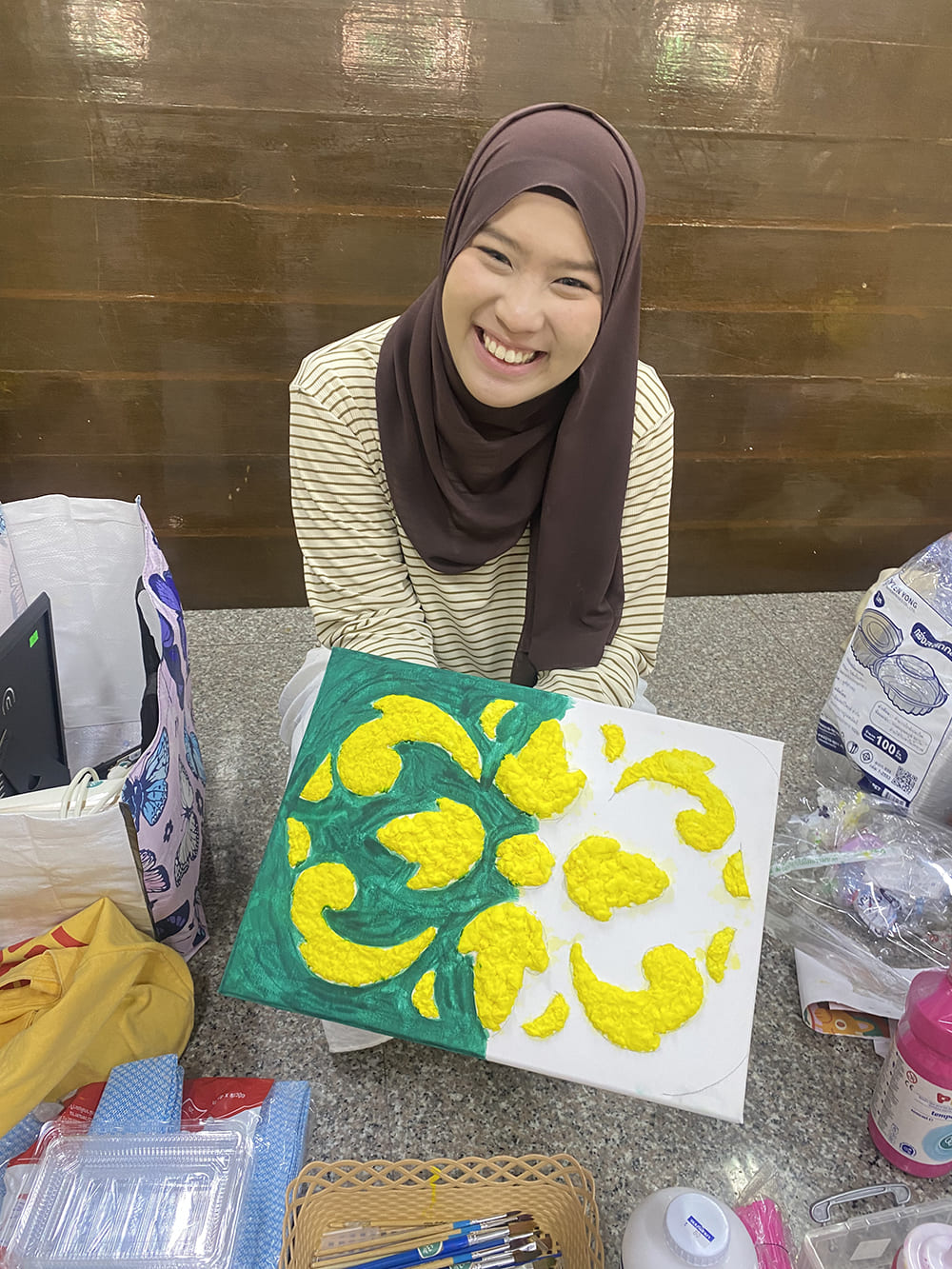
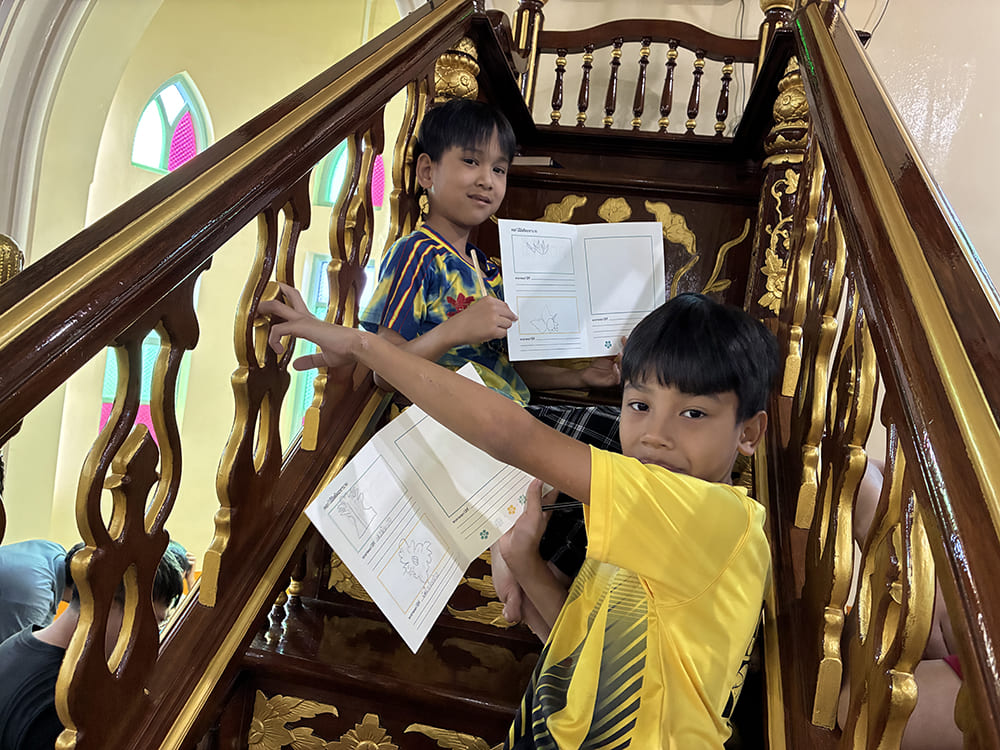
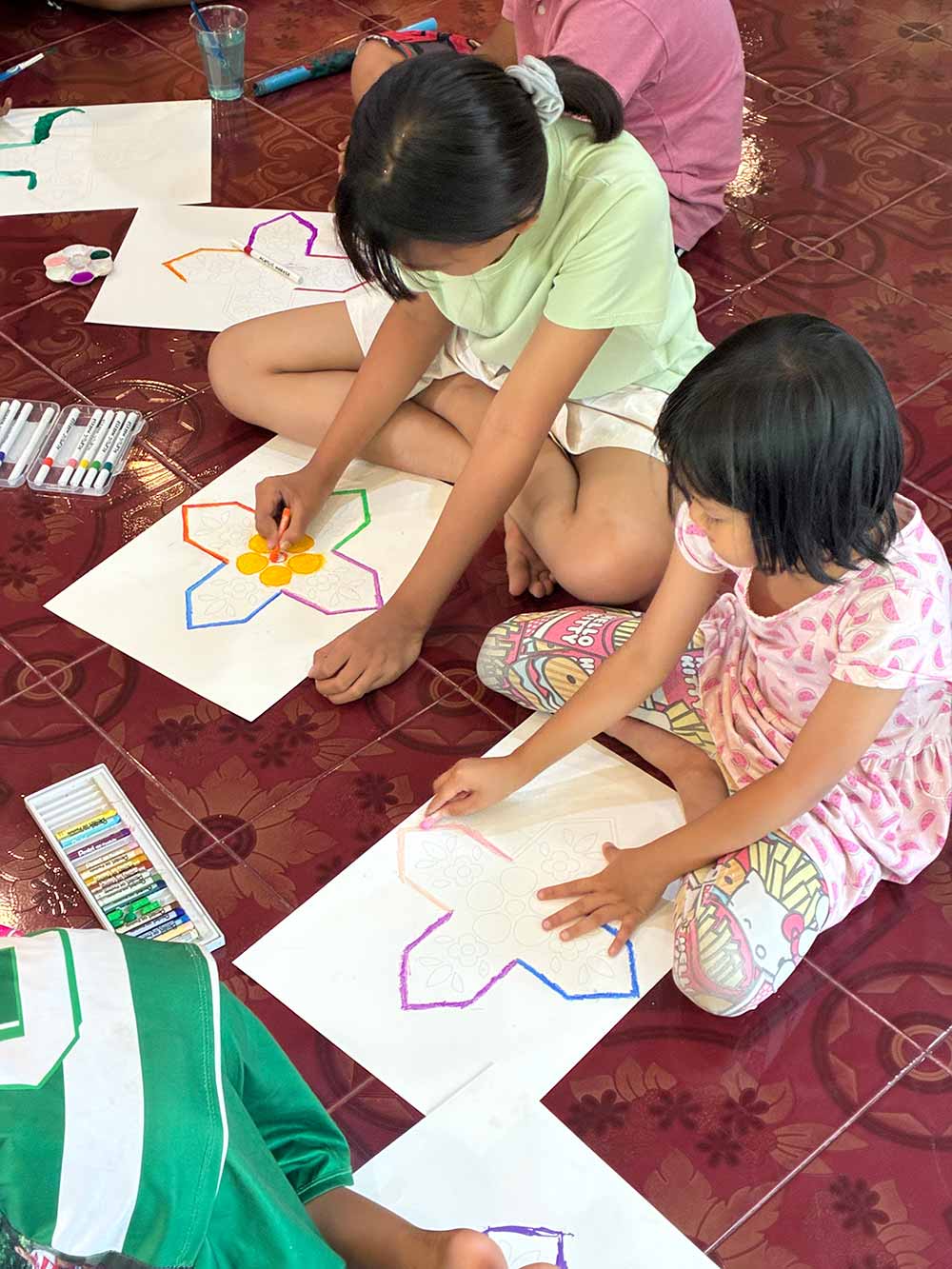
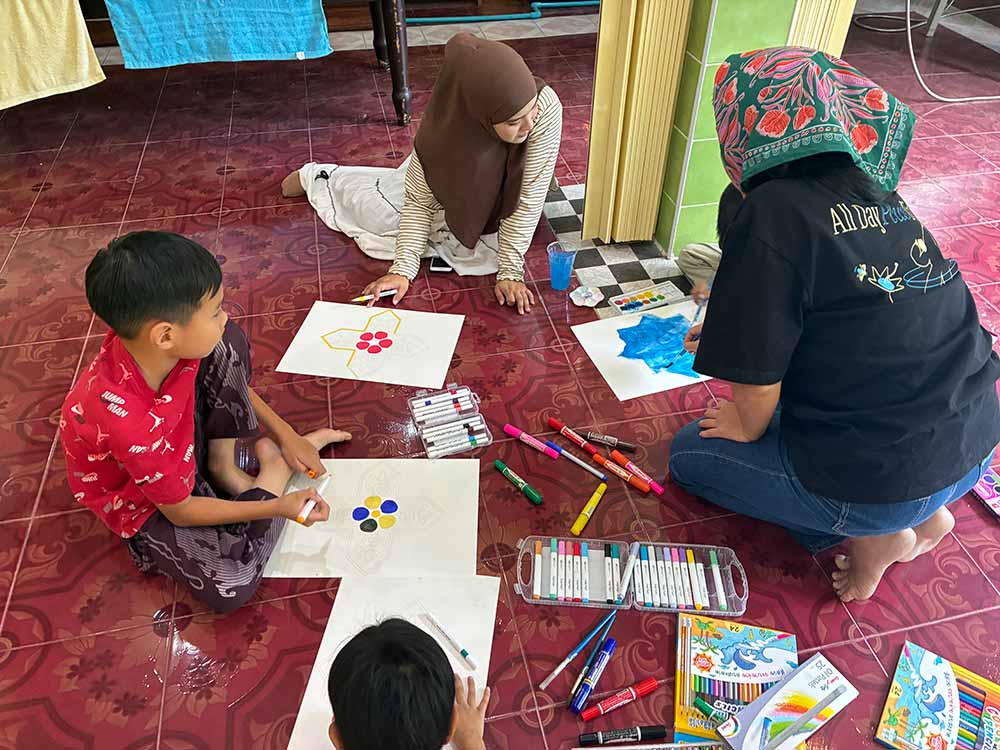
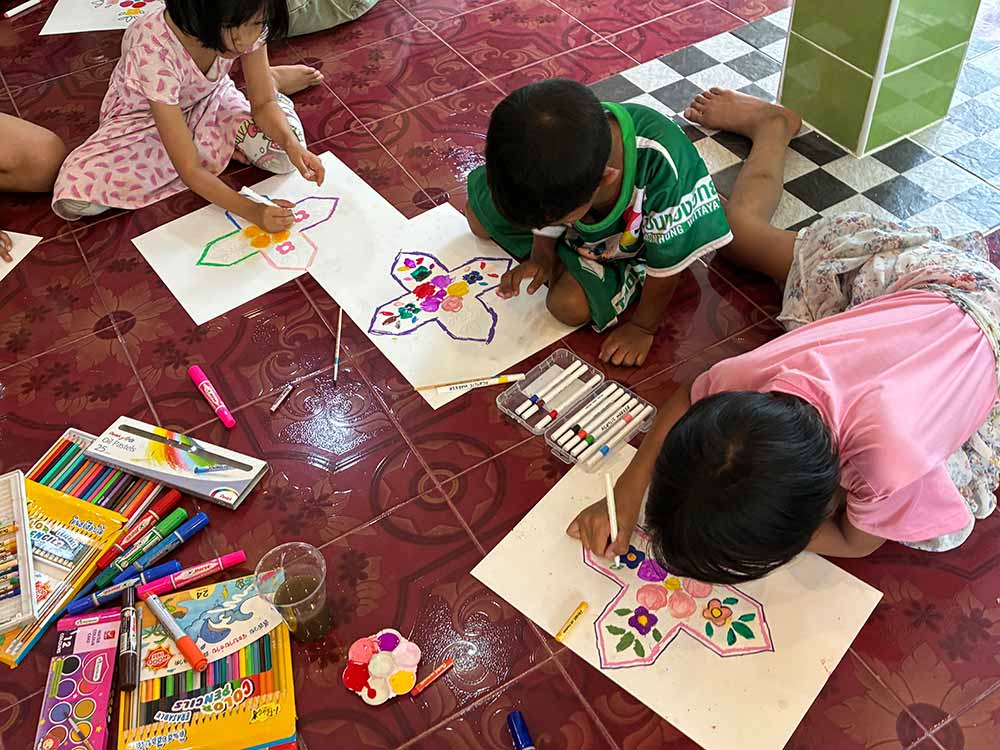
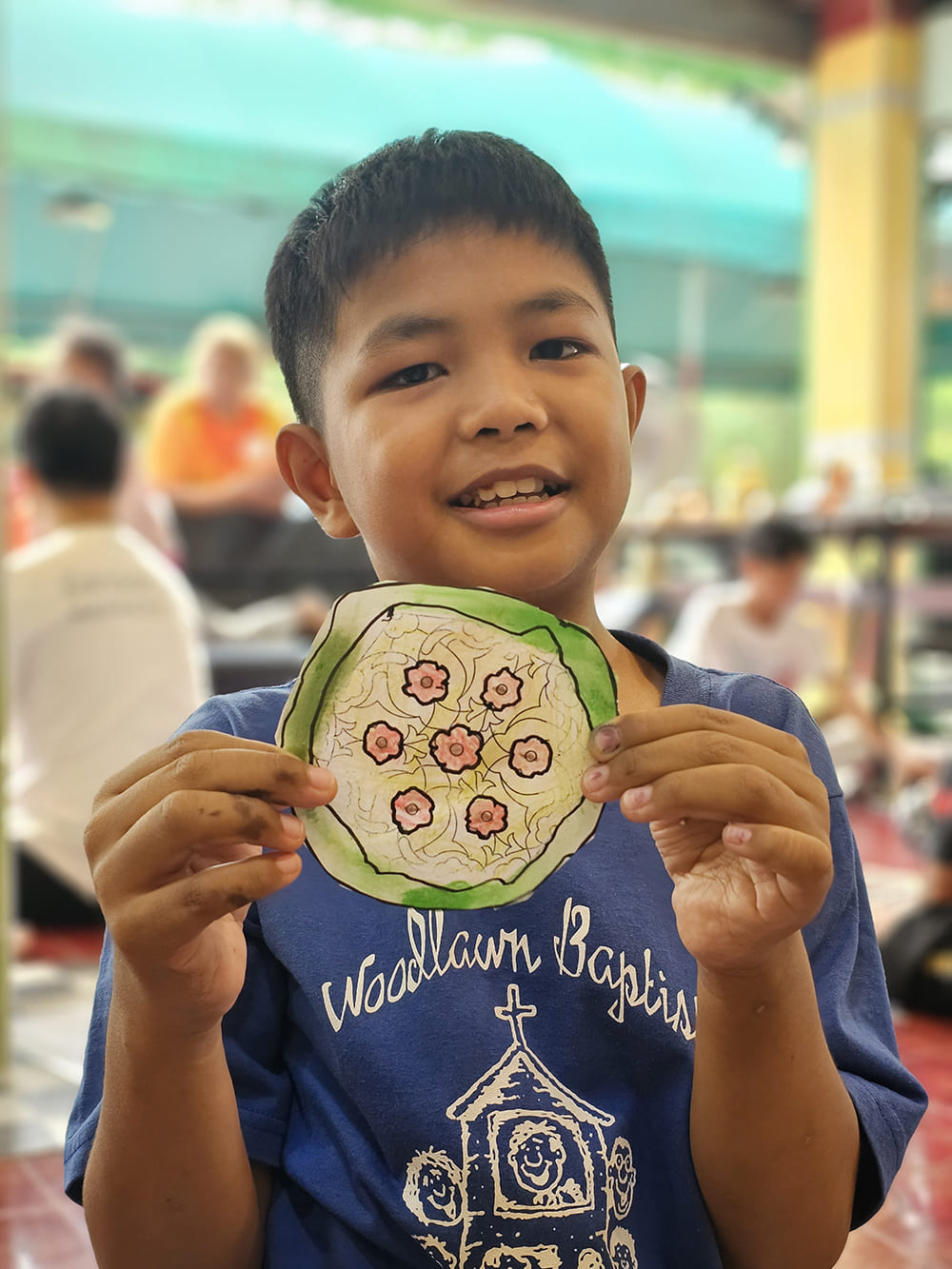
This week, students explore Arabesque—flowing floral patterns found in Islamic art. They discover how flowers and gardens carry meaning in Islamic tradition, inspired by references from the Quran. Taking cues from patterns around Masjid Mahanak, students design their own motifs—blending nature, creativity, and spirituality into beautiful, flowing designs.
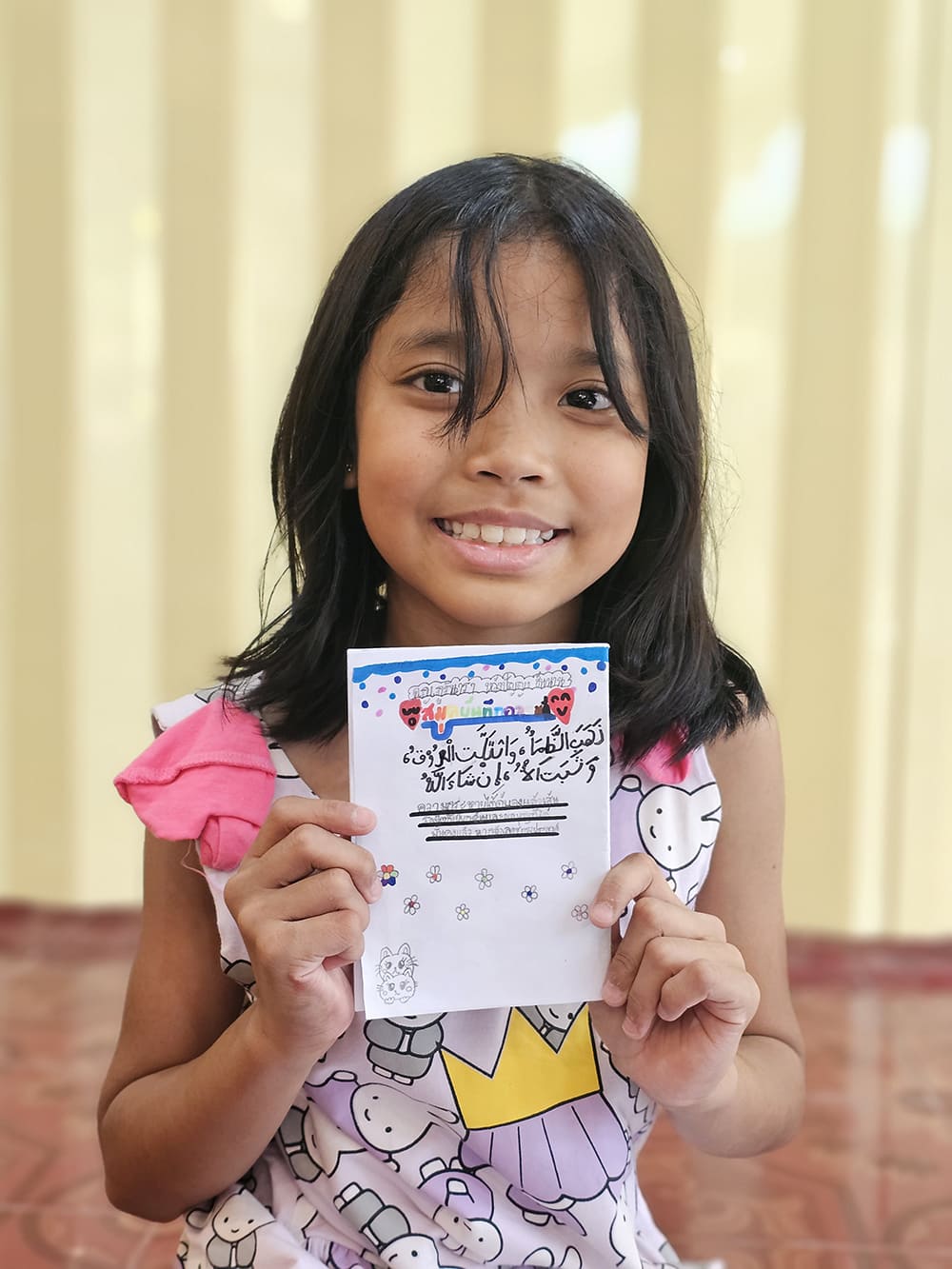
This week, students explore calligraphy as a powerful way to express language and faith. They learn about its roots in Islamic culture and practice basic writing techniques. Through guided exercises, they experiment with form, rhythm, and balance—discovering how words can flow, shape, and transform into art.
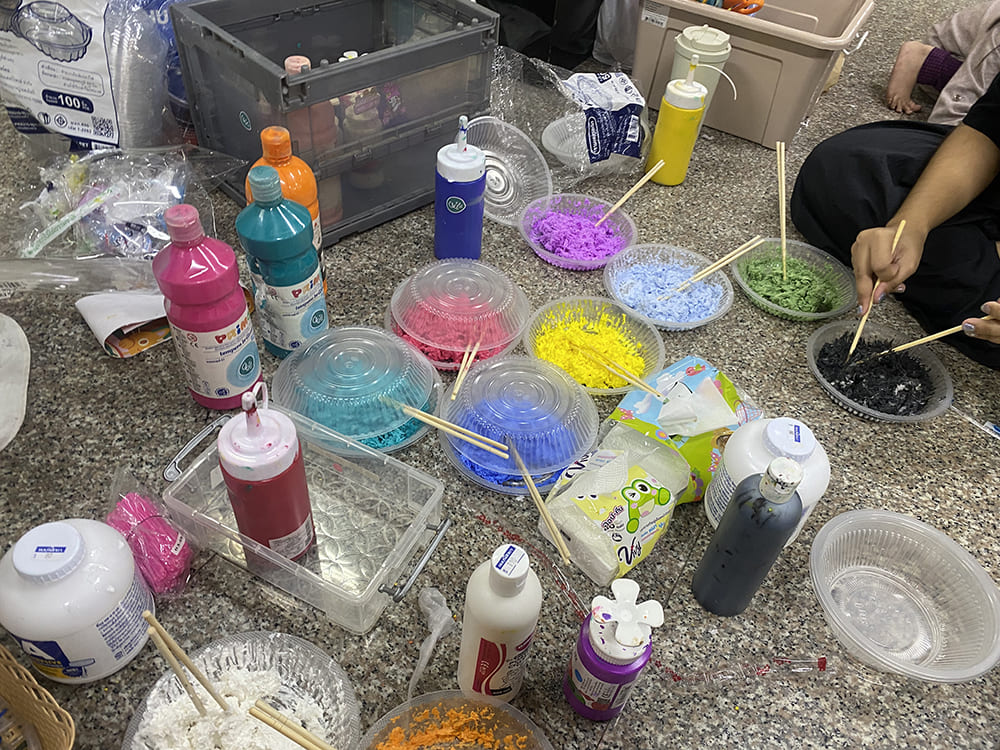
This week, students bring patterns to life through mosaic design. Revisiting geometric and floral ideas, they explore how repetition and symmetry create harmony in Islamic art. Using simple materials like cardboard and papier-mâché, they design and assemble their own mosaic tiles. Drawing from the floral motifs of Masjid Mahanak, students observe, trace, and reinterpret these forms by hand, learning about botanical patterns and the symbolic idea of paradise, Jannah.
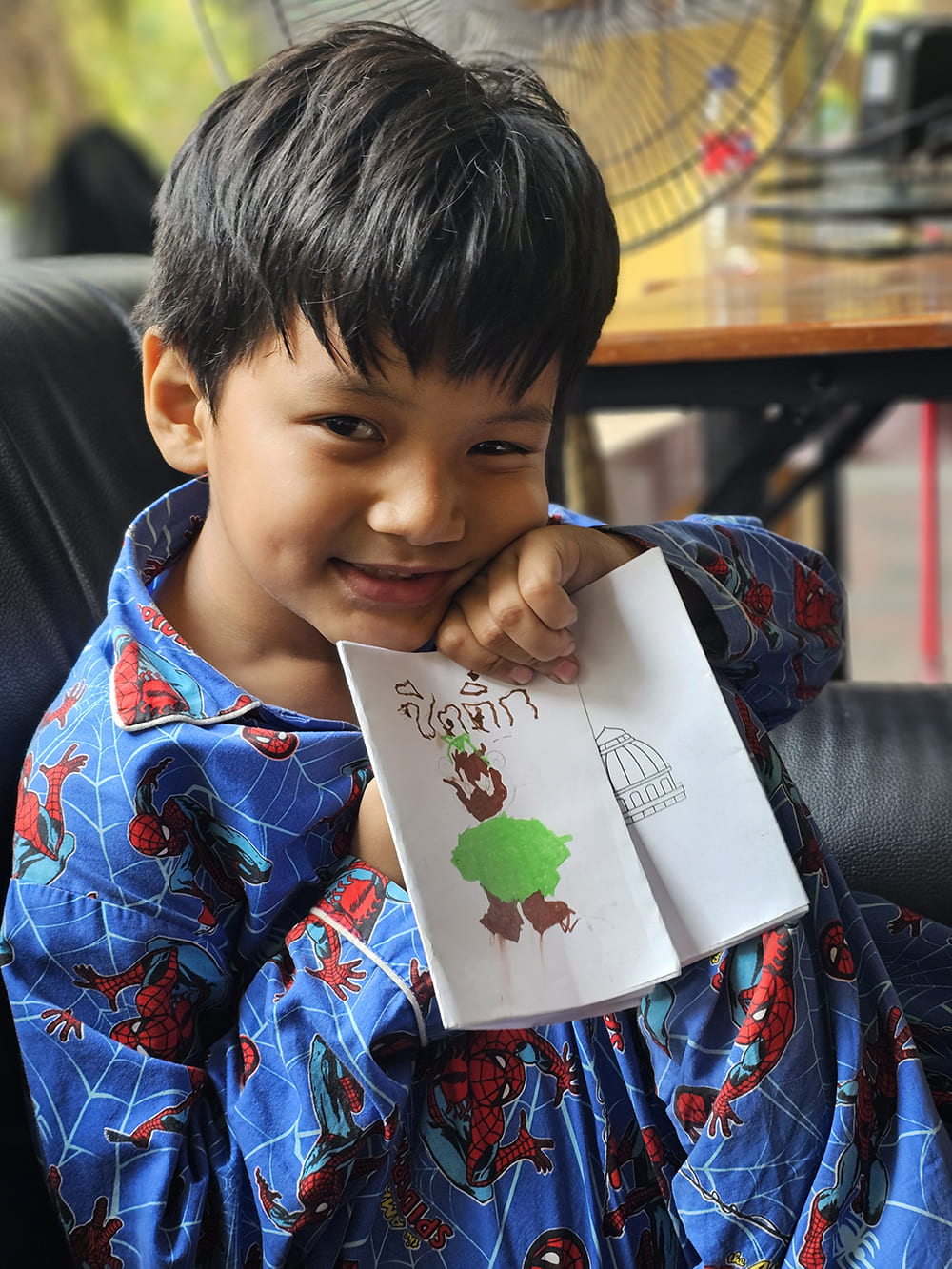
This week, students connect art with everyday life. They create handmade journals to record acts of kindness and reflect on their daily actions. Through conversations about routines and core Islamic values, students build awareness of intention and behavior. They decorate their journals, preparing to use them during Ramadan as a personal space to track good deeds and meaningful moments.
Now it all comes together. Students combine what they’ve learned into larger, more personal artworks using collage and mixed media. They blend themes of faith, community, and abstract design into one creative piece. Stay tuned.