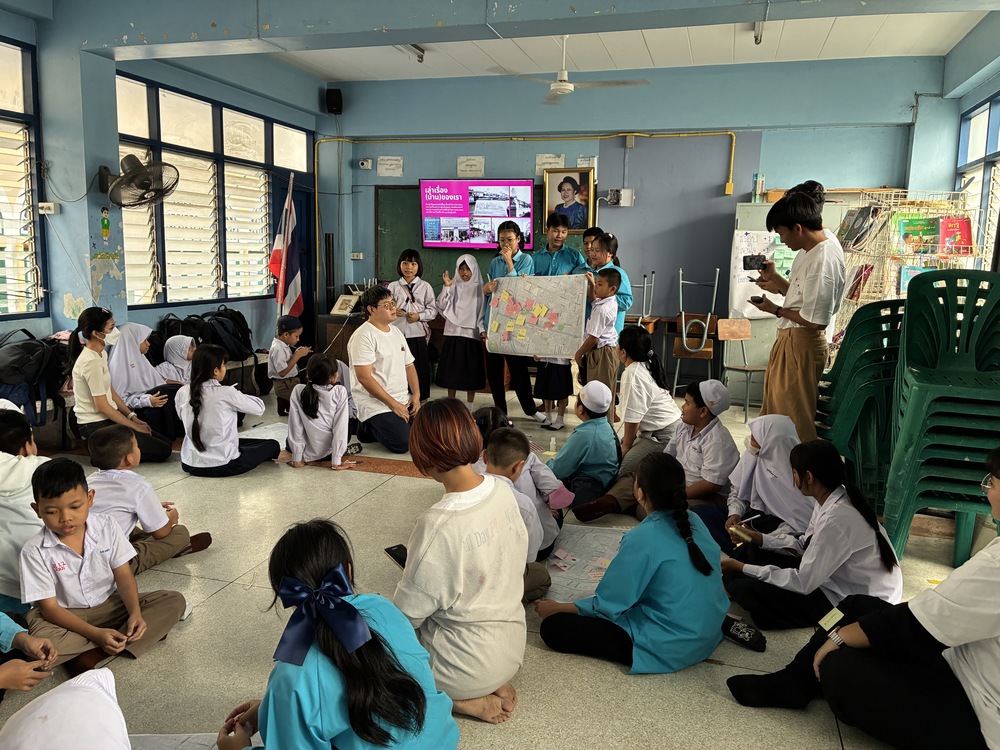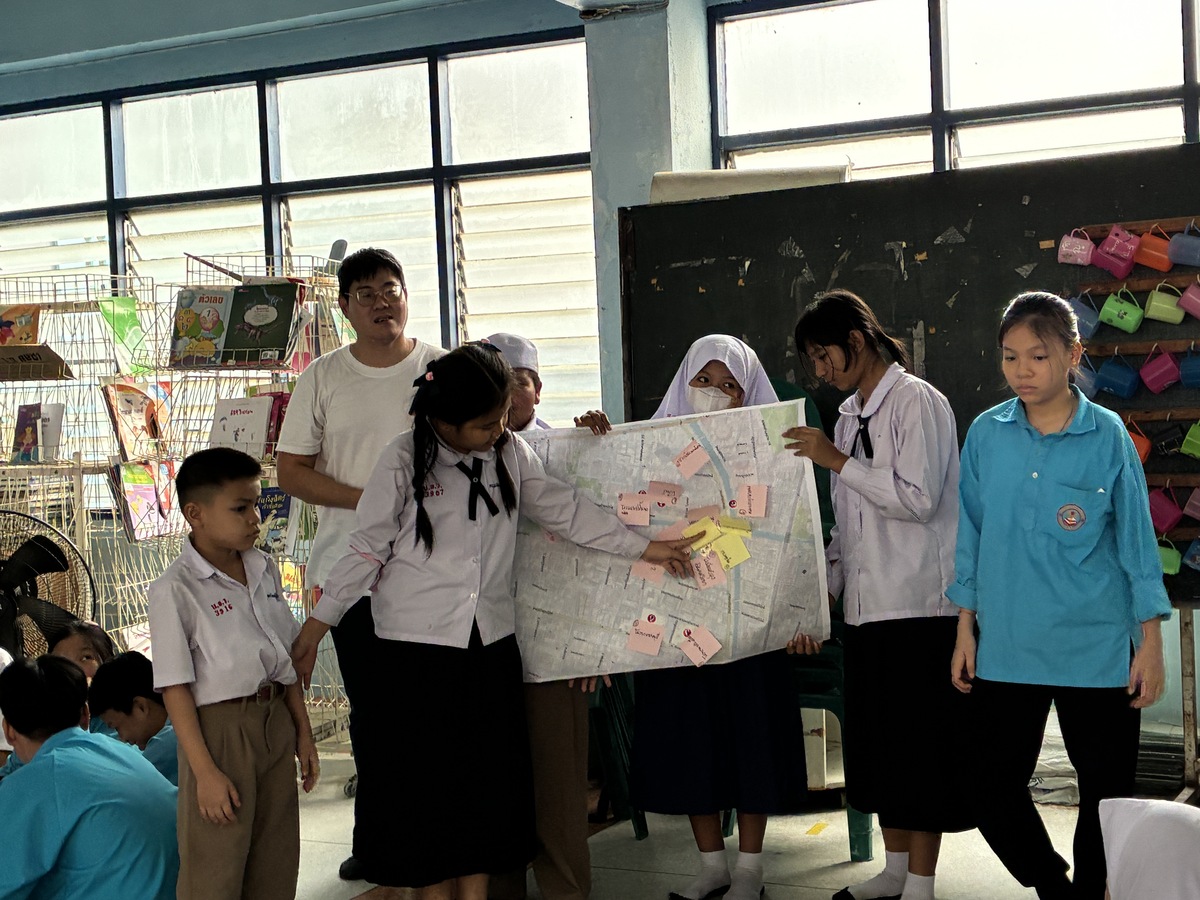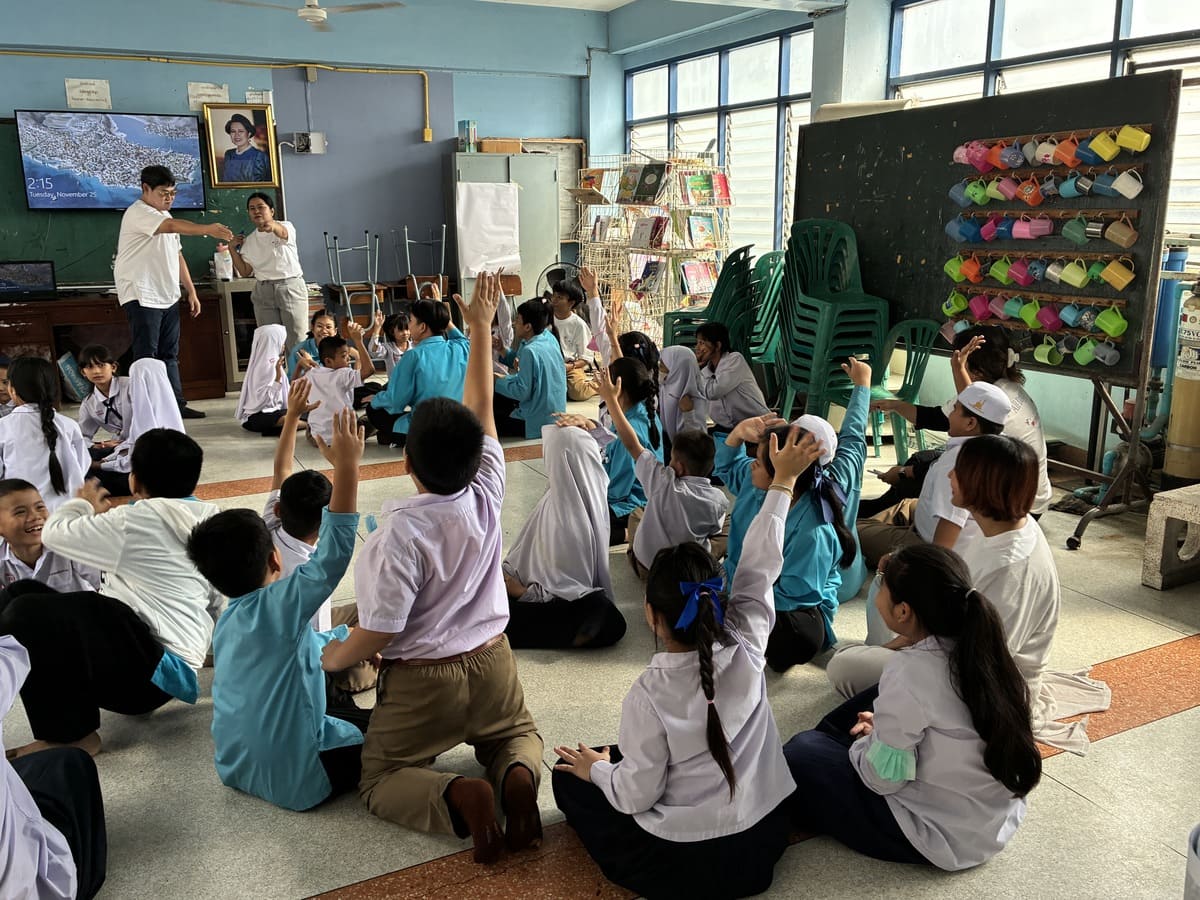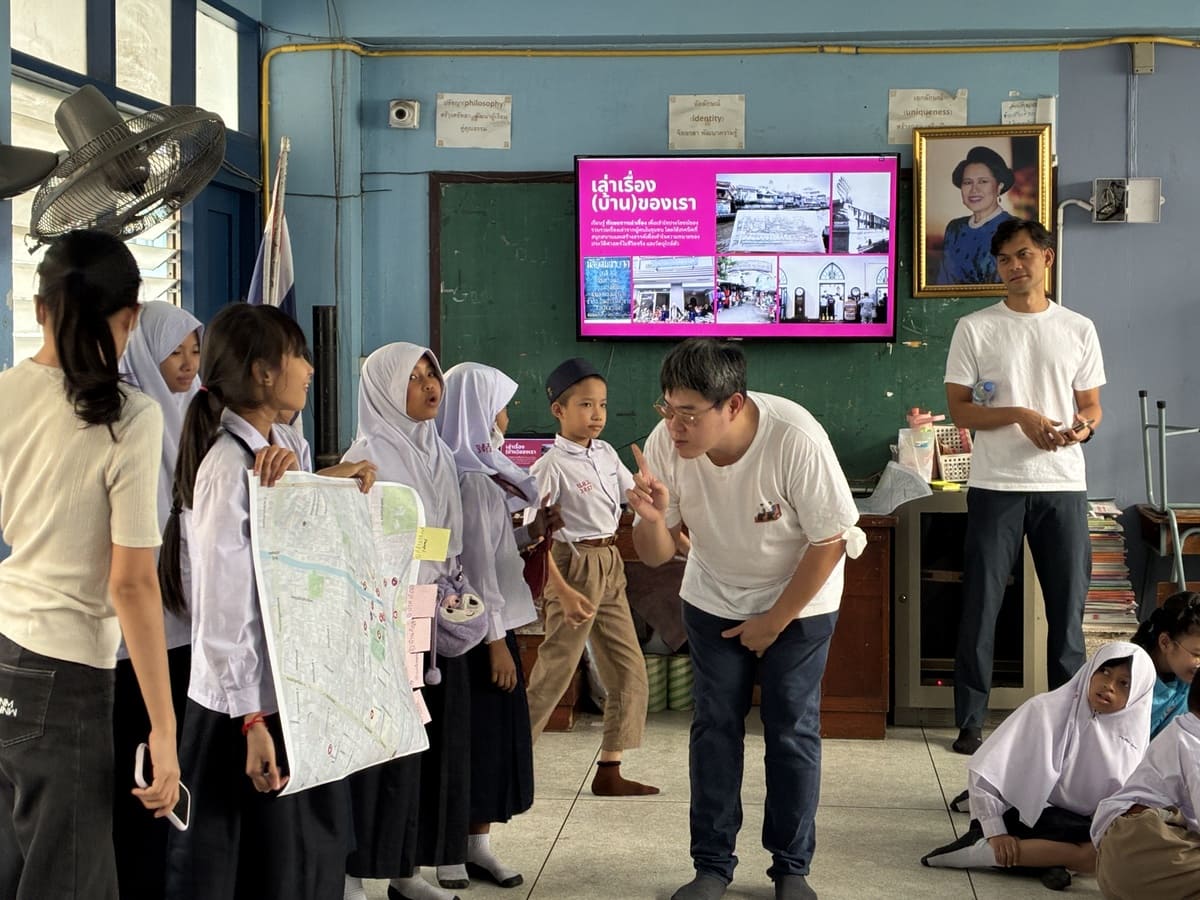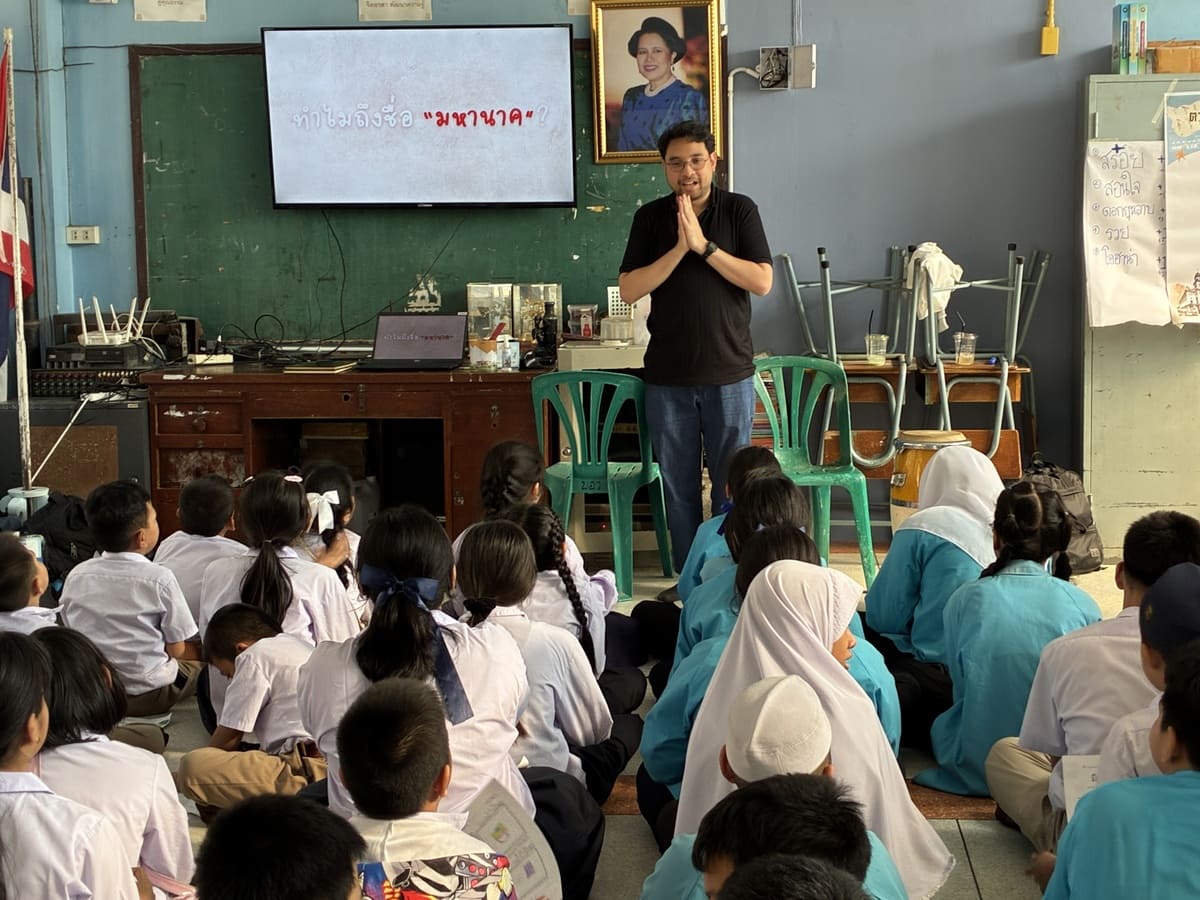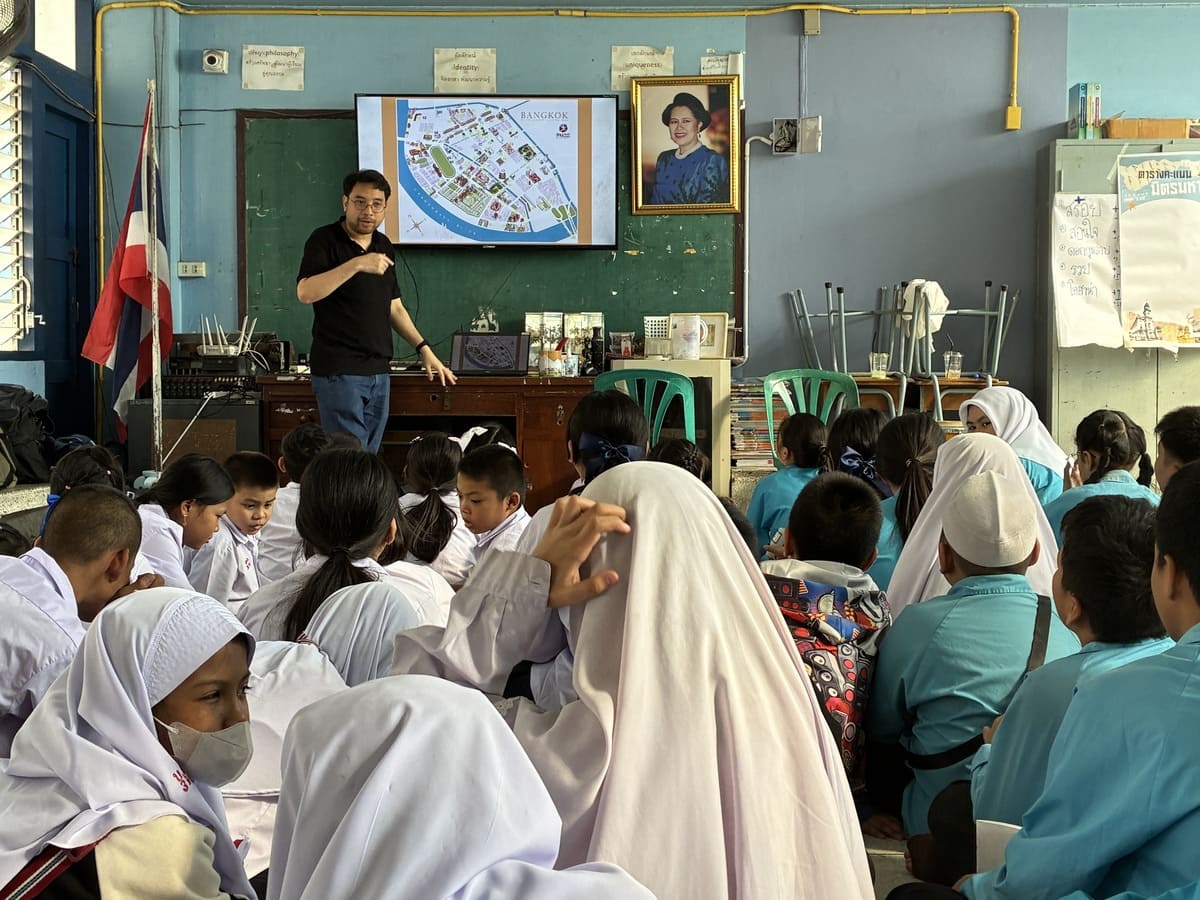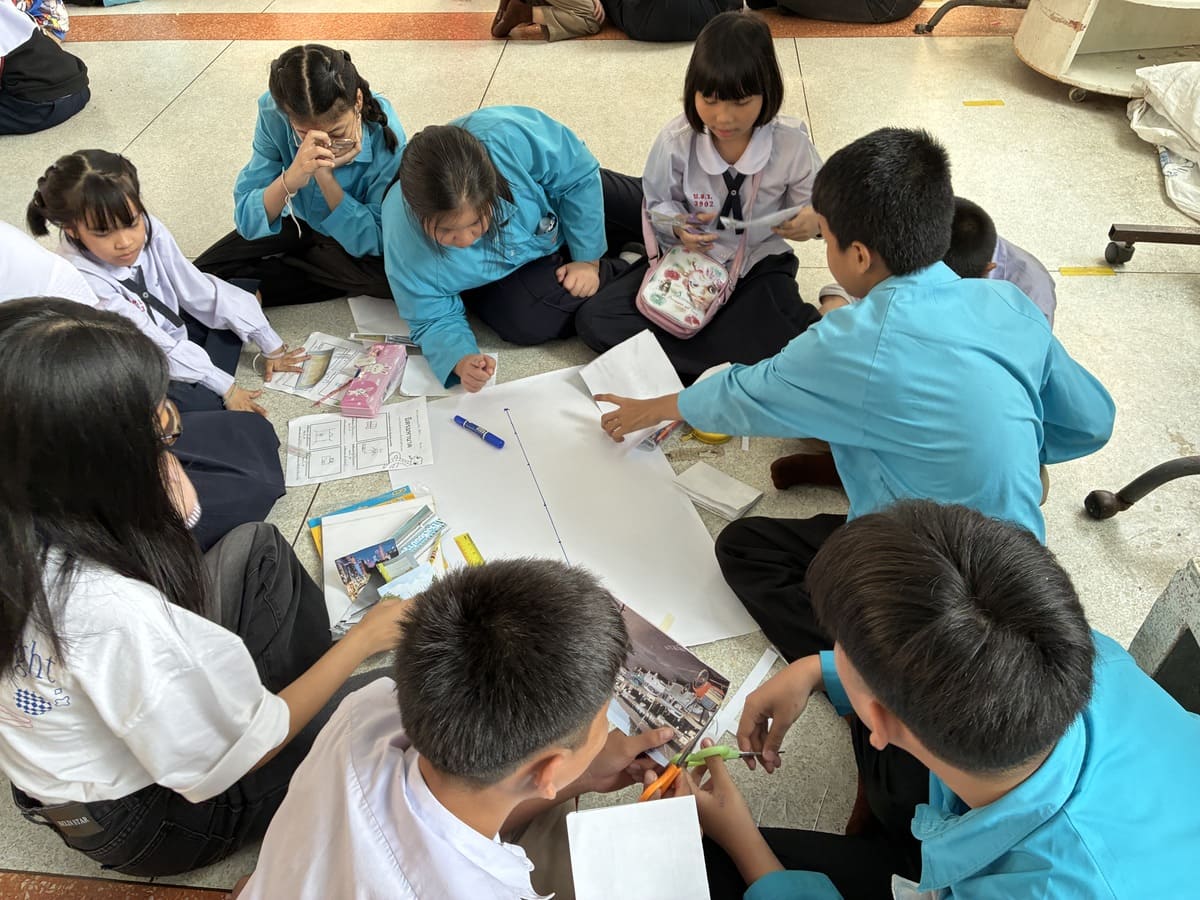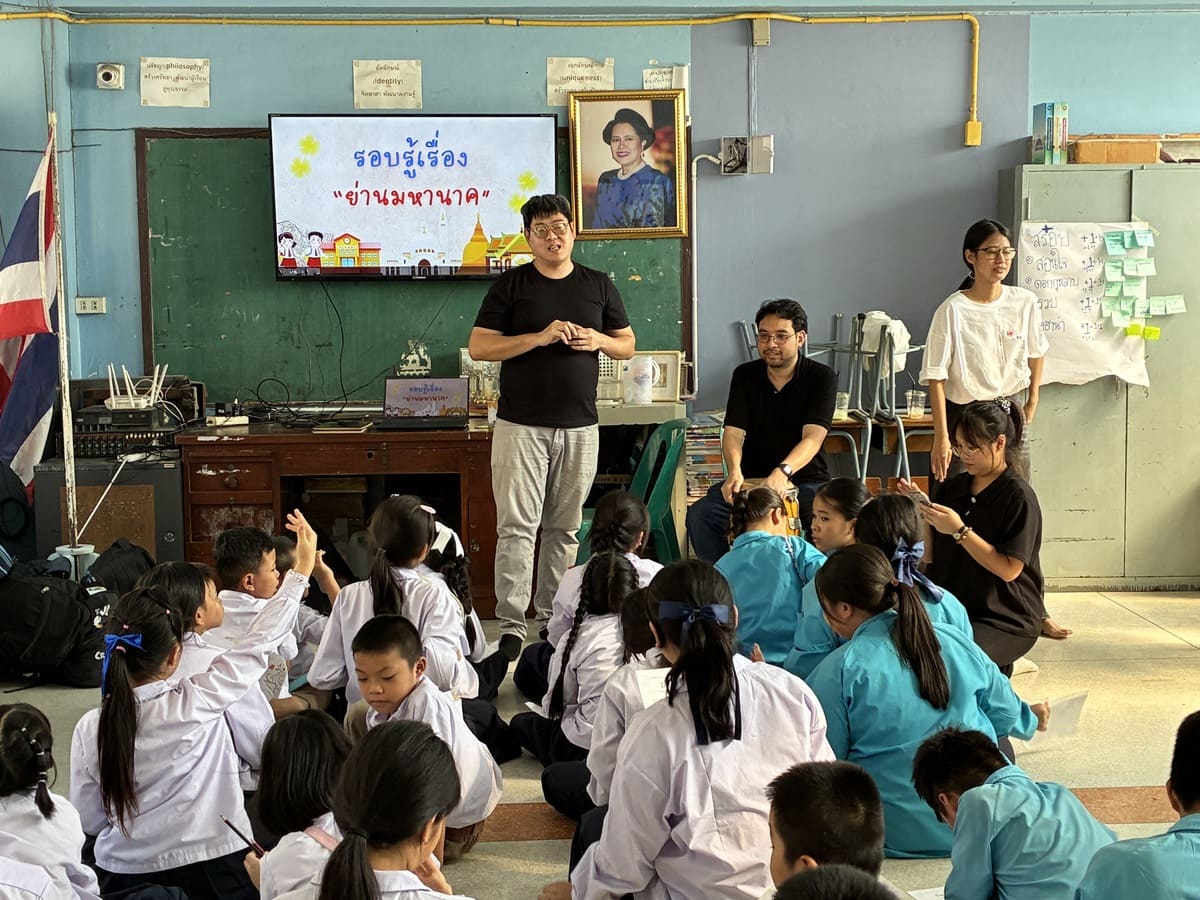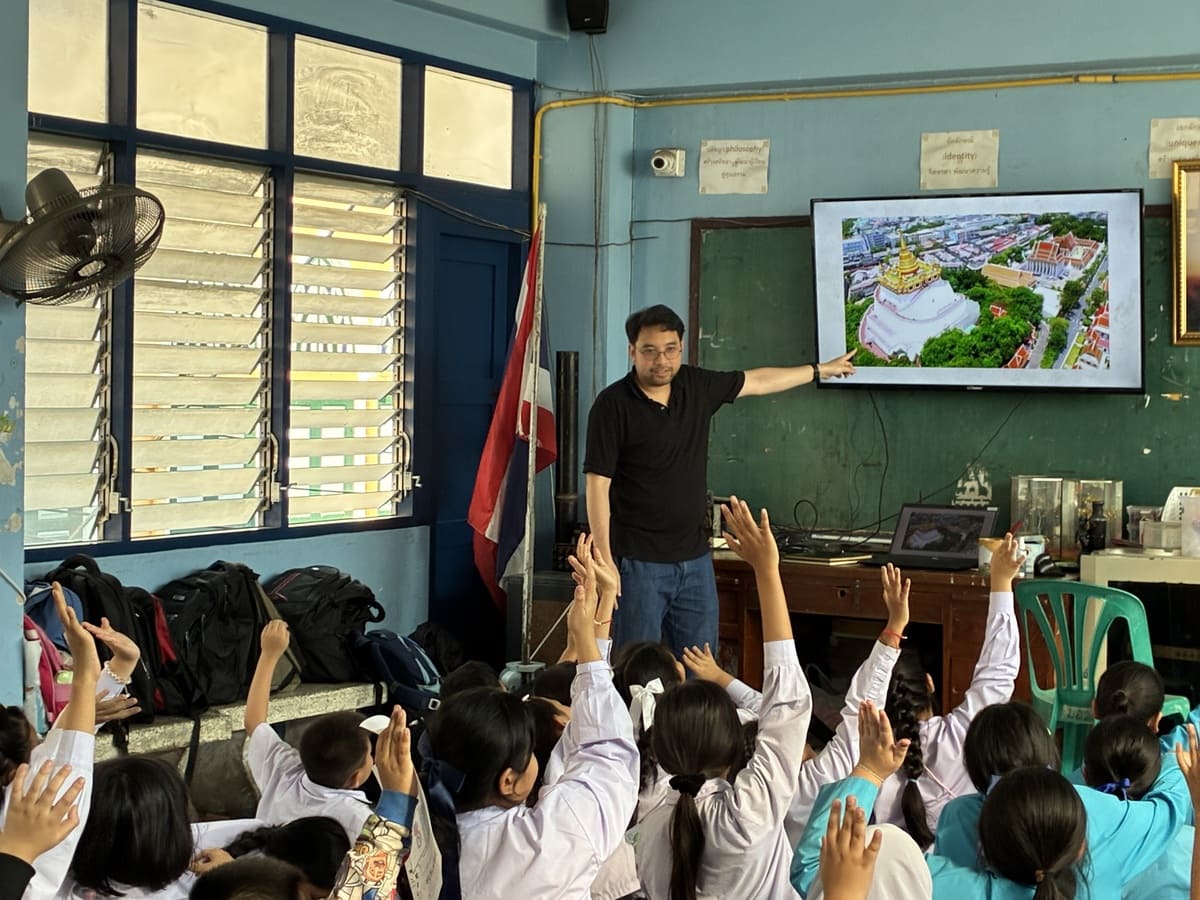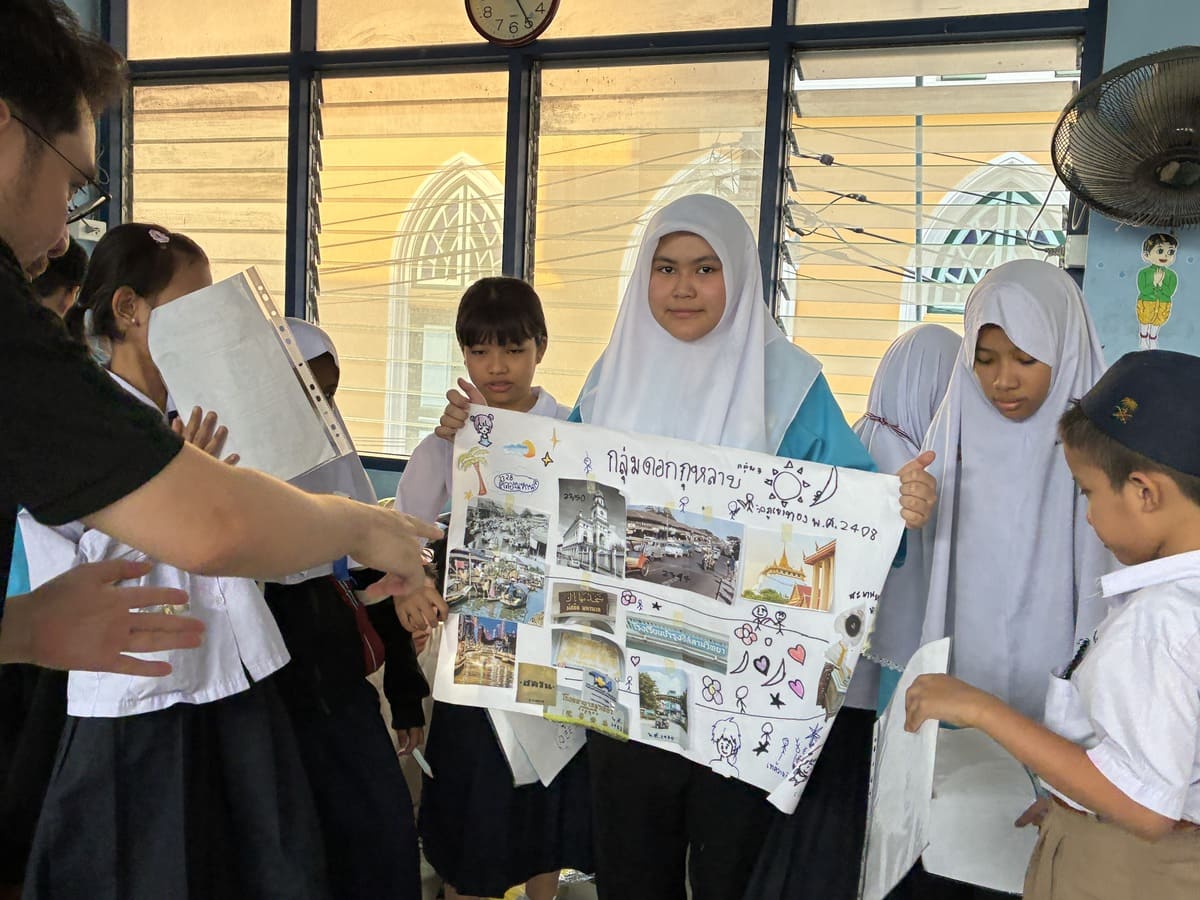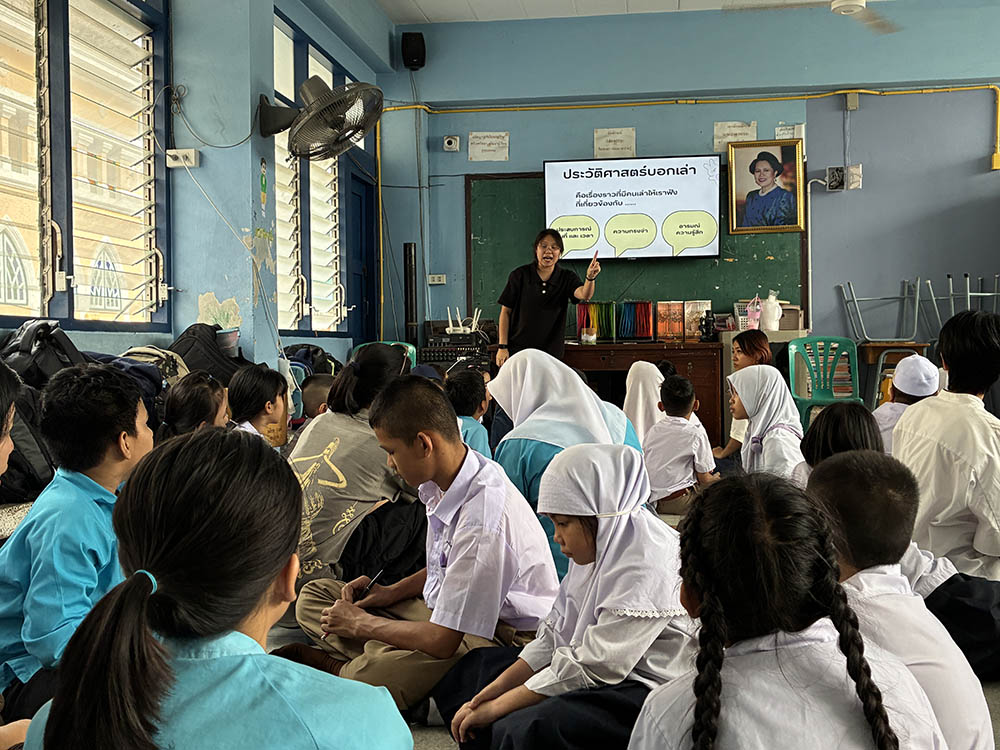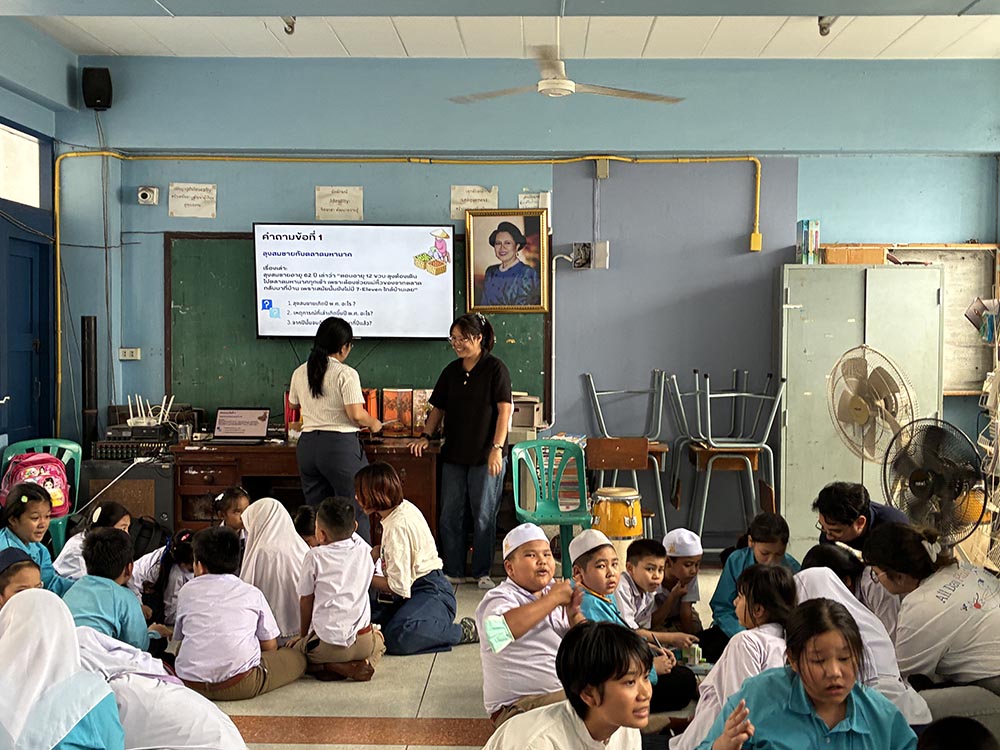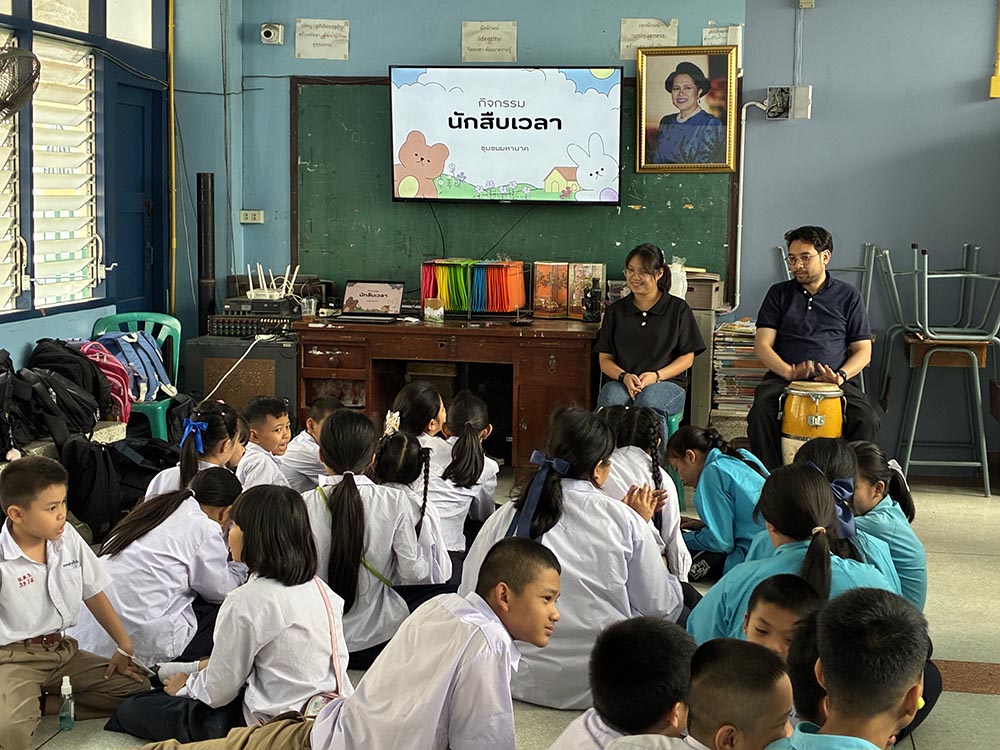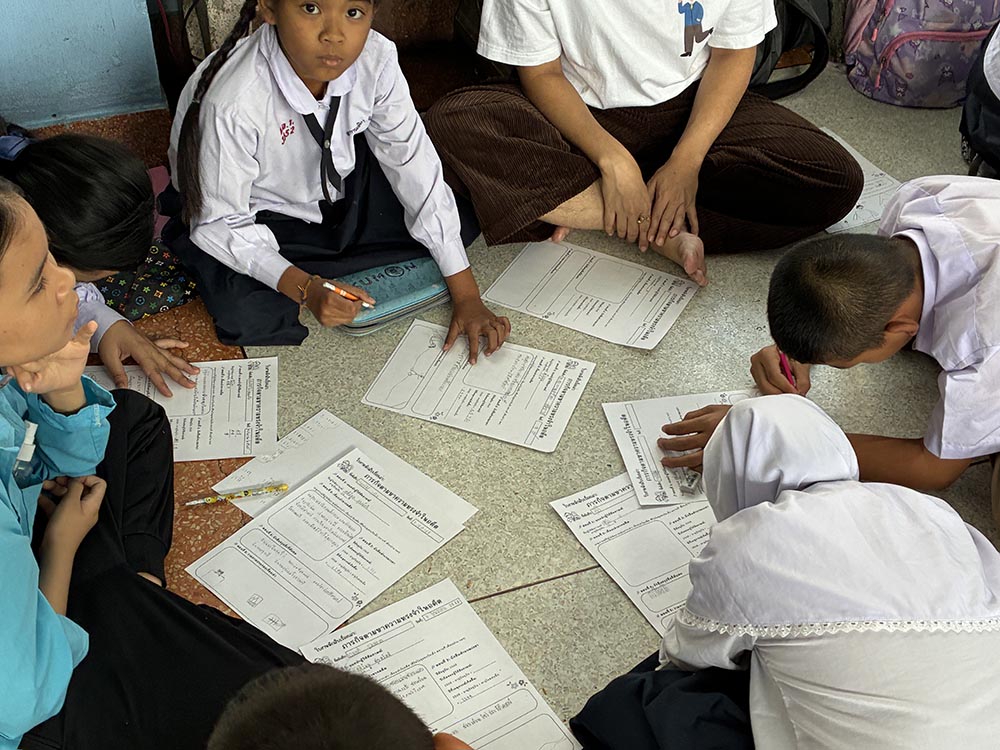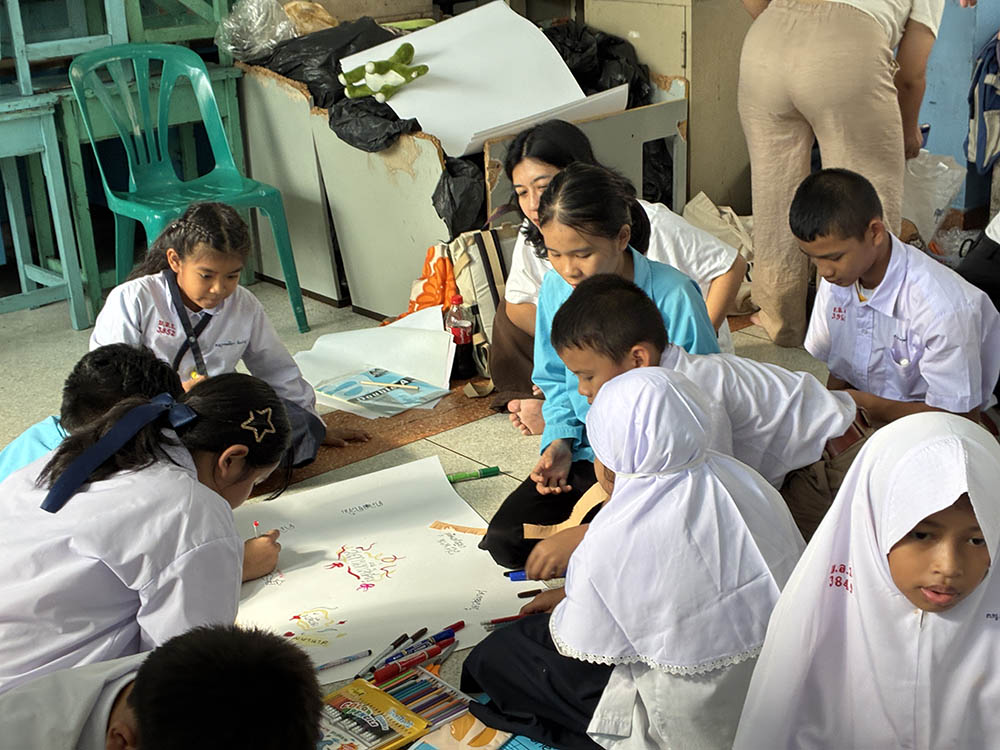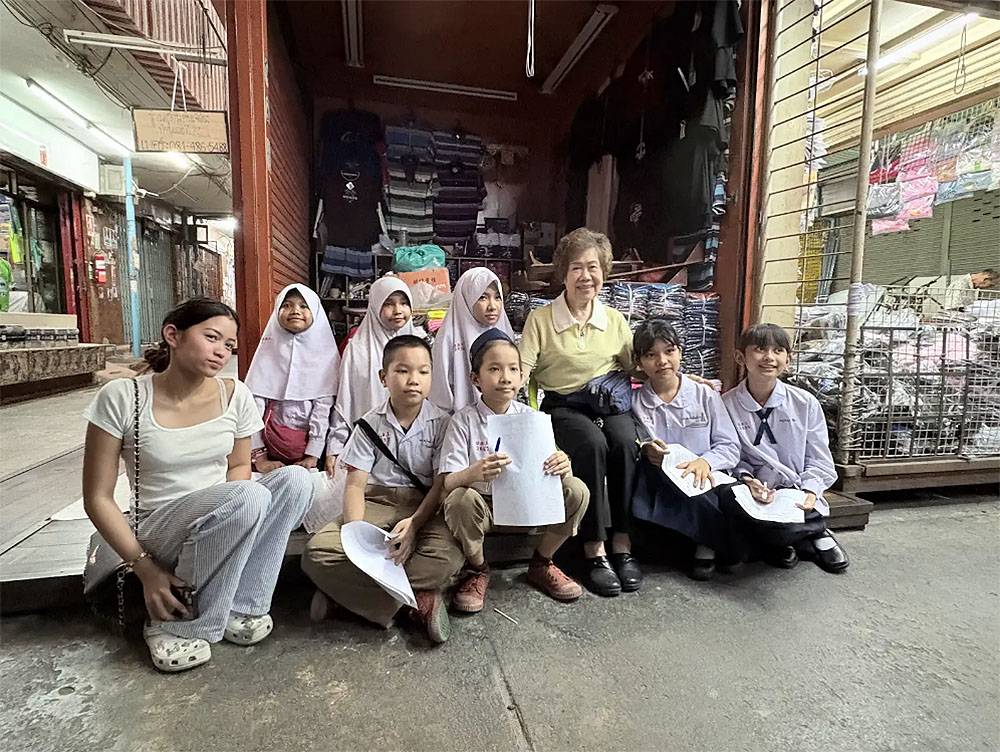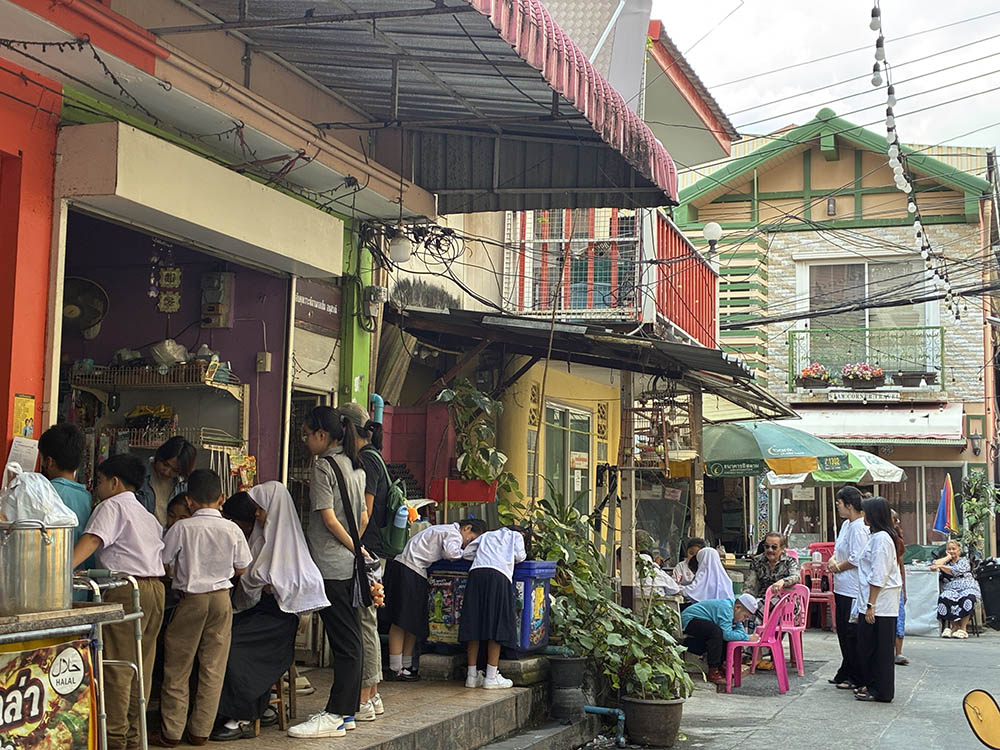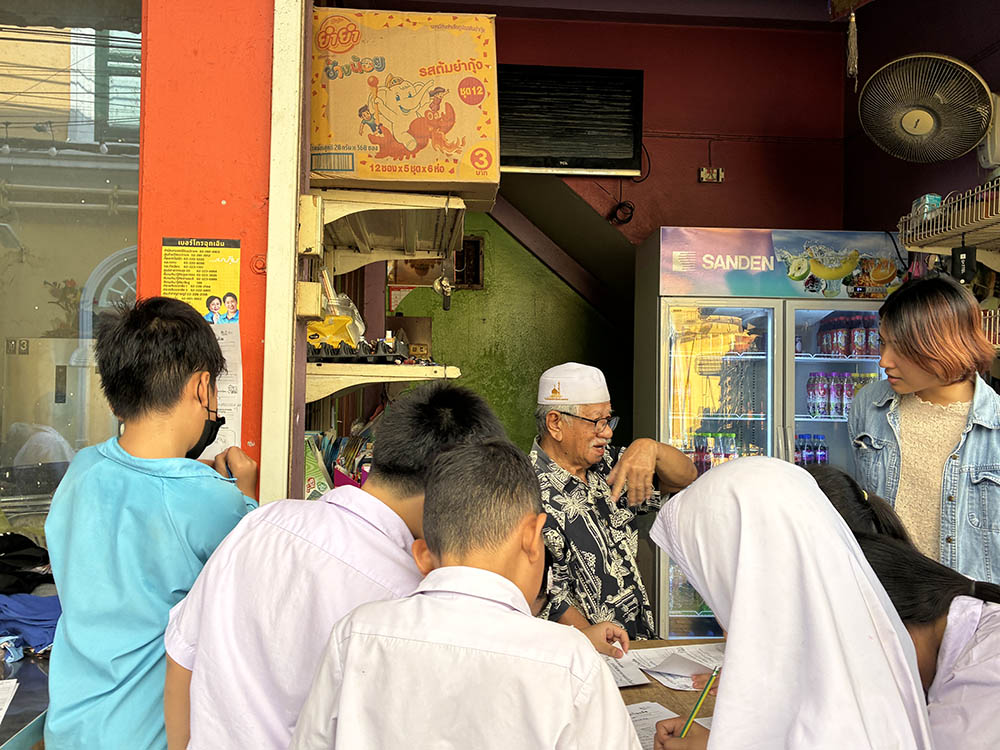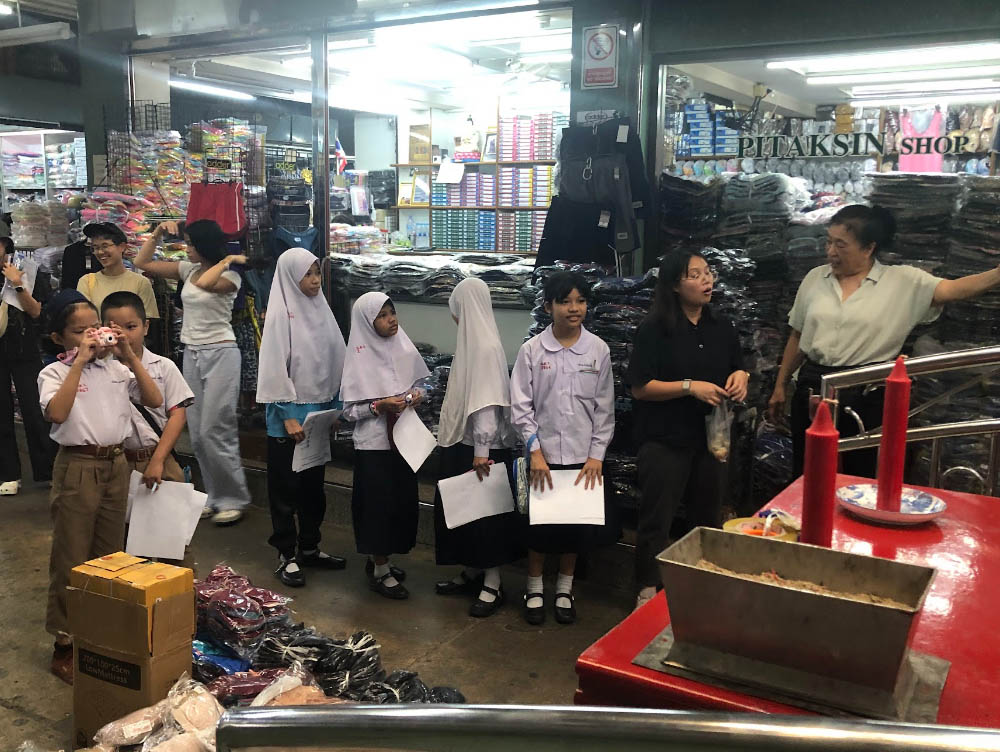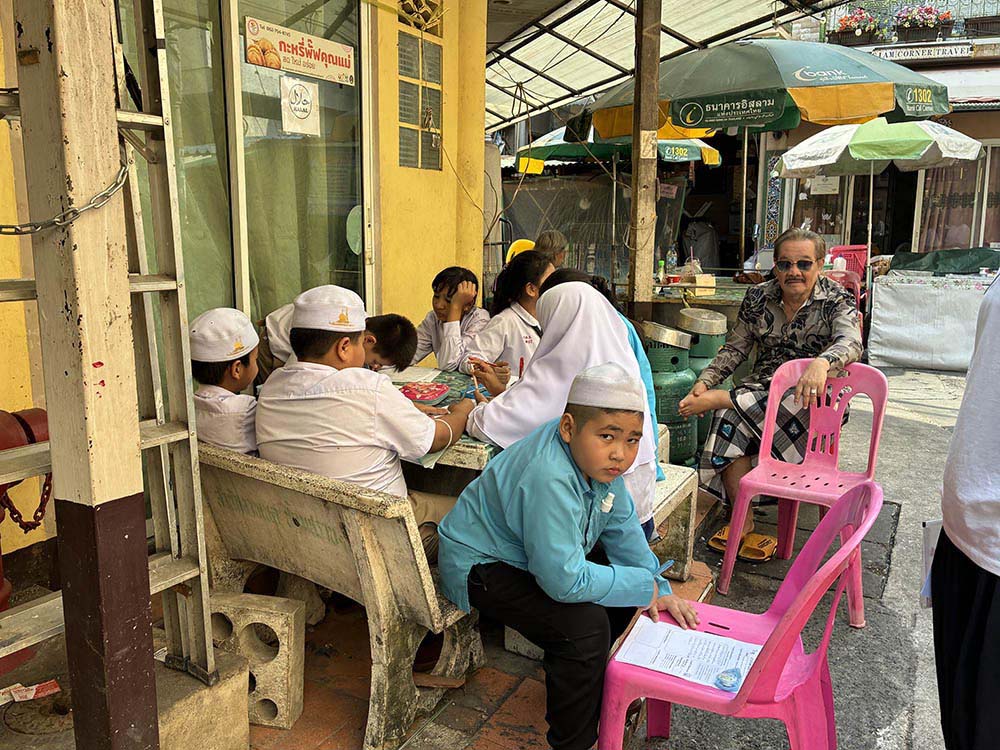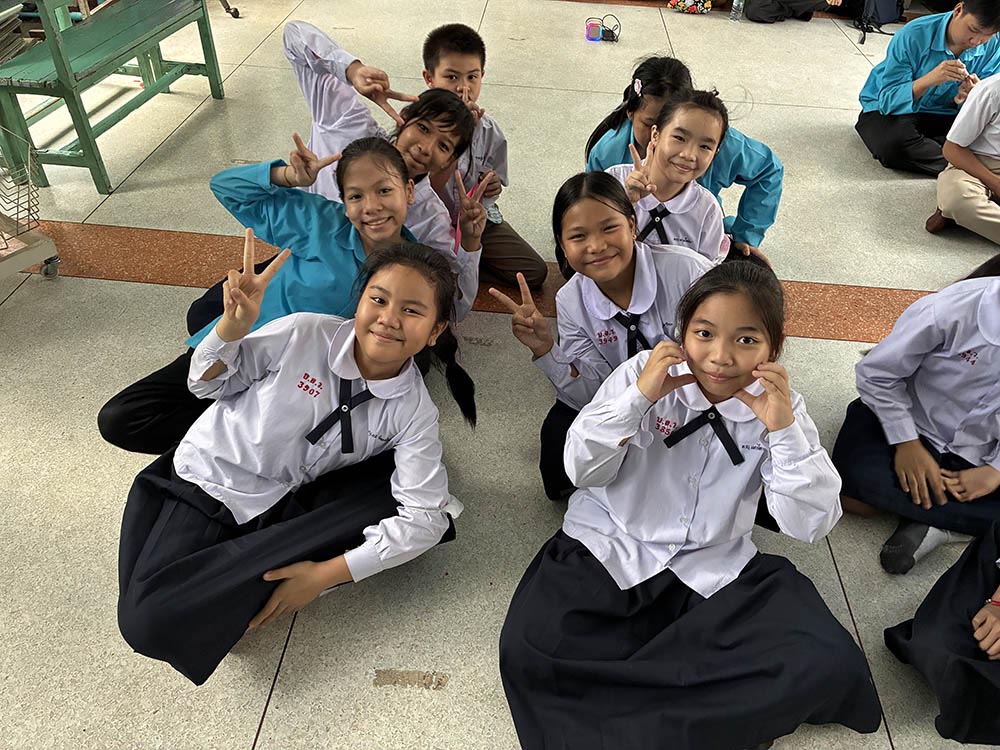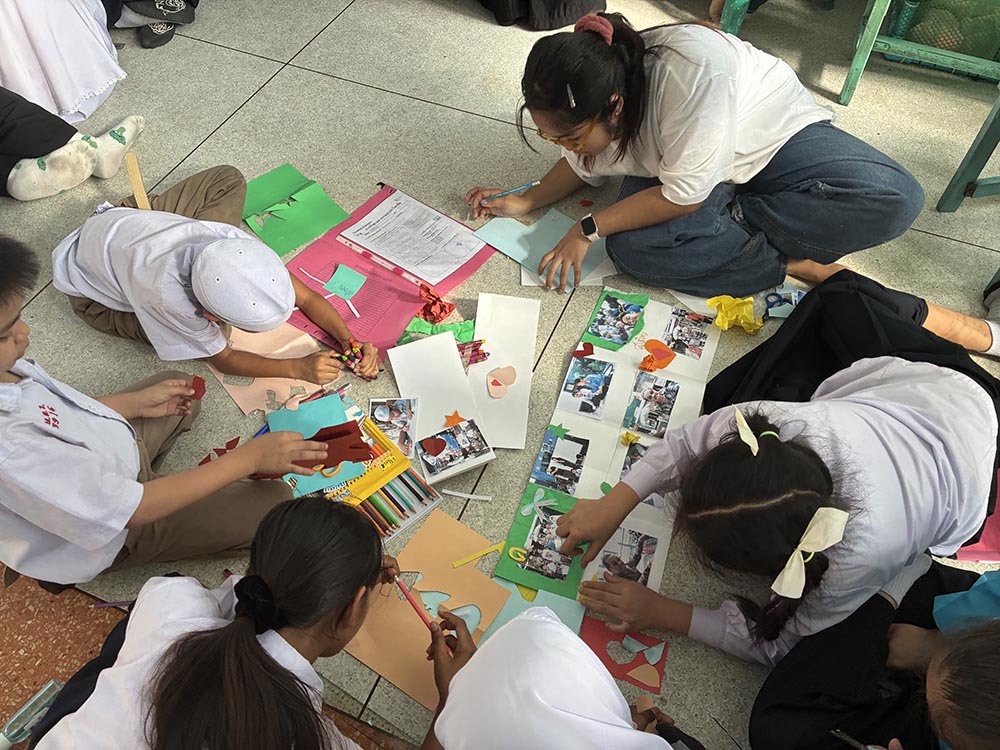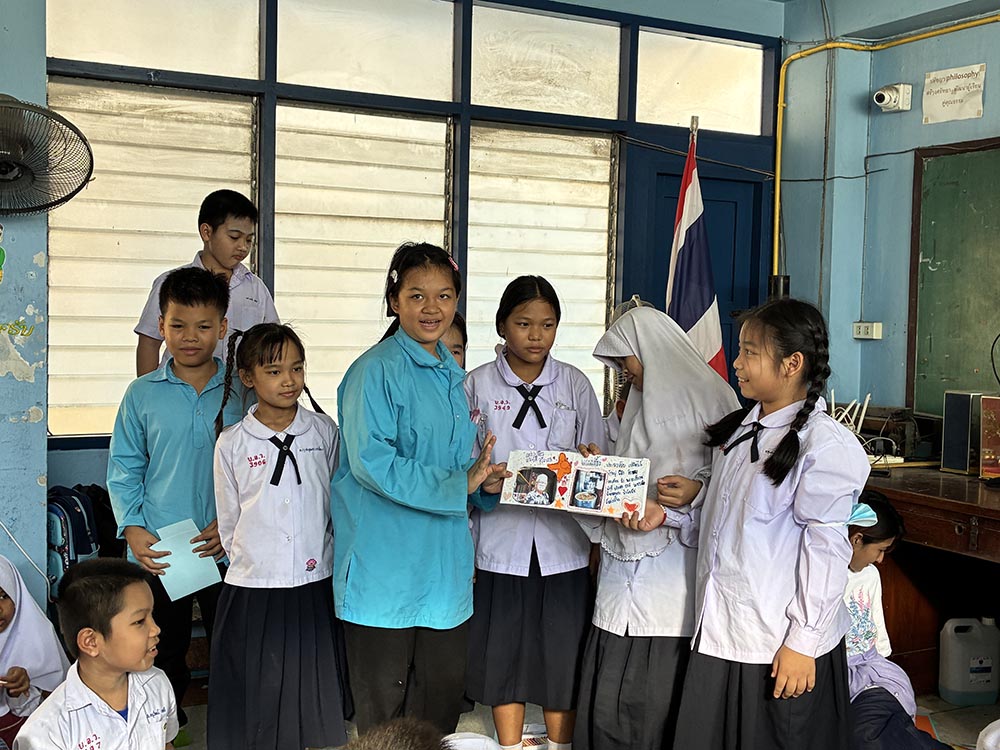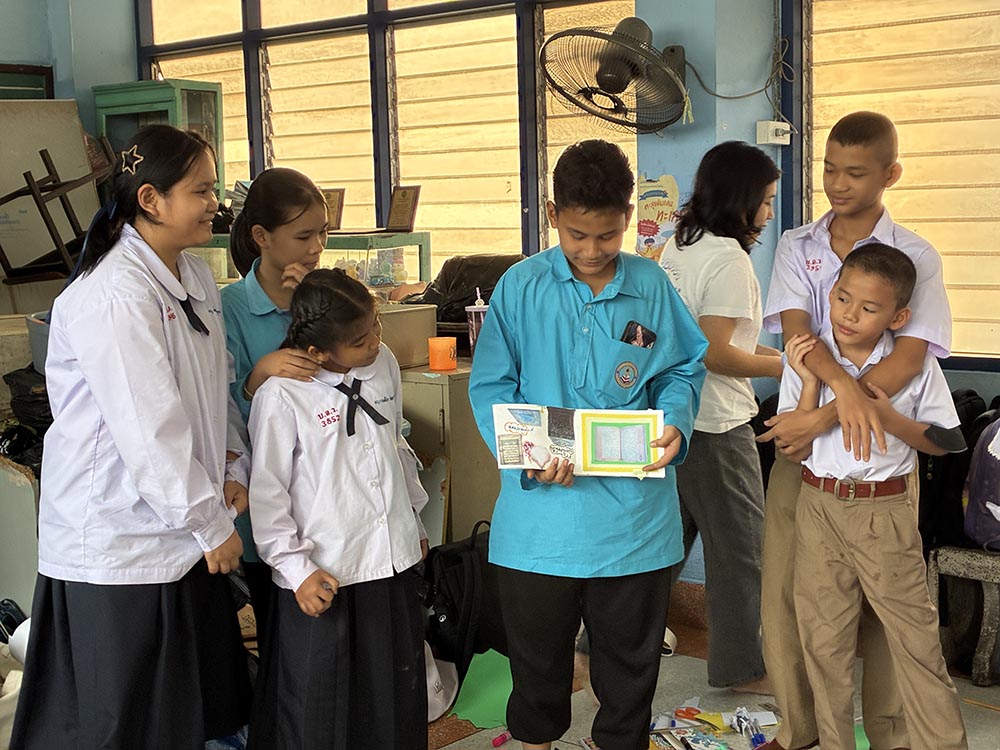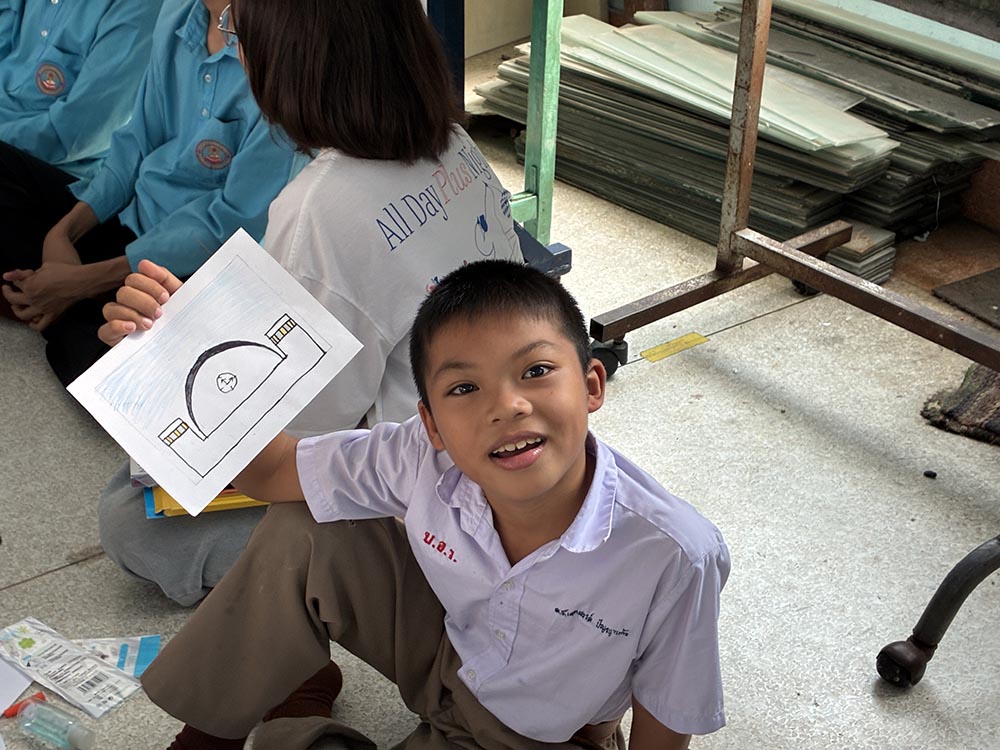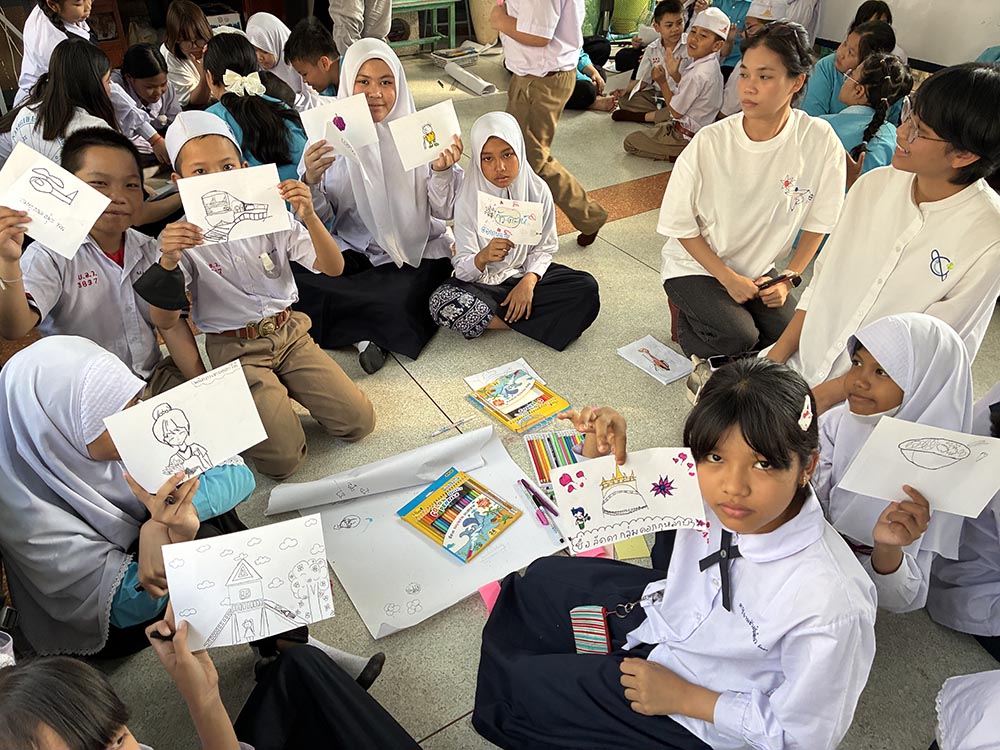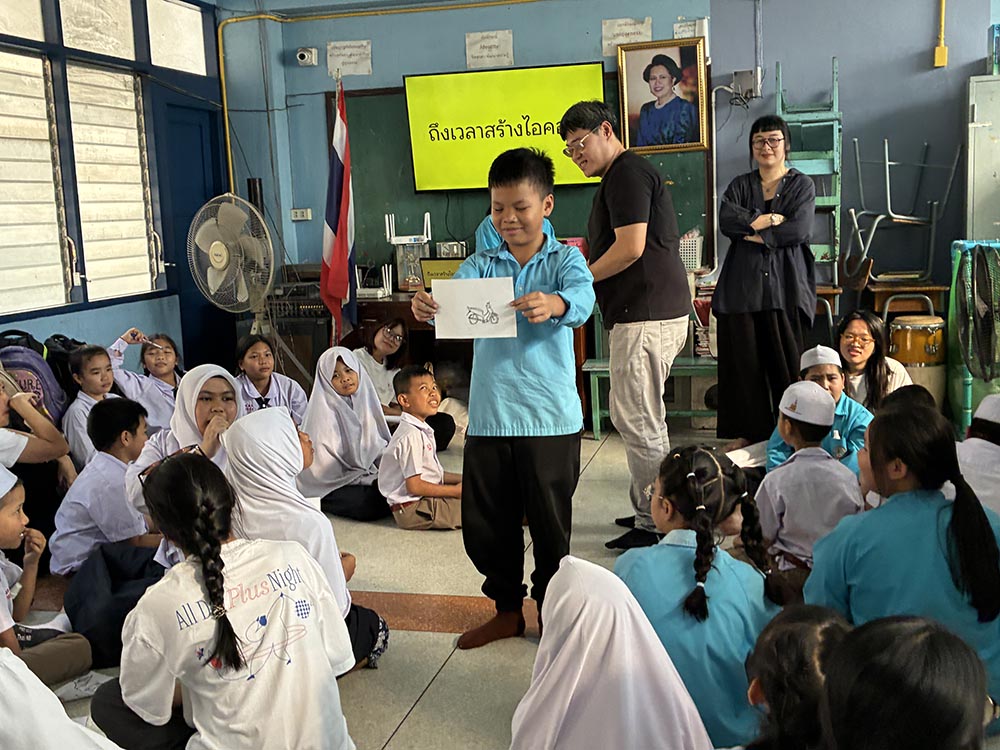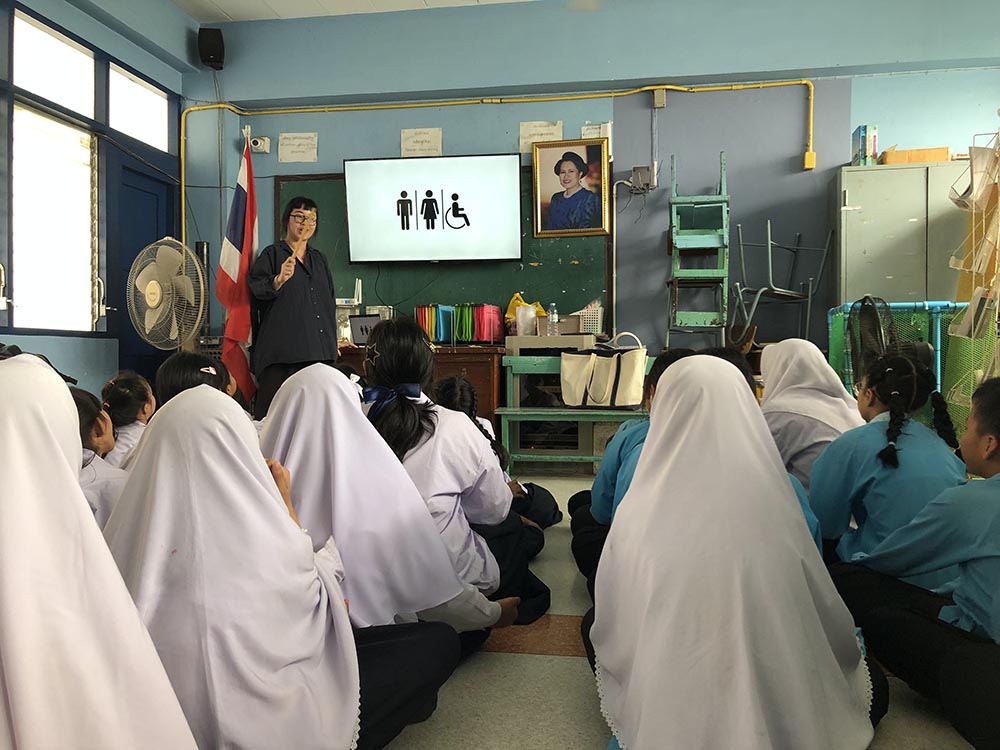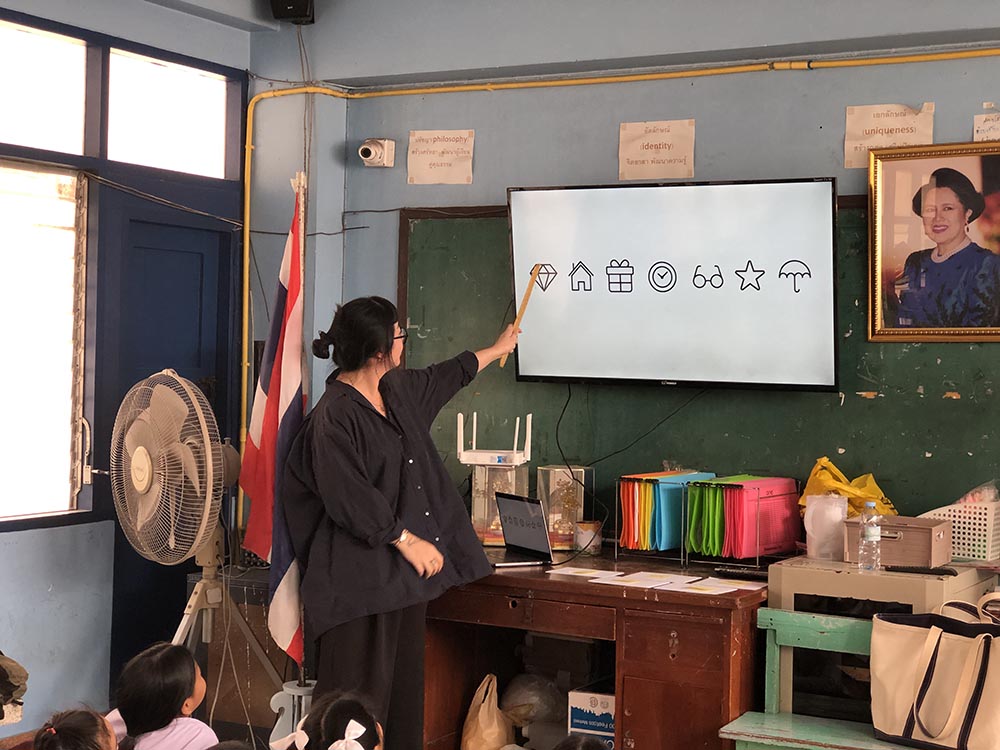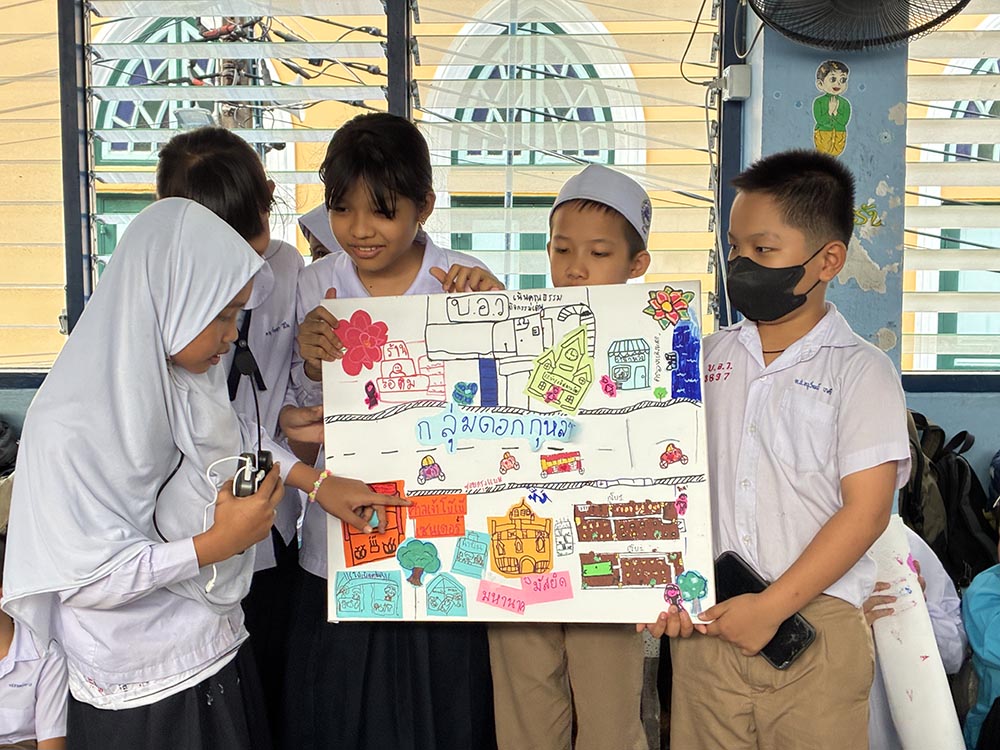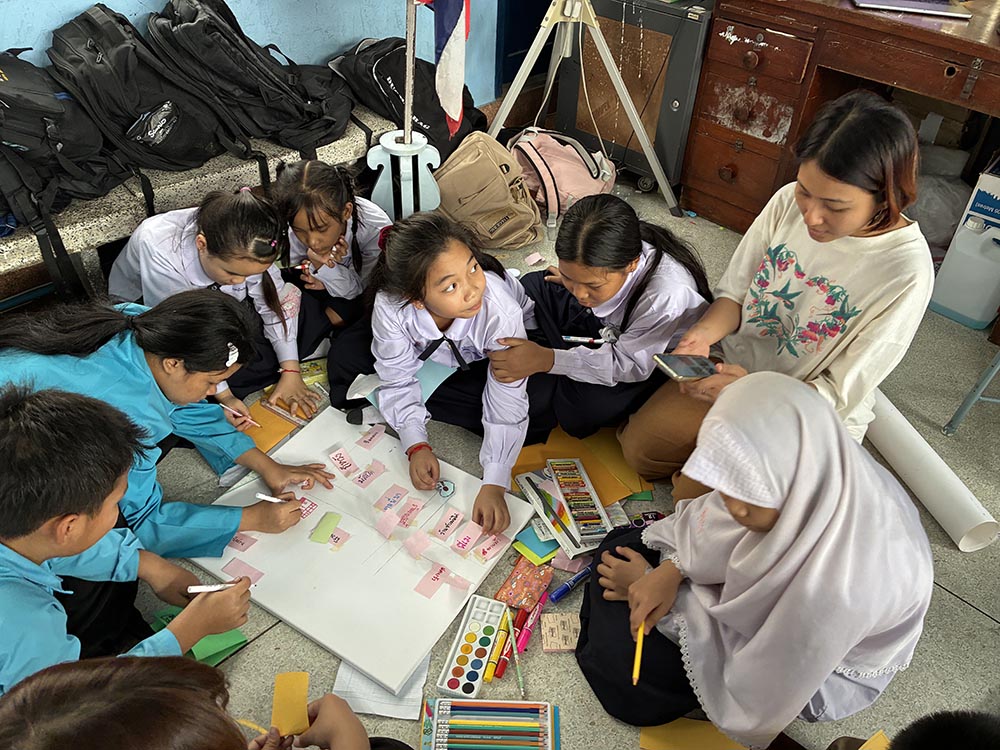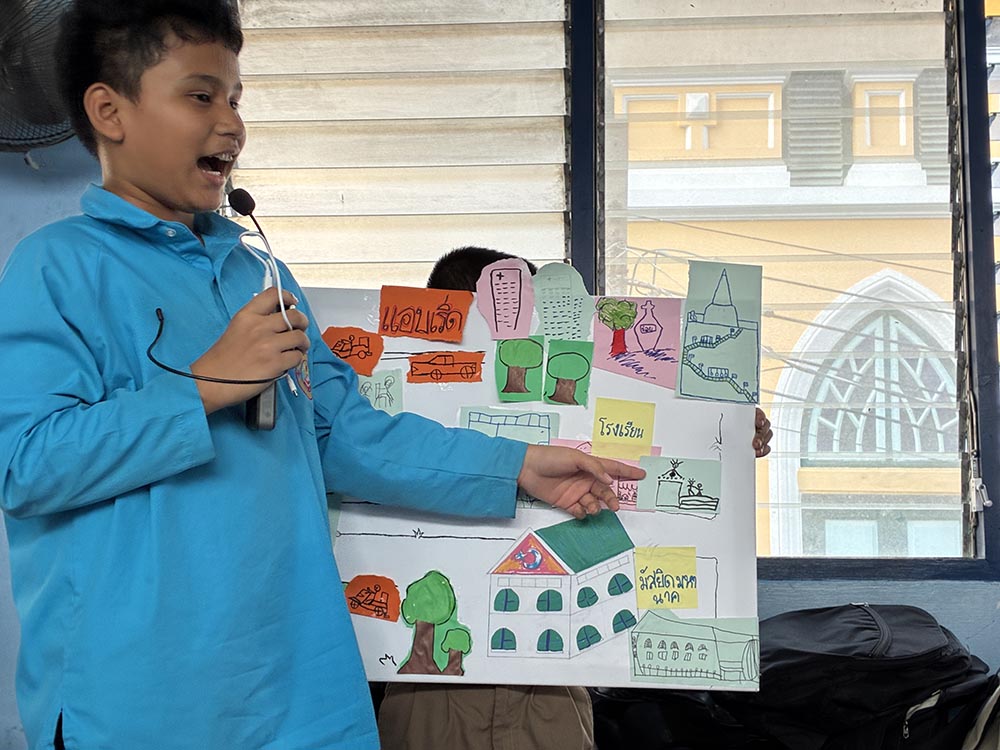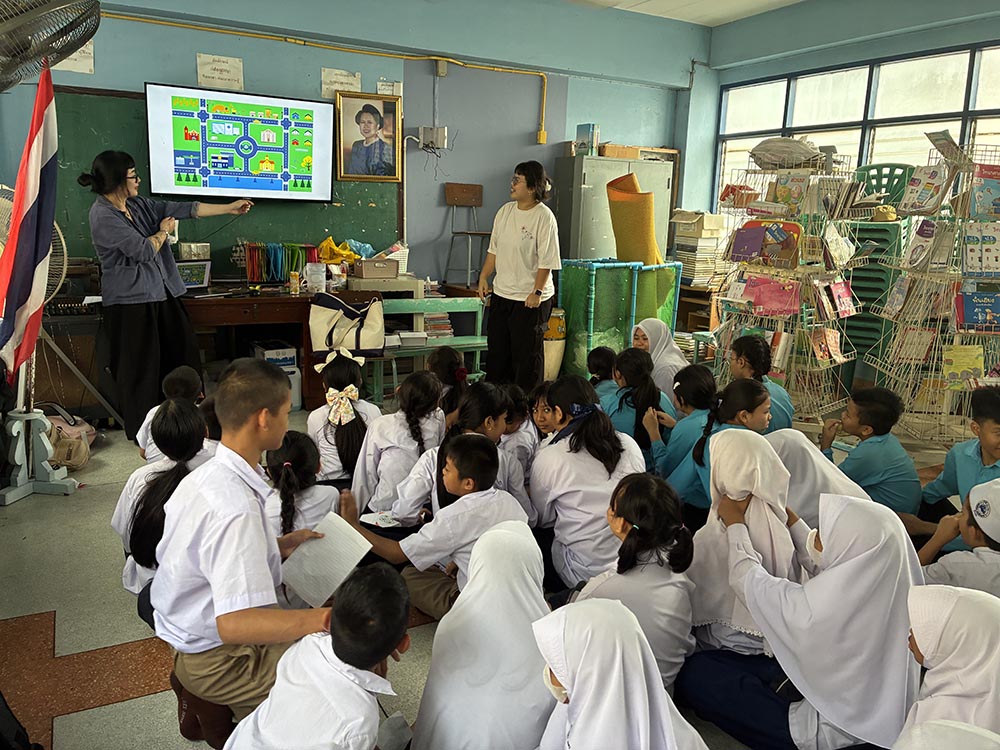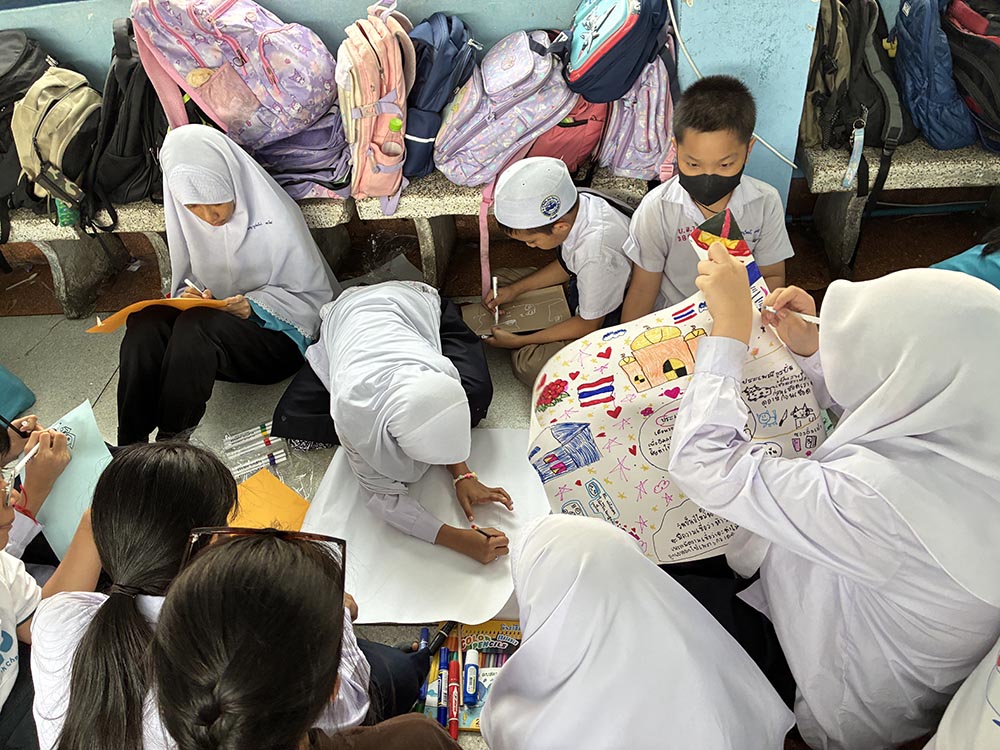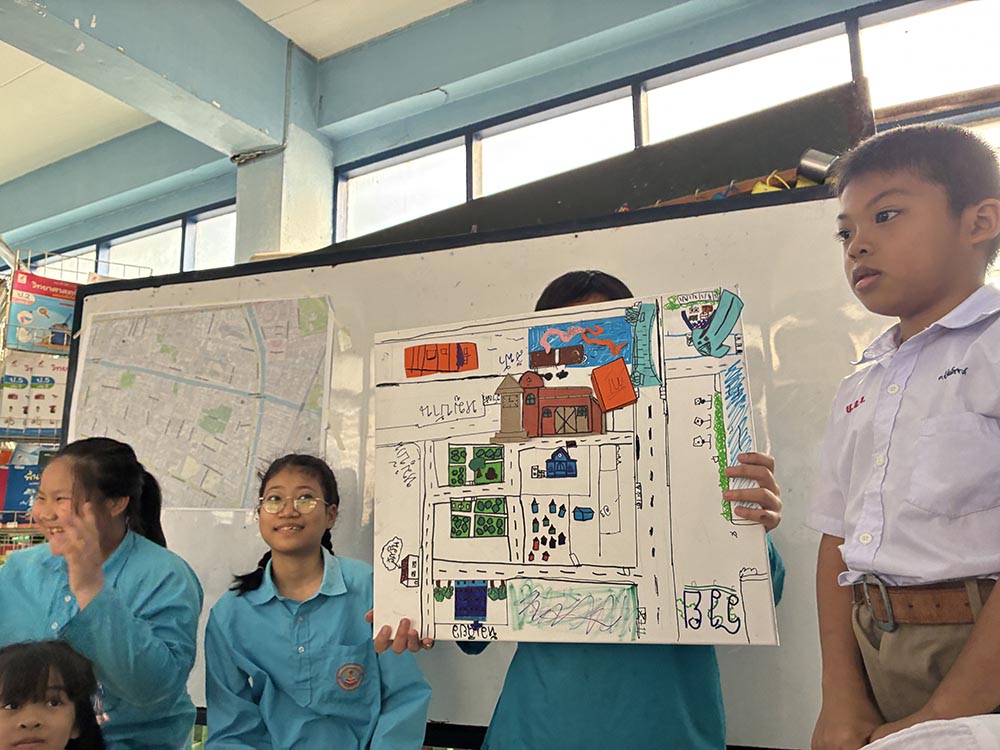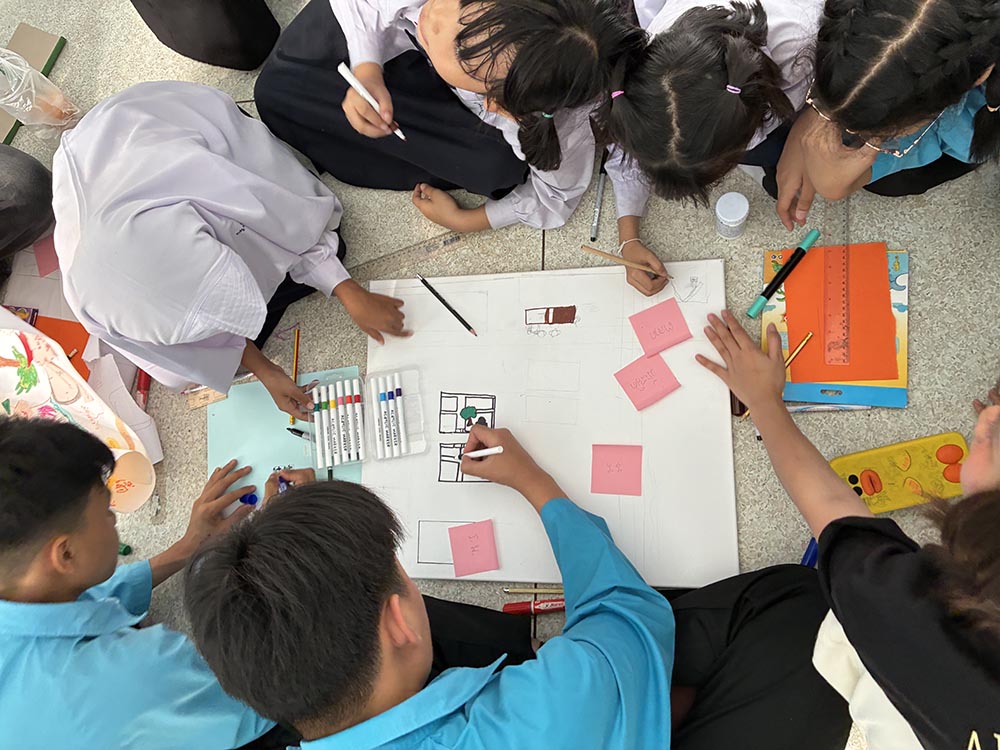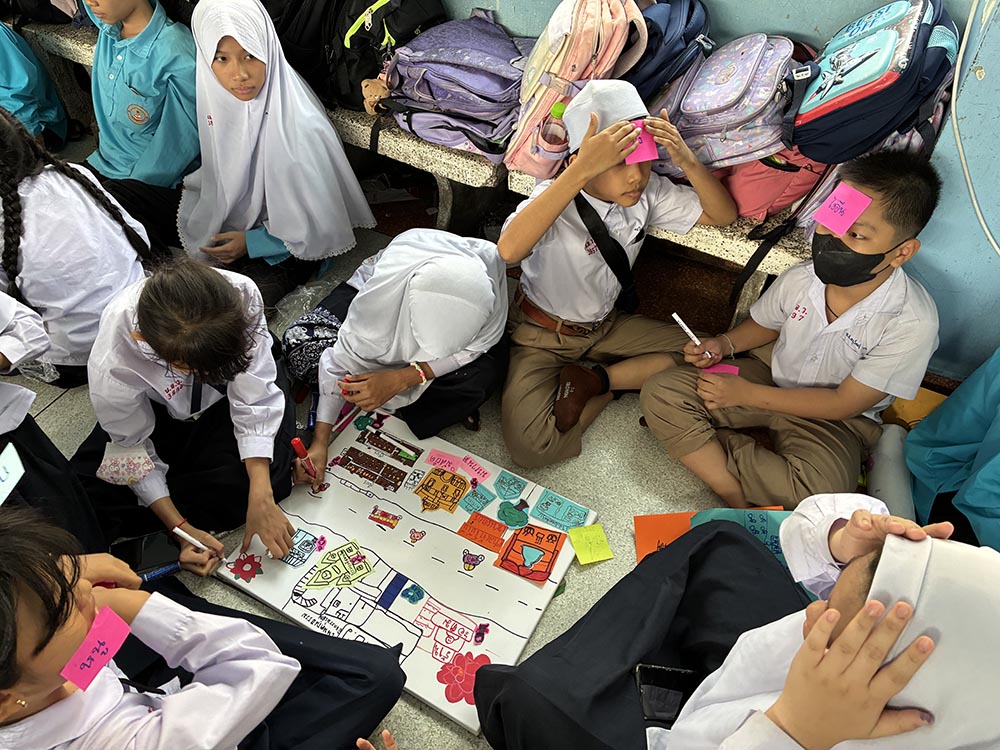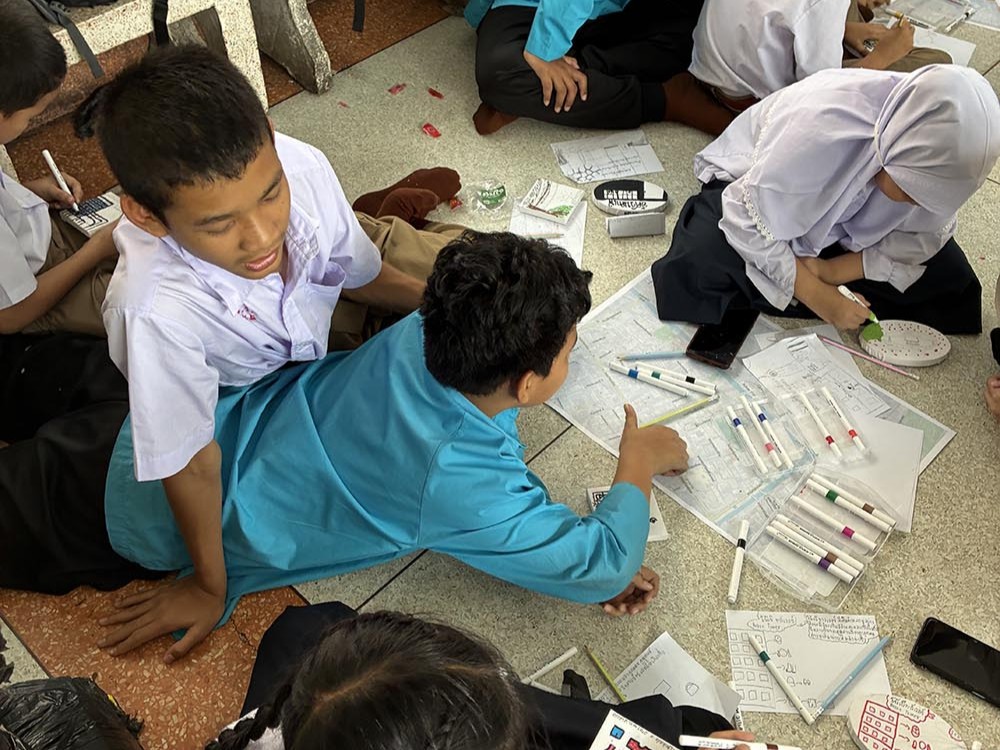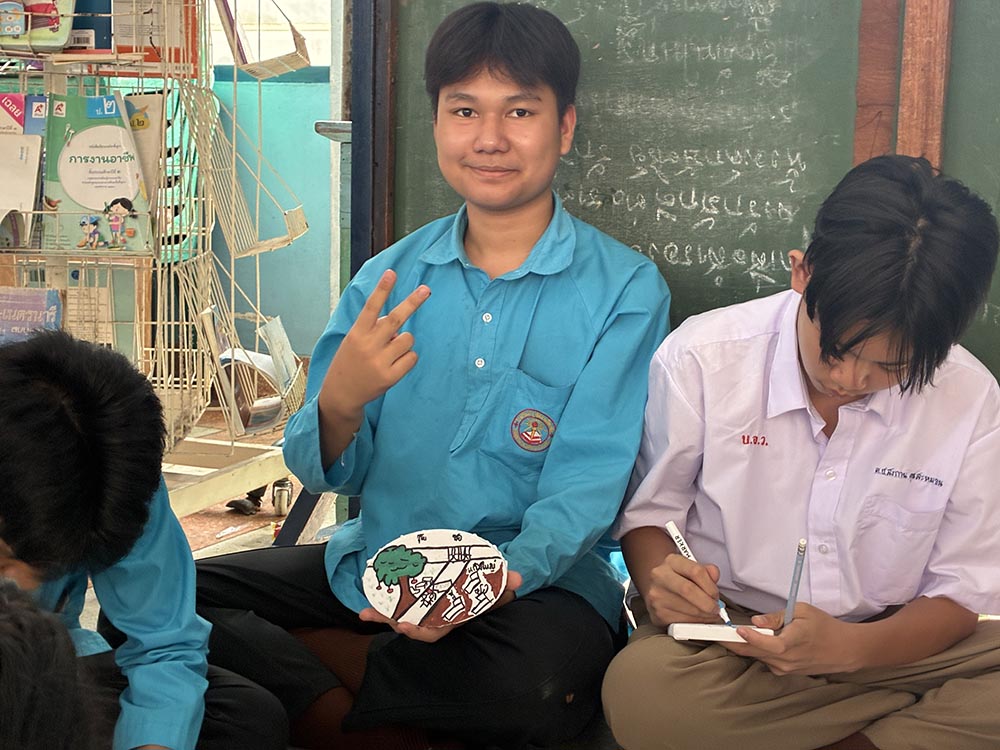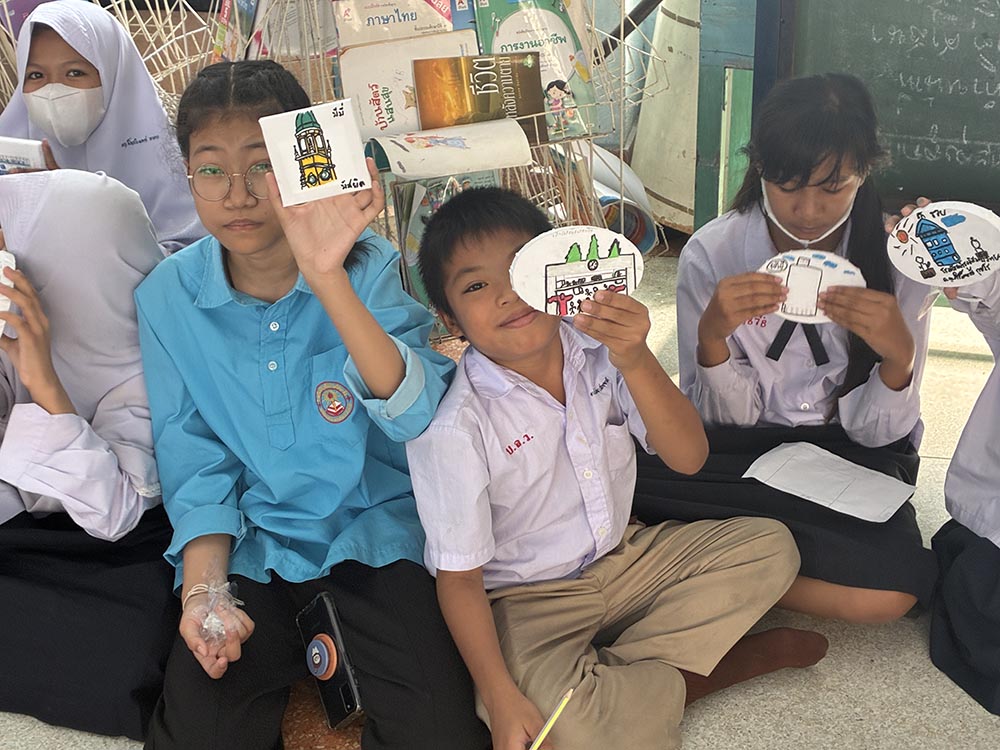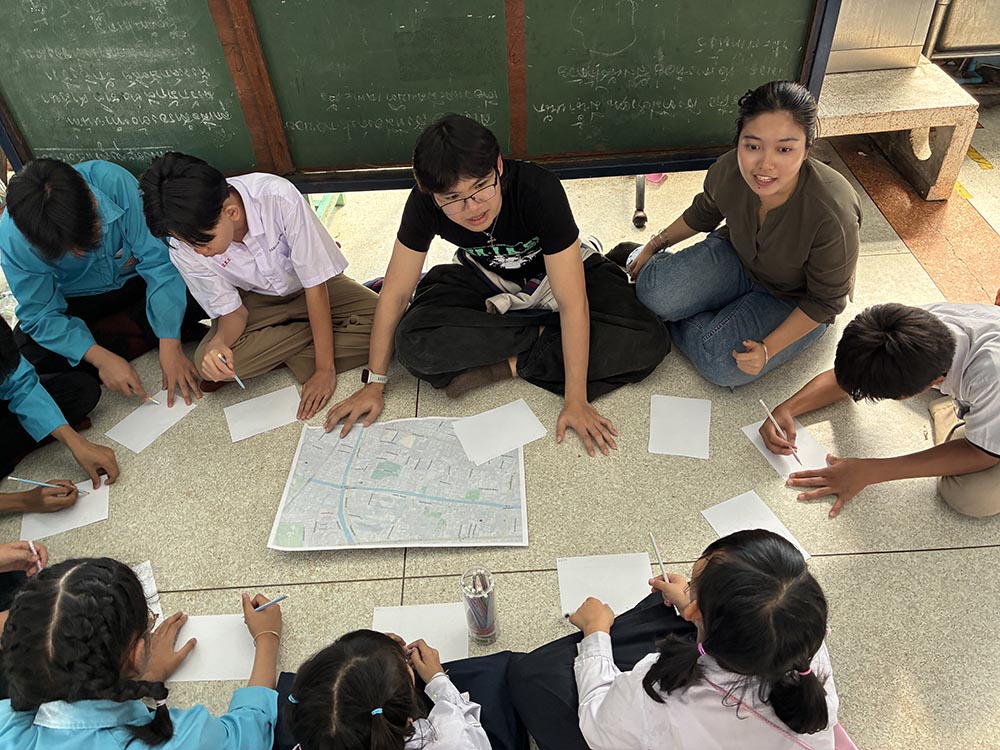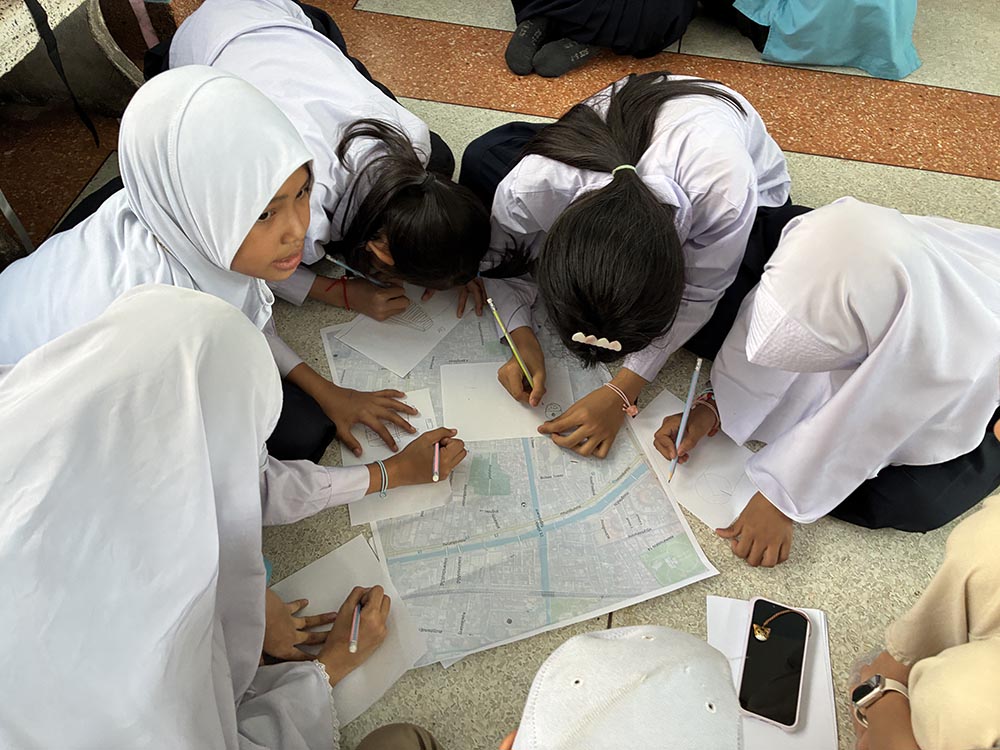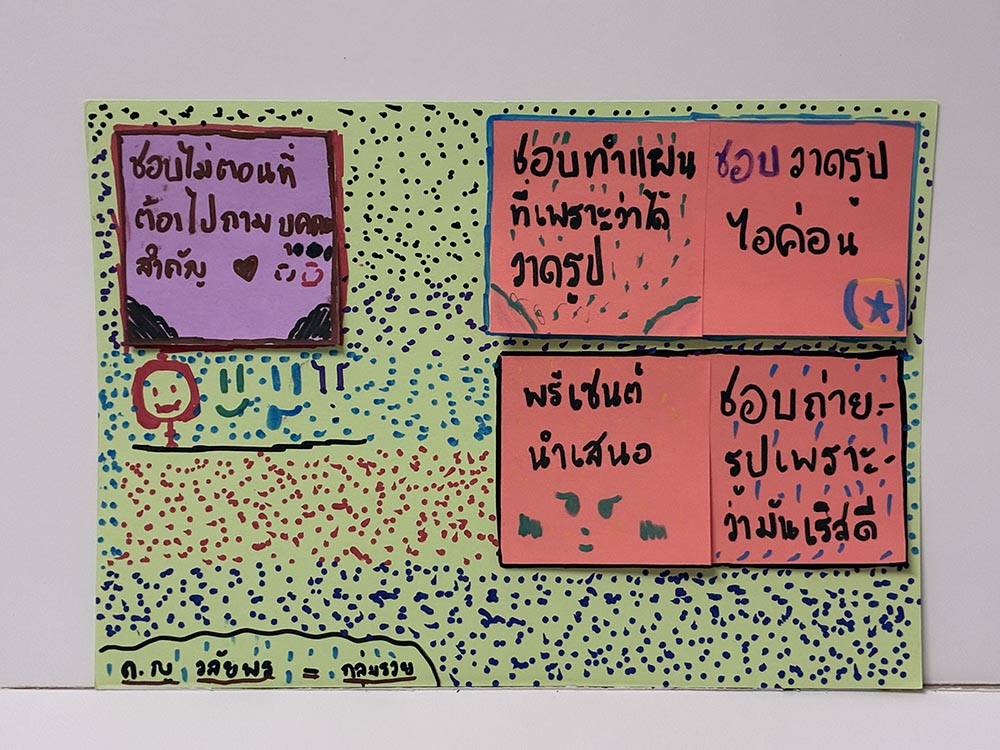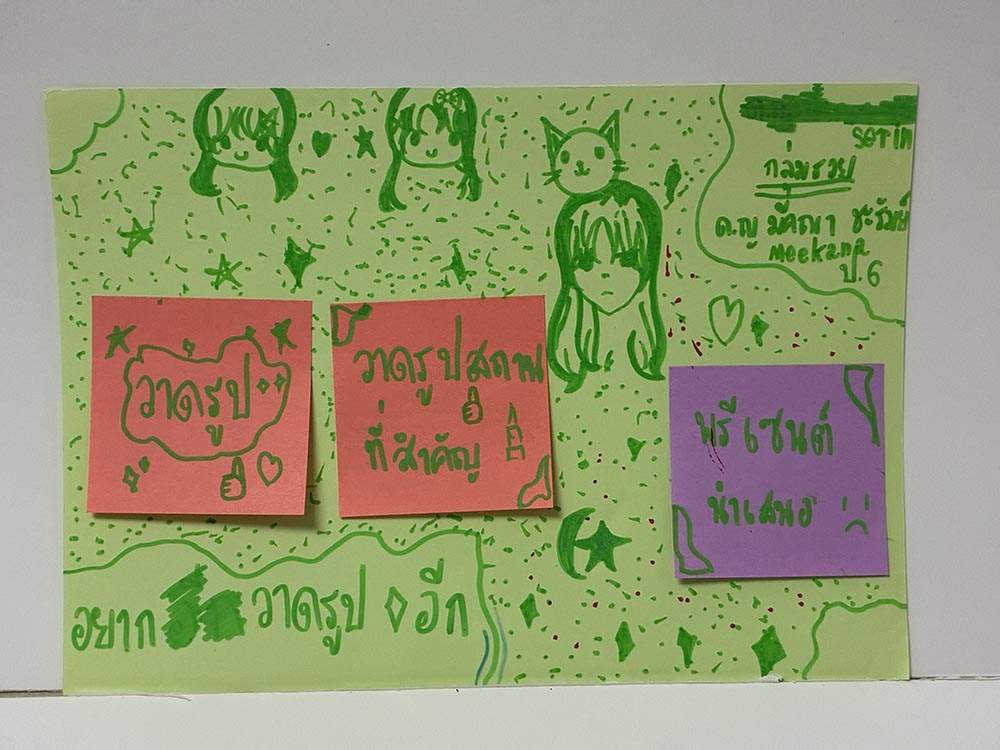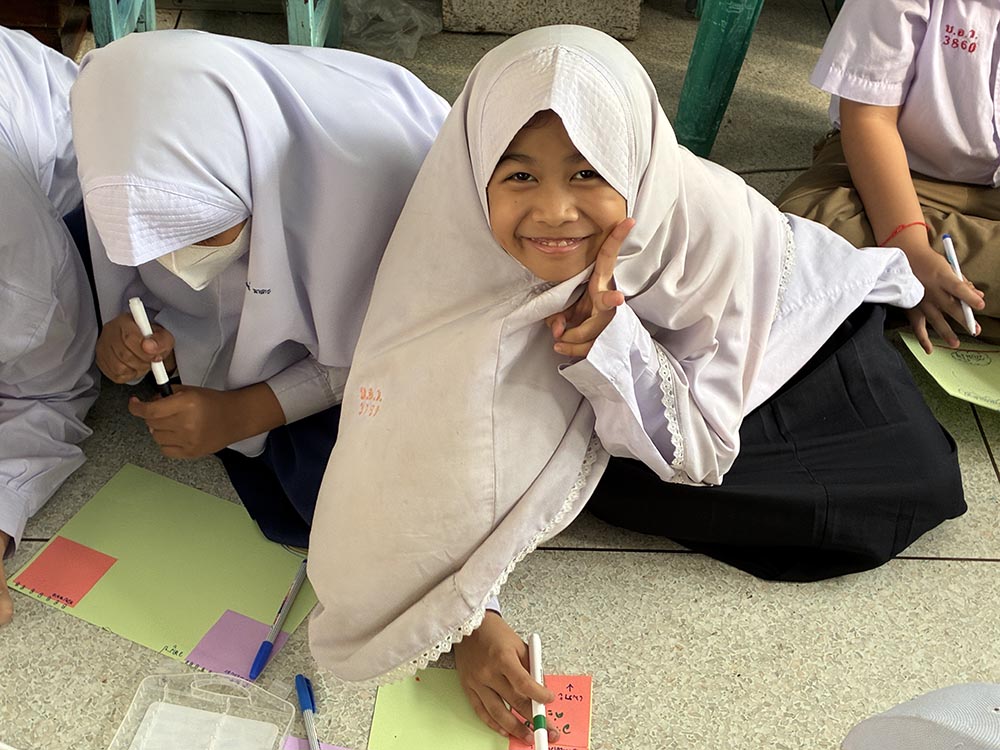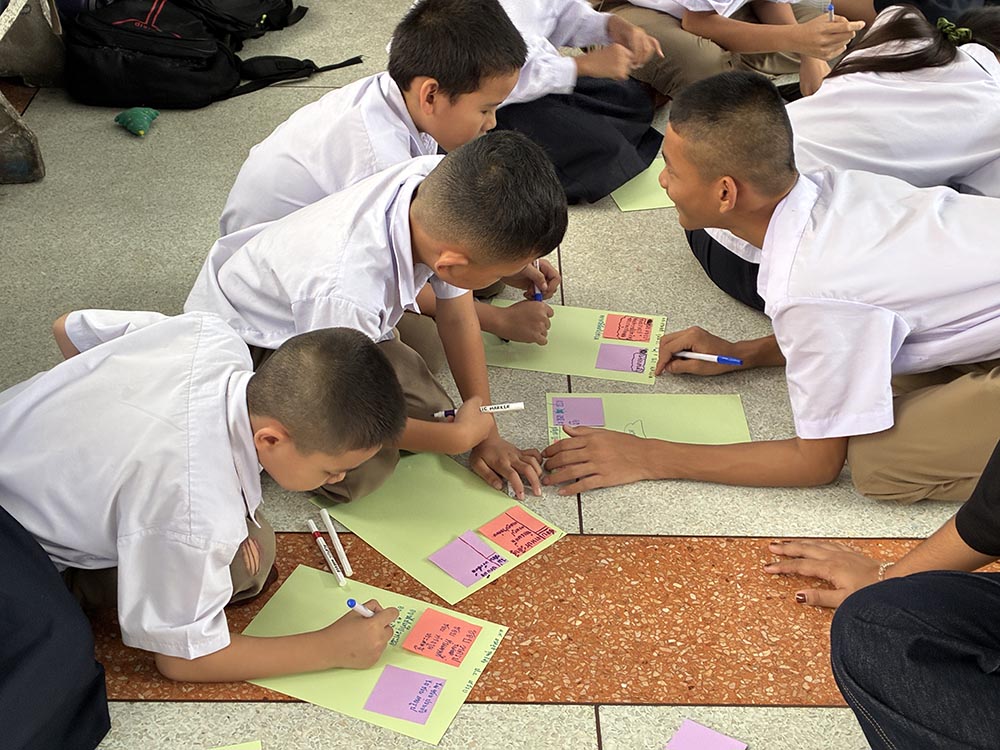
Working with around 60 students from Bamrung Islam School, the program runs weekly as an open space for curiosity—where students are encouraged to ask questions, think freely, and find their voice. Over 12 weeks, they step into their neighborhood—walking through alleys, along canals and bridges, observing people, shops, and everyday life. They learn directly from the community, discovering local food, culture, and hidden stories through conversations with residents and elders.
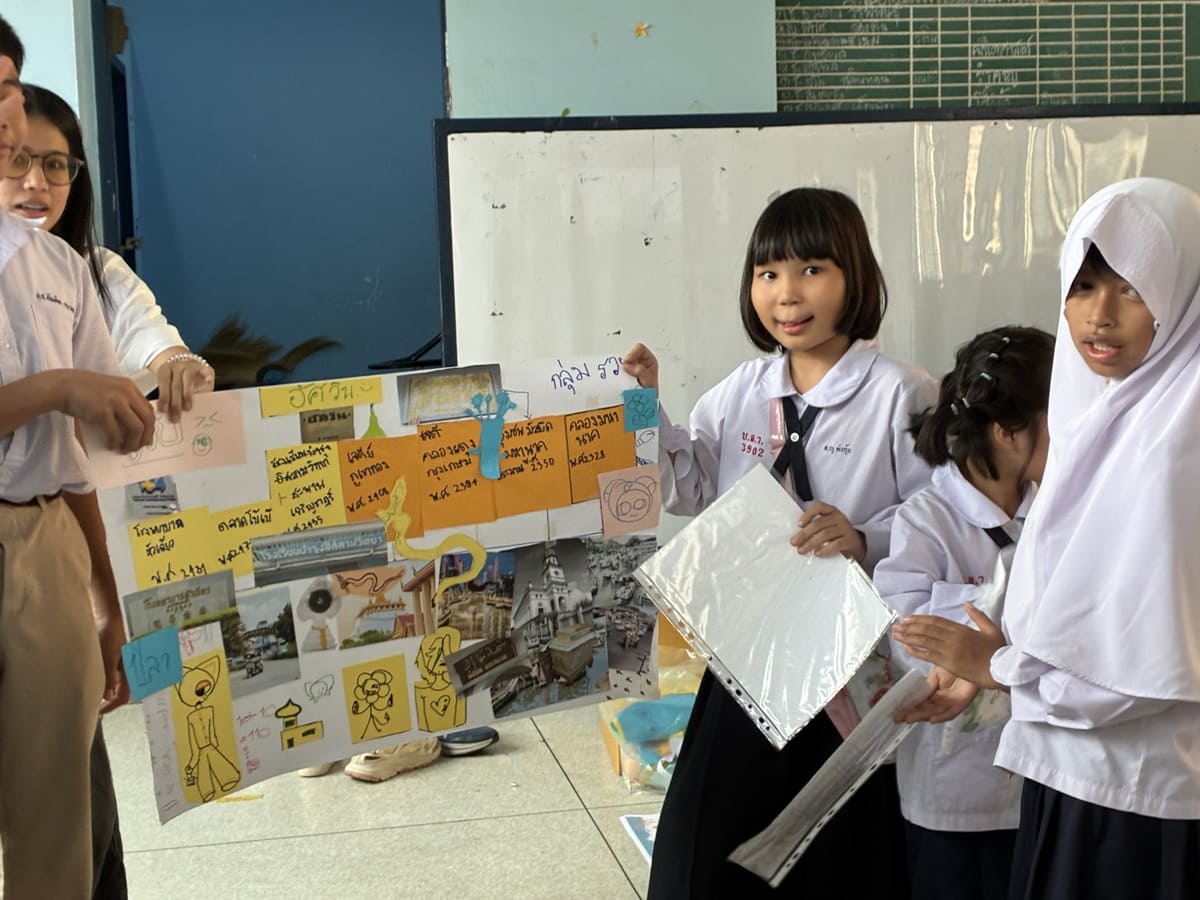
Through mapping, photography, collage, and storytelling, students turn these experiences into creative work while building skills in observation, communication, and visual storytelling. The program is a space to experiment, make mistakes, and grow—building confidence and pride in where they come from. It culminates in an exhibition at Asvin, where students share their work with the community, and in the first Mahanak Community Map, published both in print and online.
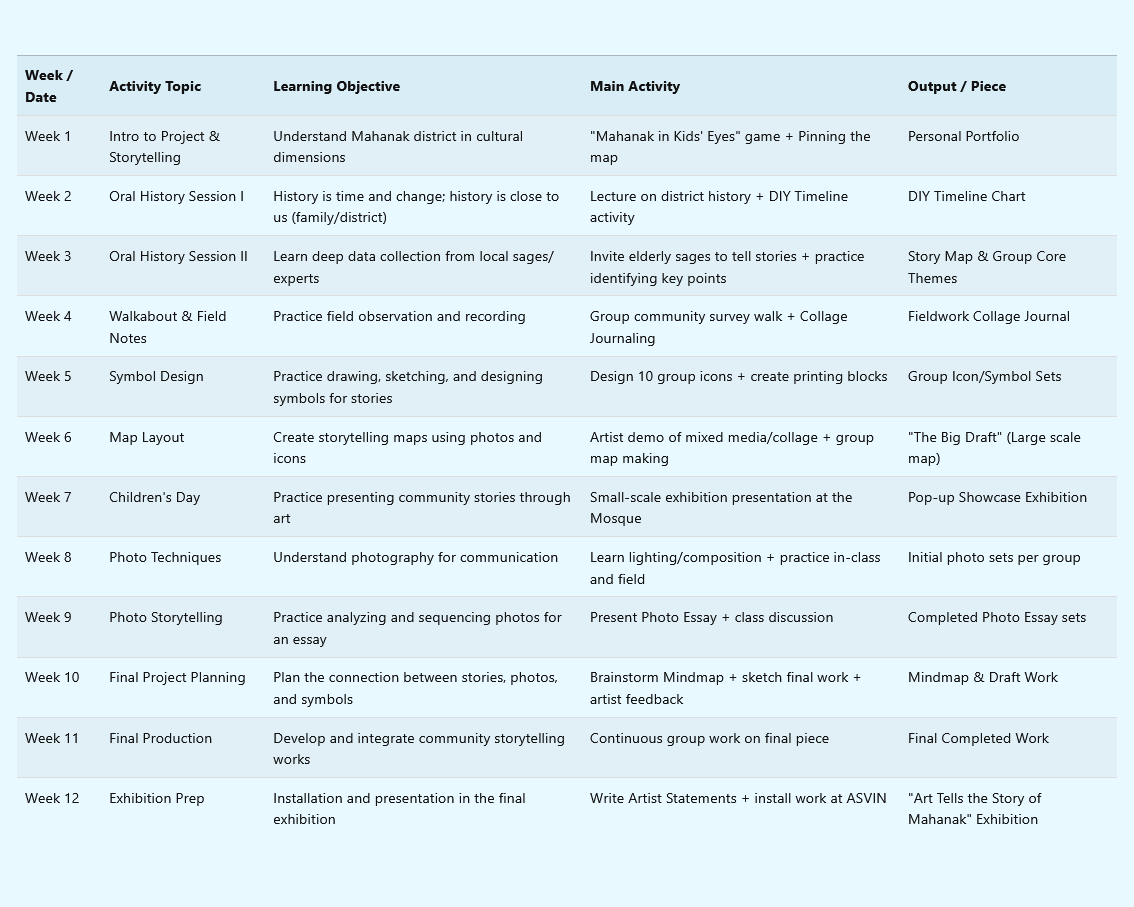
| Week / Date | Activity Topic | Learning Objective | Main Activity | Output / Piece |
|---|---|---|---|---|
| Week 1 | Intro to Project & Storytelling | Understand Mahanak district in cultural dimensions | "Mahanak in Kids' Eyes" game + Pinning the map | Personal Portfolio |
| Week 2 | Oral History Session I | History is time and change; history is close to us (family/district) | Lecture on district history + DIY Timeline activity | DIY Timeline Chart |
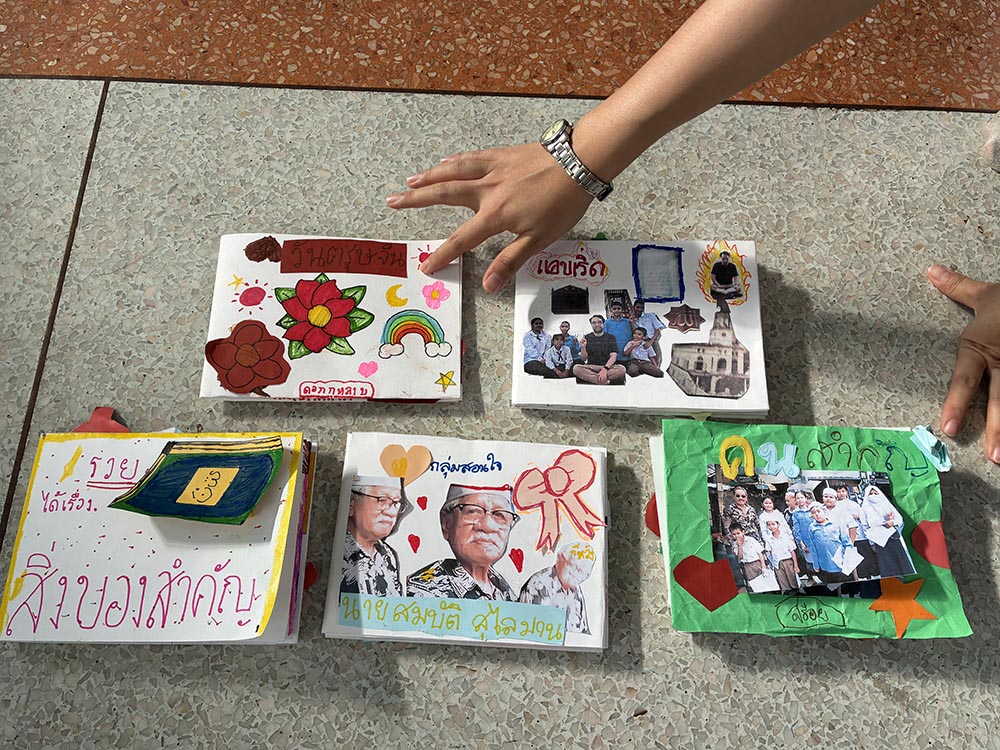
| Week 3 | Oral History Session II | Learn deep data collection from local sages/experts | Invite elderly sages to tell stories + practice identifying key points | Story Map & Group Core Themes |
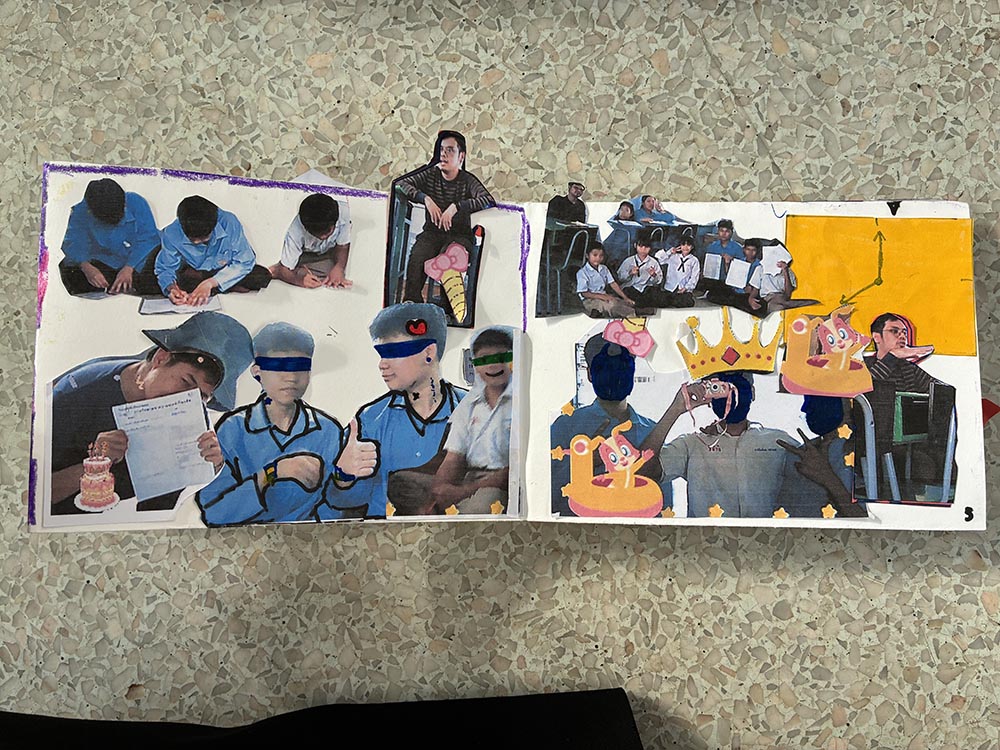
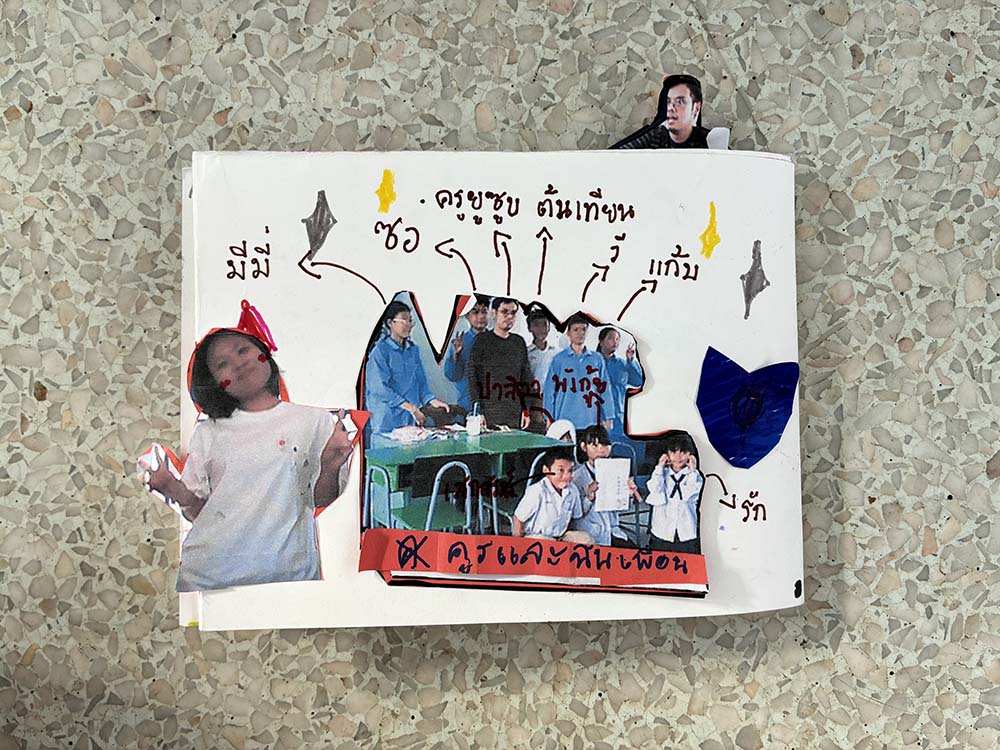
| Week 4 | Walkabout & Field Notes | Practice field observation and recording | Group community survey walk + Collage Journaling | Fieldwork Collage Journal |
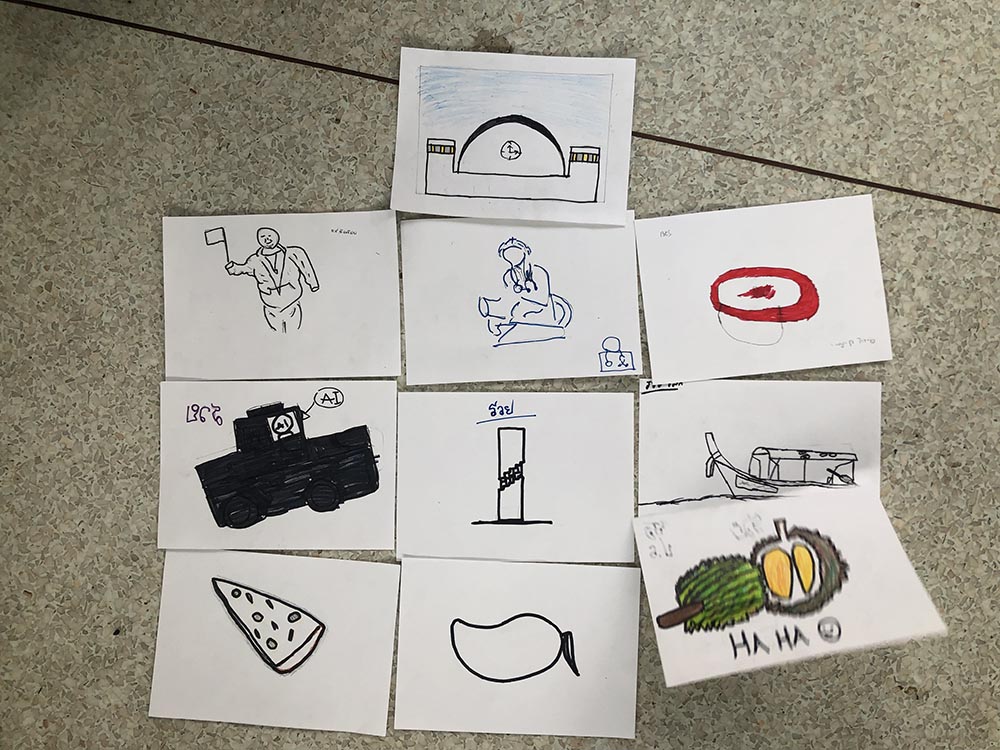
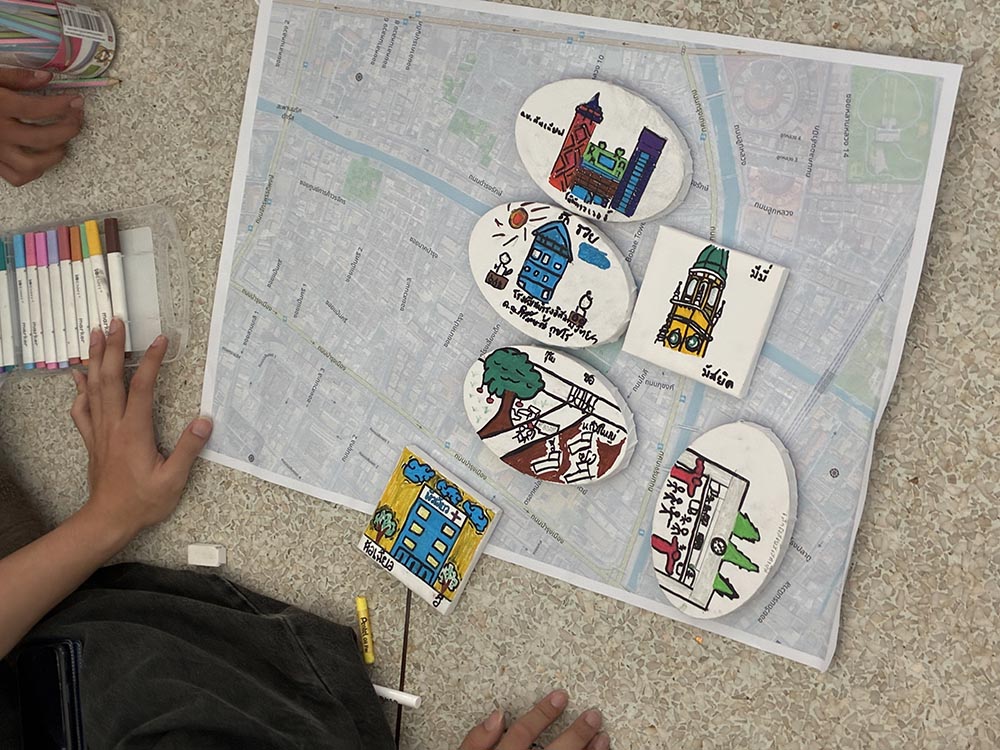
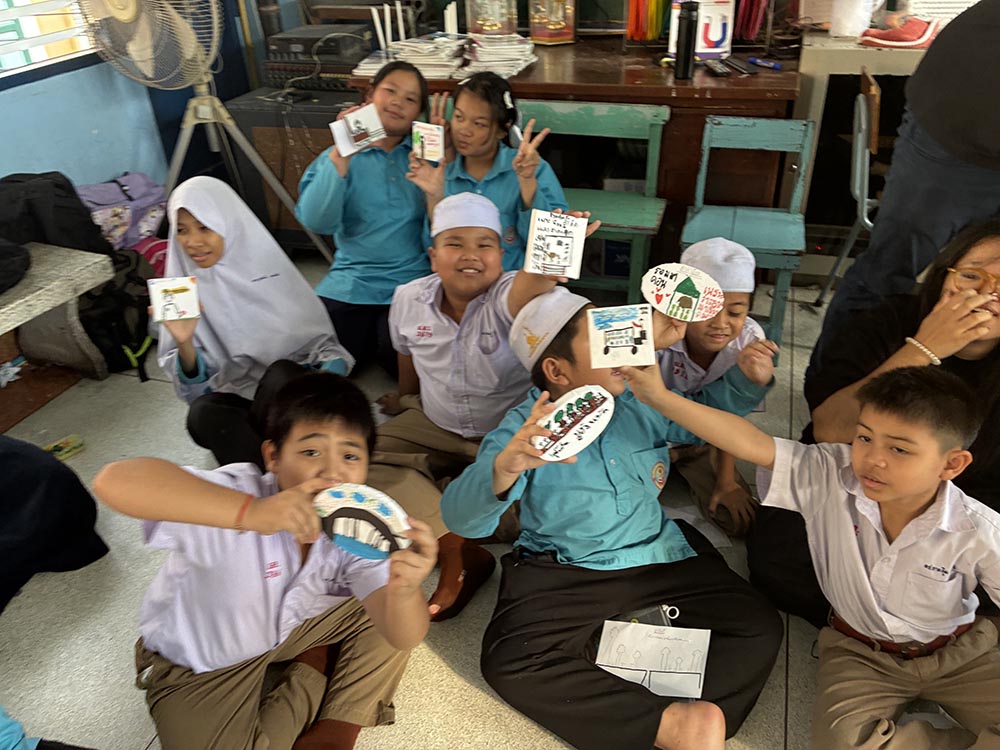
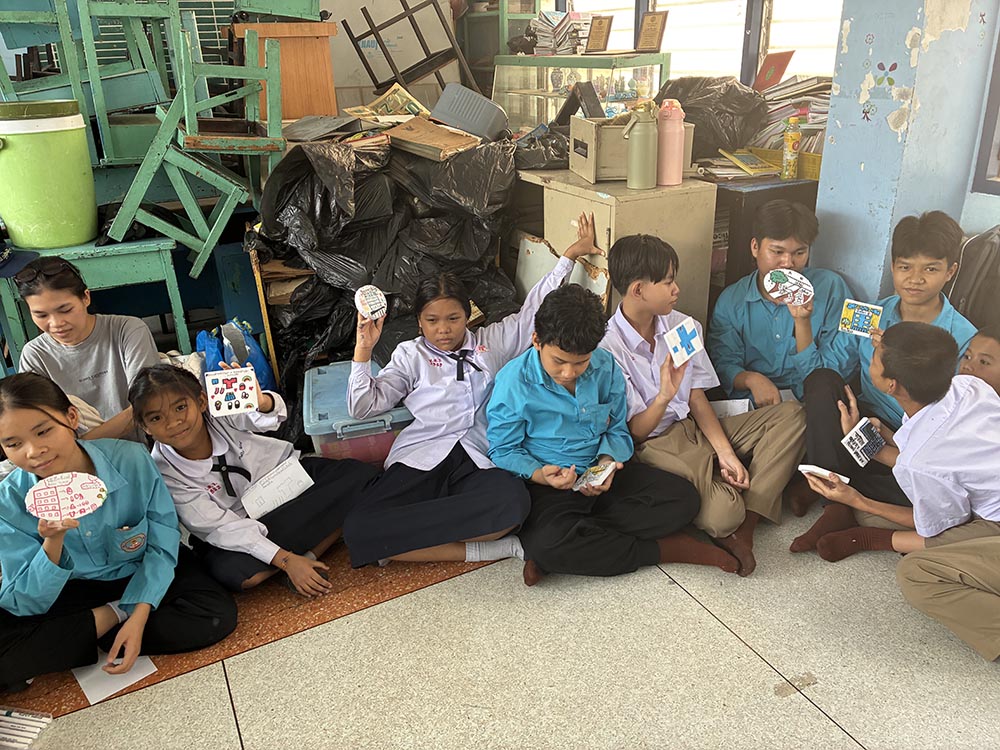
| Week 5 | Symbol Design | Practice drawing, sketching, and designing symbols for stories | Design 10 group icons + create printing blocks | Group Icon/Symbol Sets |
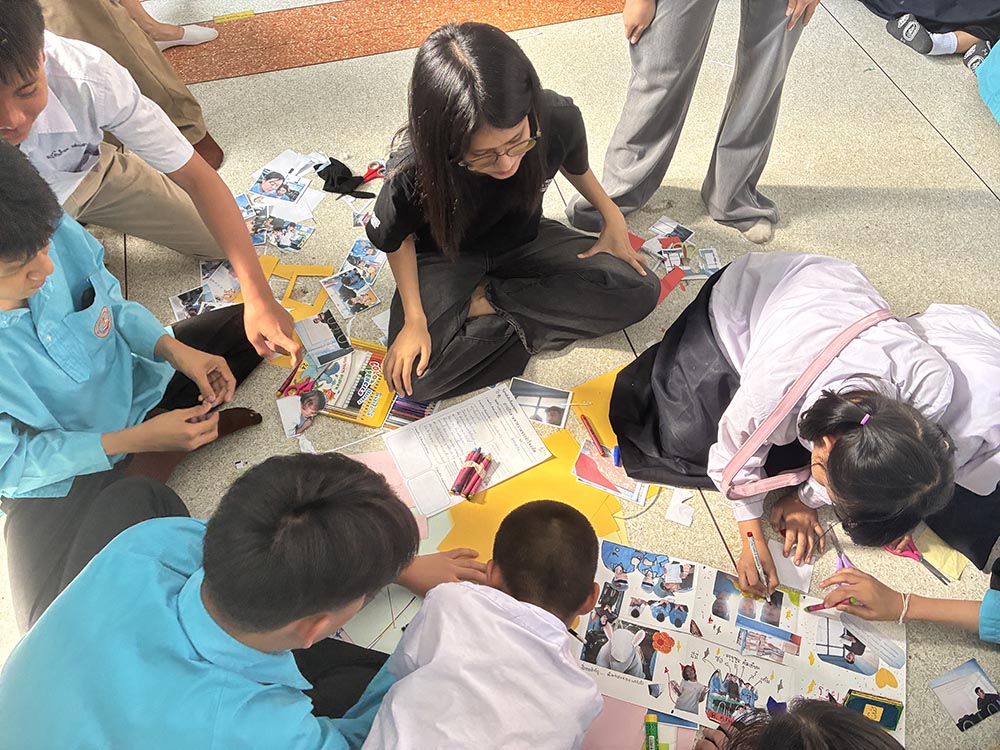
| Week 6 | Map Layout | Create storytelling maps using photos and icons | Artist demo of mixed media/collage + group map making | "The Big Draft" (Large scale map) |
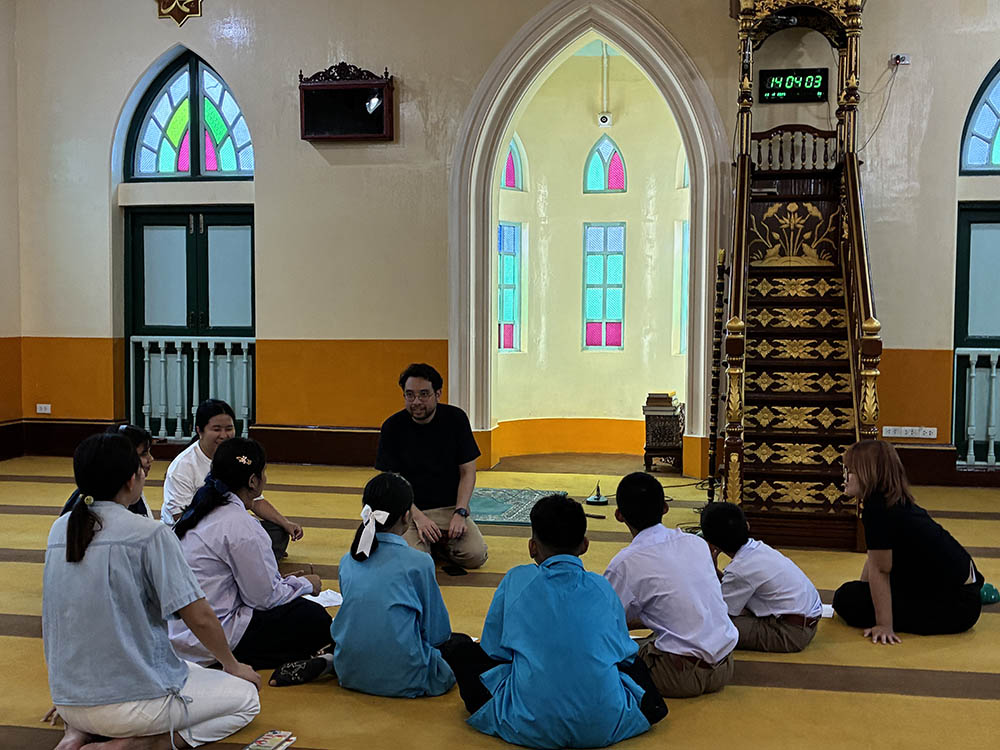
| Week 7 | Children's Day | Practice presenting community stories through art | Small-scale exhibition presentation at the Mosque | Pop-up Showcase Exhibition |
| Week 8 | Photo Techniques | Understand photography for communication | Learn lighting/composition + practice in-class and field | Initial photo sets per group |
| Week 9 | Photo Storytelling | Practice analyzing and sequencing photos for an essay | Present Photo Essay + class discussion | Completed Photo Essay sets |
| Week 10 | Final Project Planning | Plan the connection between stories, photos, and symbols | Brainstorm Mindmap + sketch final work + artist feedback | Mindmap & Draft Work |
| Week 11 | Final Production | Develop and integrate community storytelling works | Continuous group work on final piece | Final Completed Work |
| Week 12 | Exhibition Prep | Installation and presentation in the final exhibition | Write Artist Statements + install work at ASVIN | "Art Tells the Story of Mahanak" Exhibition |
We kick things off by turning everyday places into stories. Through fun case studies, students see how maps and photos can capture the life of a neighborhood. They team up in small groups, find shared interests, and decide what they want to explore. With games like “Mahanak in 5 Seconds,” they discover their surroundings in a playful way, then create their own mini maps—pinning favorite spots, hidden corners, and meaningful places. It’s all about getting to know the area, each other, and starting their journey as storytellers of their own community.
History comes to life! Students explore history as something lived and personal—connected to their families and community. Through stories of Mahanak and Bangkok, they begin to see history as a story of time and change. They create their own timelines, mapping personal and neighborhood moments while using simple calculations to understand when things happened. Getting ready to become “time detectives,” they prepare to interview family members and uncover stories from the past. Special guest session by the Princess Maha Chakri Sirindhorn Anthropology Centre.
Time to hear stories straight from the source! Students learn how to gather stories from community elders—practicing listening, note-taking, and picking out key ideas. Through a fun “Time Detective” activity, they use simple math to figure out when events happened—turning memories into timelines. Working in groups, they organize these stories into themes and start transforming them into visual story maps. This session is all about respect, curiosity, and seeing community memory as a powerful source of knowledge.
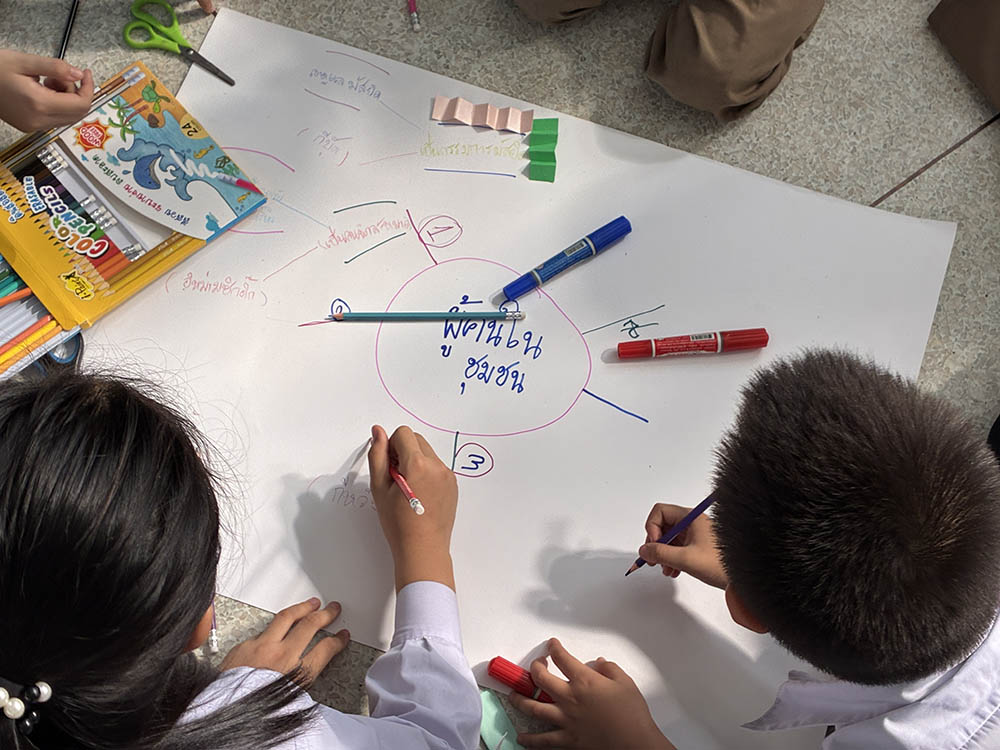
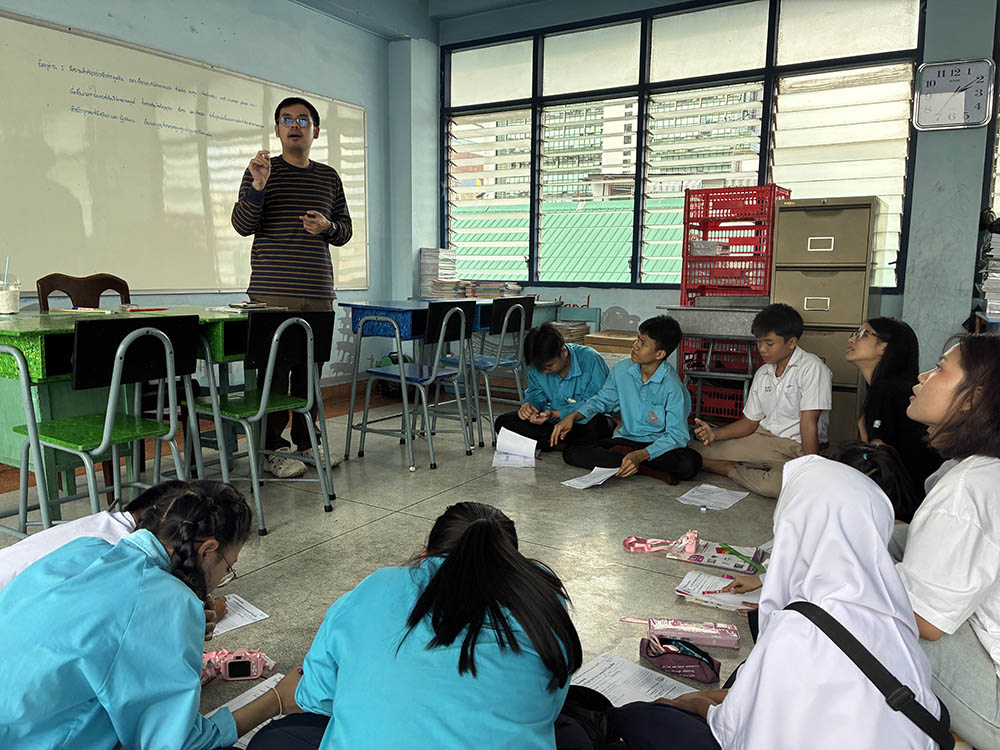
This week is all about turning ideas into visuals. Students create colorful mind maps around themes like food, traditions, people, places, and everyday objects, organizing the stories they’ve gathered from their community. They then design symbols and icons to represent their discoveries, learning through sketching and experimentation how visual language can simplify complex ideas. The session ends with group presentations, where students share their mind maps and stories with the class.
Building on the previous week, students head out on a guided walkabout with mentors, exploring their chosen themes with cameras in hand. They learn to ask questions, observe closely, and capture details from community members. Using collage journals, they document what they see and hear—turning real-life encounters into visual records. This session encourages curiosity, attention to everyday life, and a deeper connection to the community through direct experience.
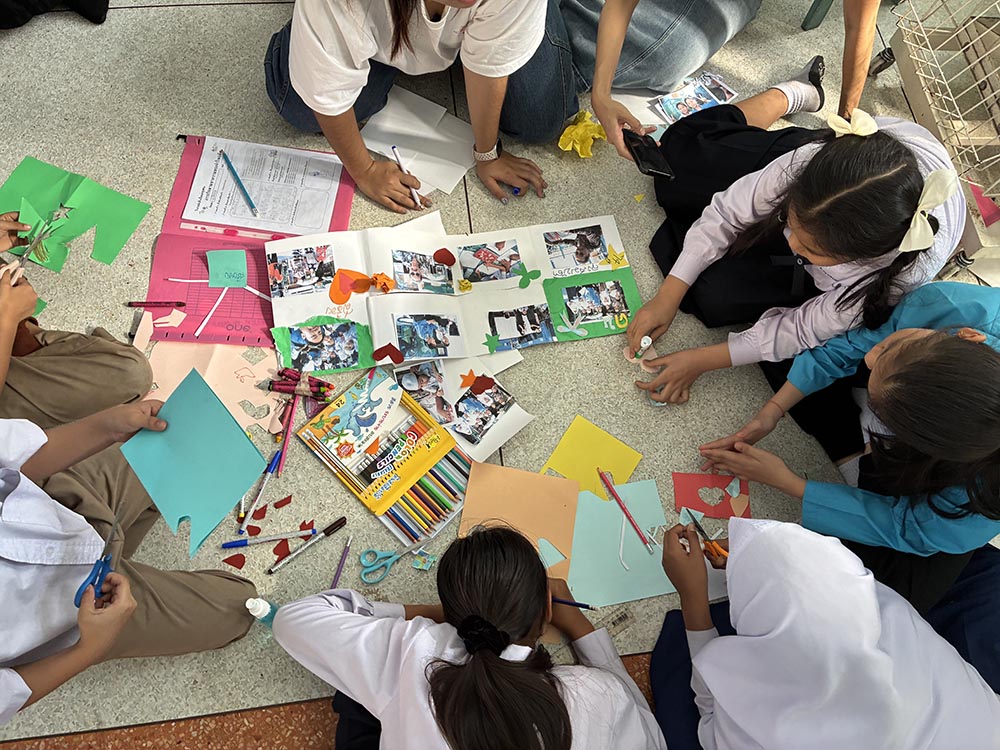
This week, students dive into photography as a storytelling tool. Using photos from their walkabout, they learn how to select and curate photos that best reflect their themes. Through sequencing, layout, and composition, they create zines—small handmade books that mix photos, collage, and other materials. Along the way, they discover how images can come together to tell a meaningful story about their community.
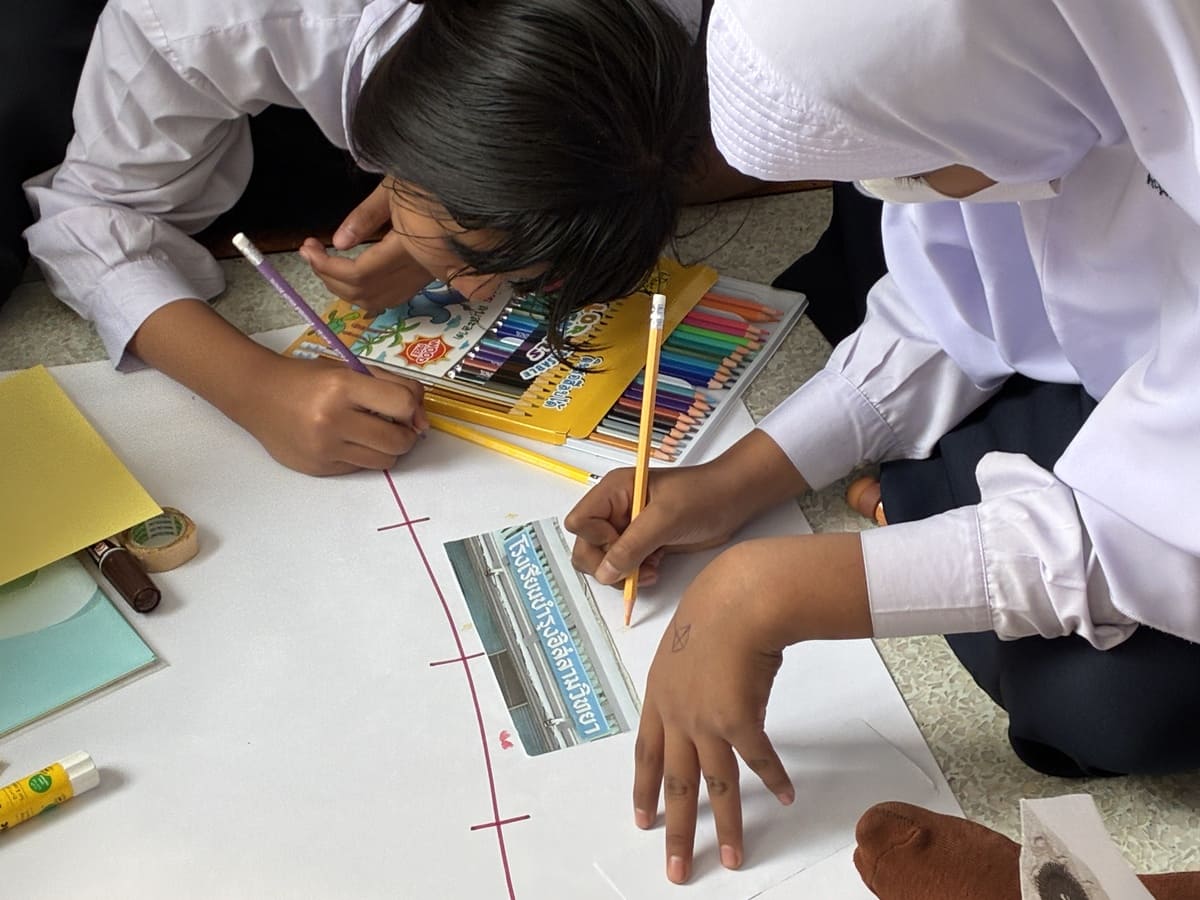
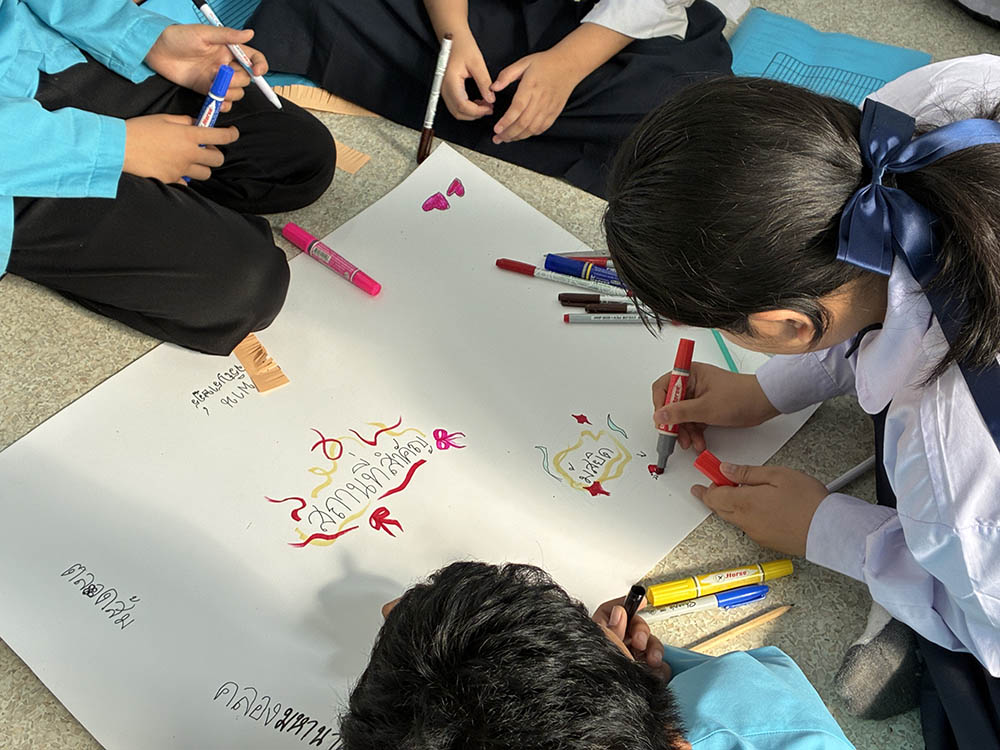
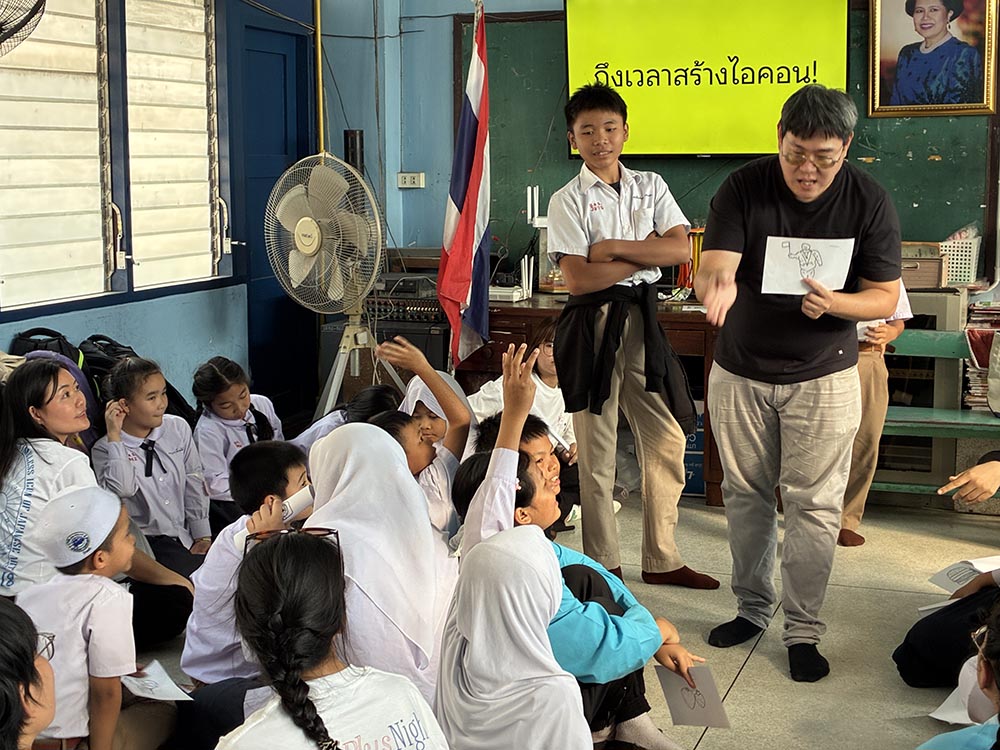
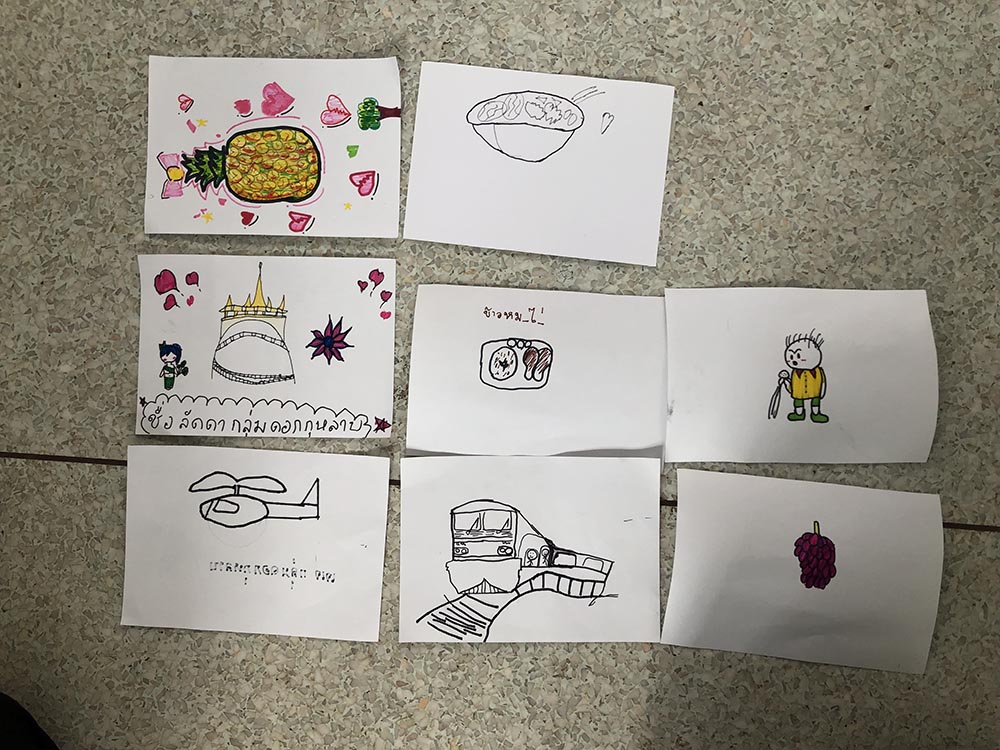
This week, students bring their stories to life through icons and symbols. With sketchbooks in hand, they experiment and play—turning places, memories, and emotions into simple, creative visuals. It’s all about capturing details and finding their own visual language. To keep things fun, we play a guessing game where students take turns interpreting each other’s icons—testing how clearly their ideas come across. These playful designs will later become key pieces in their final maps and storytelling projects.
This week, students bring their stories to life through icons and symbols. With sketchbooks in hand, they experiment and play—turning places, memories, and emotions into simple, creative visuals. It’s all about capturing details and finding their own visual language. To keep things fun, we play a guessing game where students take turns interpreting each other’s icons—testing how clearly their ideas come across. These playful designs will later become key pieces in their final maps and storytelling projects.
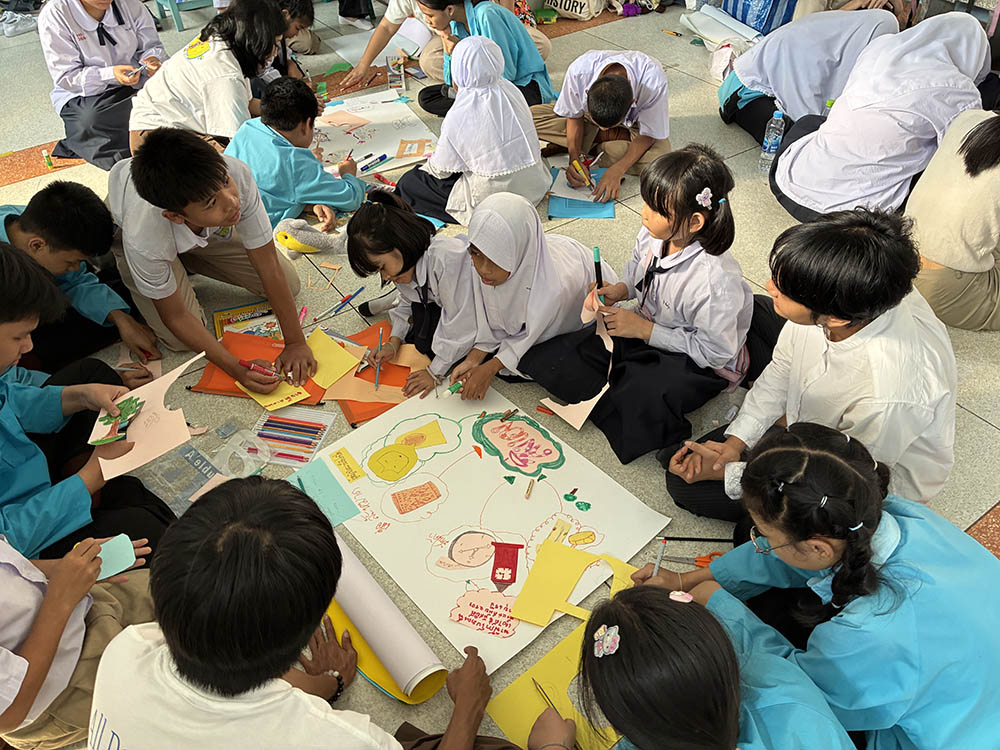
Students take their maps to the next level—refining visuals, strengthening stories, and adding new icons for key places. Through group discussions and feedback, they connect images, symbols, and narratives into one cohesive piece. The map begins to come alive, blending personal perspectives with shared community stories.
Time to bring it all together! Students look back on their journey—what they discovered, what surprised them, and what they now see differently about their community. They continue refining their group projects, adding final touches and making sure every story is clear and meaningful. Through sharing circles, they talk about their favorite moments and what they’ve learned along the way. Students also begin writing their own artist statements—explaining the ideas behind their work as they get ready for the final exhibition, where their stories will be shared with the wider community.