#LetTheEntertainmentBegin
A walking journey that reimagines the city’s historic entertainment district.
— — —Speakers
Assoc. Prof. Dr. Prapat Chuwichian
Asst. Prof. Dr. Eksuda Singlamphong
(Faculty of Archaeology, Silpakorn University)
along with local community speakers
400 Baht per person, with all proceeds supporting Mahanak Alley’s community activities.
📍 Asvin Contemporary Arts & Culture Space
🗓 31 Jan 2026
🕚 12:30 AM – 4:30 PM
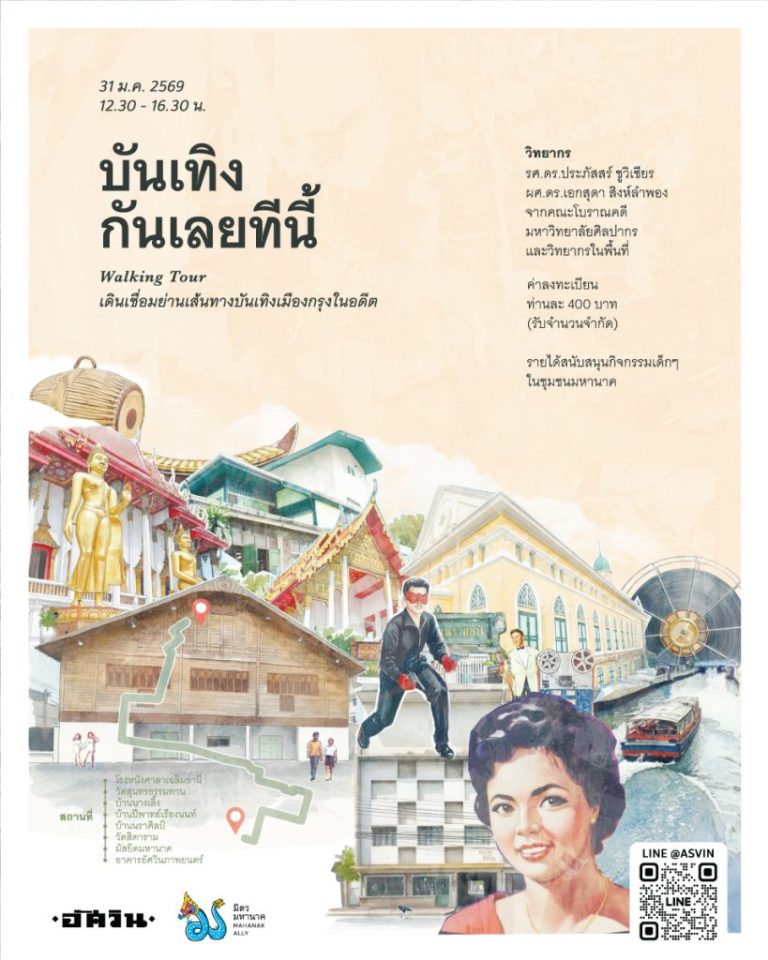
On 30 January 2026, Mahanak Alley and Asvin piloted this walking tour for the Bangkok Klang Plaeng Festival—an invitation to explore Bangkok’s historic entertainment district on foot. The Mahanak–Nang Loeng corridor is not preserved; it is lived, where entertainment has always been fluid—moving across water, into buildings, through bodies, and into new kinds of space. The story begins with Khlong Mahanak, dug in the early Rattanakosin period to echo the geography of Ayutthaya. In high-water season, it became a gathering ground—boats filled the canal, songs (phleng ruea) carried across water, and poetry (sakawa) unfolded in real time.
As the city expanded, diverse communities—Chinese, Mon, Muslim, Western, and Southern Thai—settled here, bringing performance traditions like Lakhon Chatri and Nang Talung into everyday life. By the late nineteenth century, roads replaced waterways, markets formed, and entertainment followed onto land. We are walking through that transition.
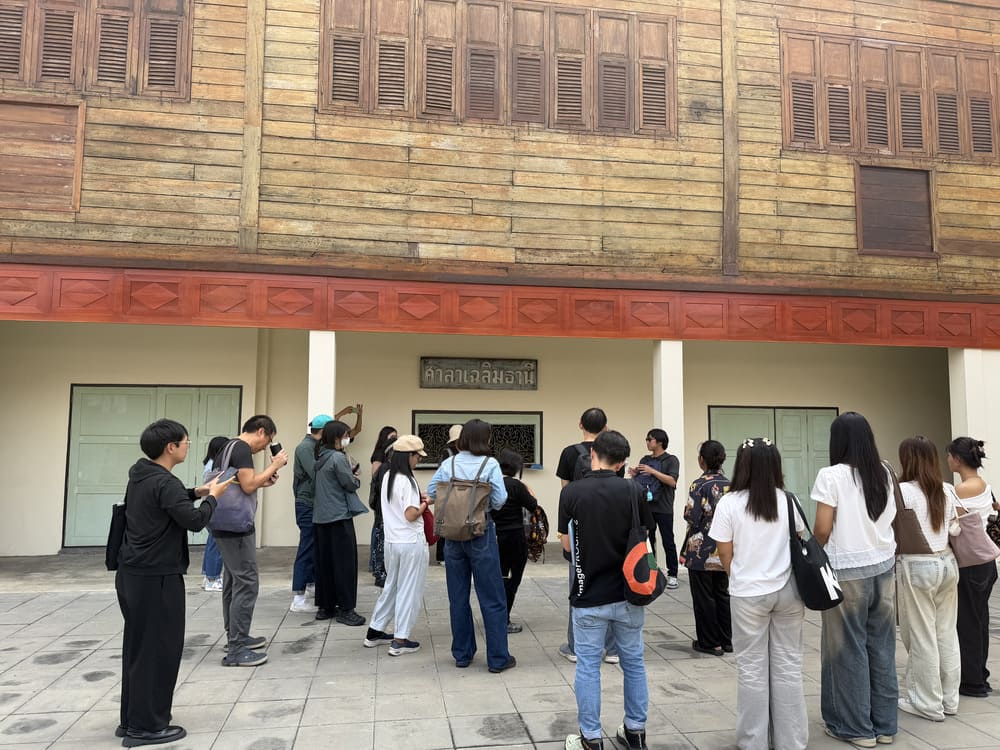
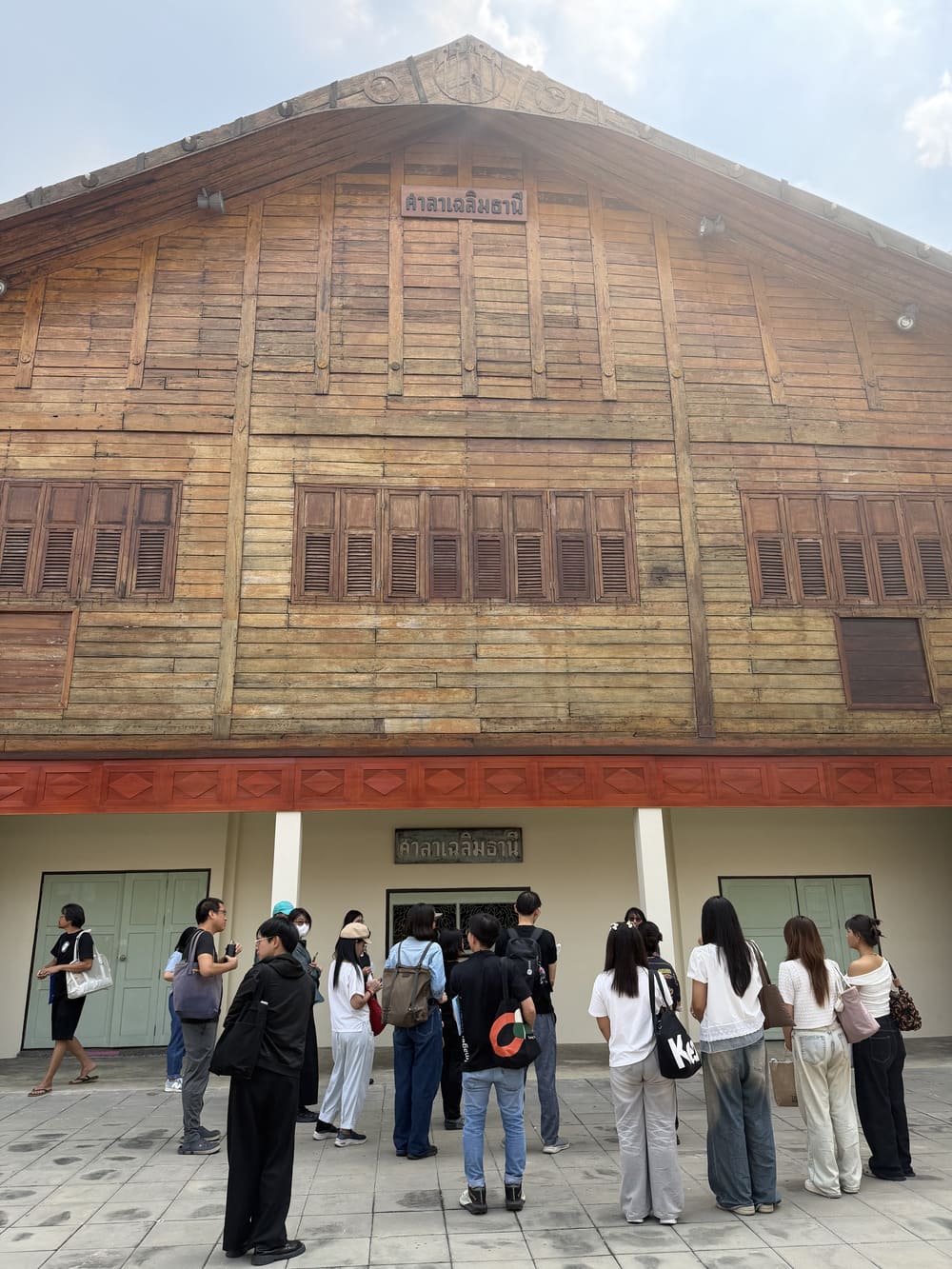
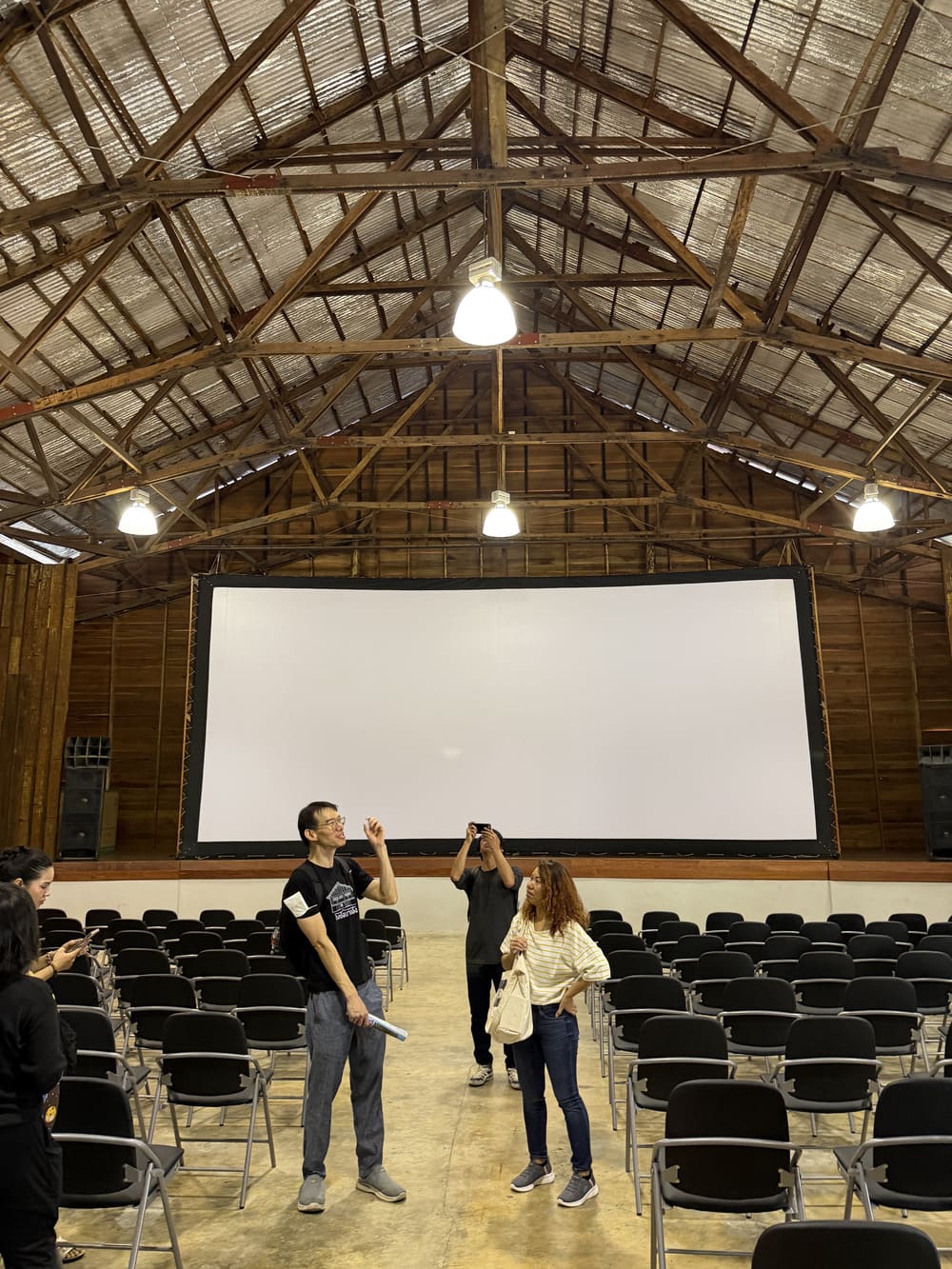
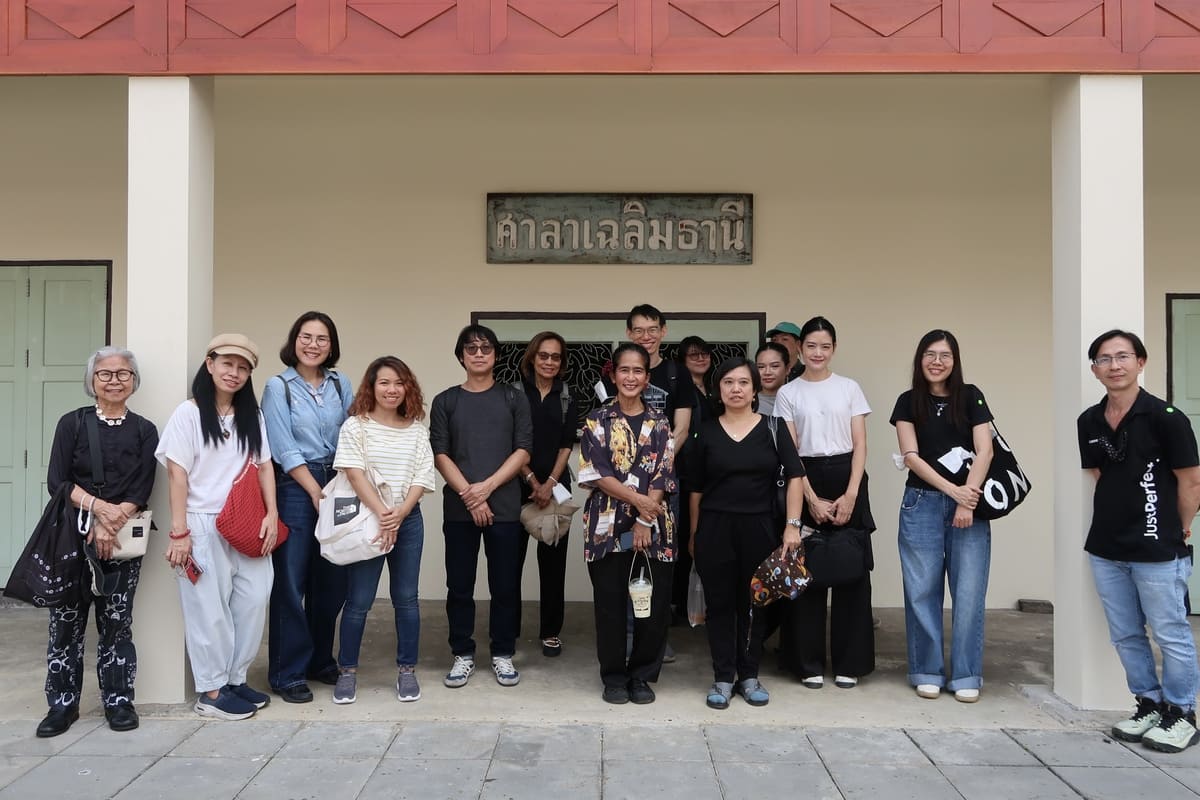
We began at Sala Chaloem Thani, tucked within the Nang Loeng community just off the main street. The short walk in softened the pace, and inside, the space opened into a wide, unobstructed hall. A timber truss system carried the structure to the sides, creating a clear, shared viewing space that felt simple but deliberate. Before cinemas had a permanent home in Siam, film was introduced by King Chulalongkorn and shown in temples and palaces as temporary, experimental settings. Over time, it became something people returned to. By 1918, a cinema already stood in this neighborhood, and in 1932, under King Prajadhipok, it was formalized under the “Chaloem” name, though locals continued to call it Nang Loeng Cinema.
Its design uses simple geometry, vertical lines, and subtle Art Deco expressed in wood, sitting quietly between tradition and modernity. Later, cinemas moved into malls, and this one closed in 1993, left unused for years before being revived by the Thai Film Archive. Standing inside, it is easy to imagine what it once was, a place where Bangkok first learned to sit together and share the same story.
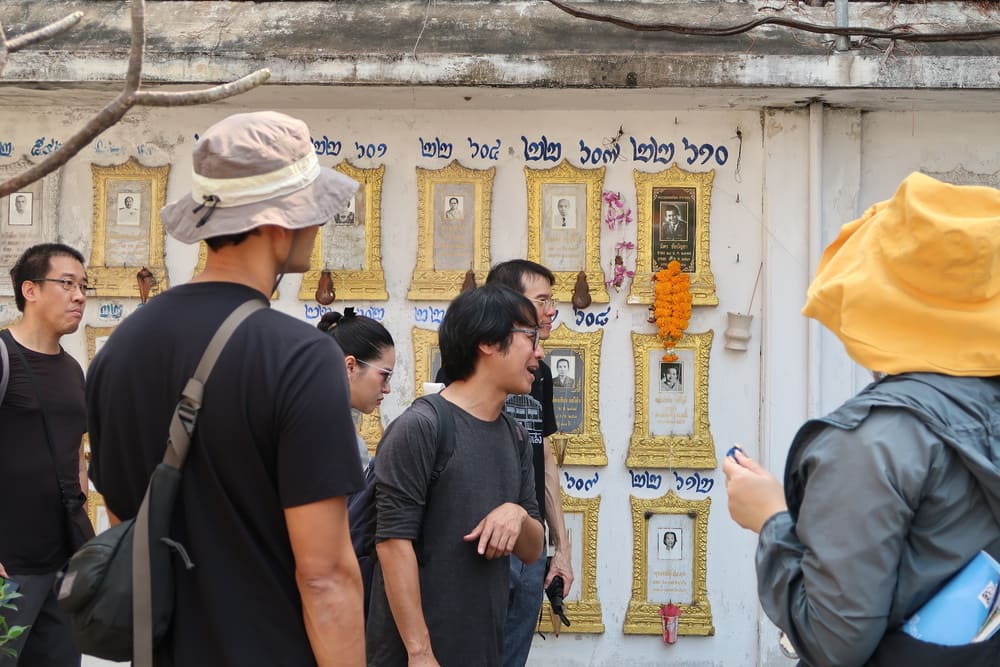
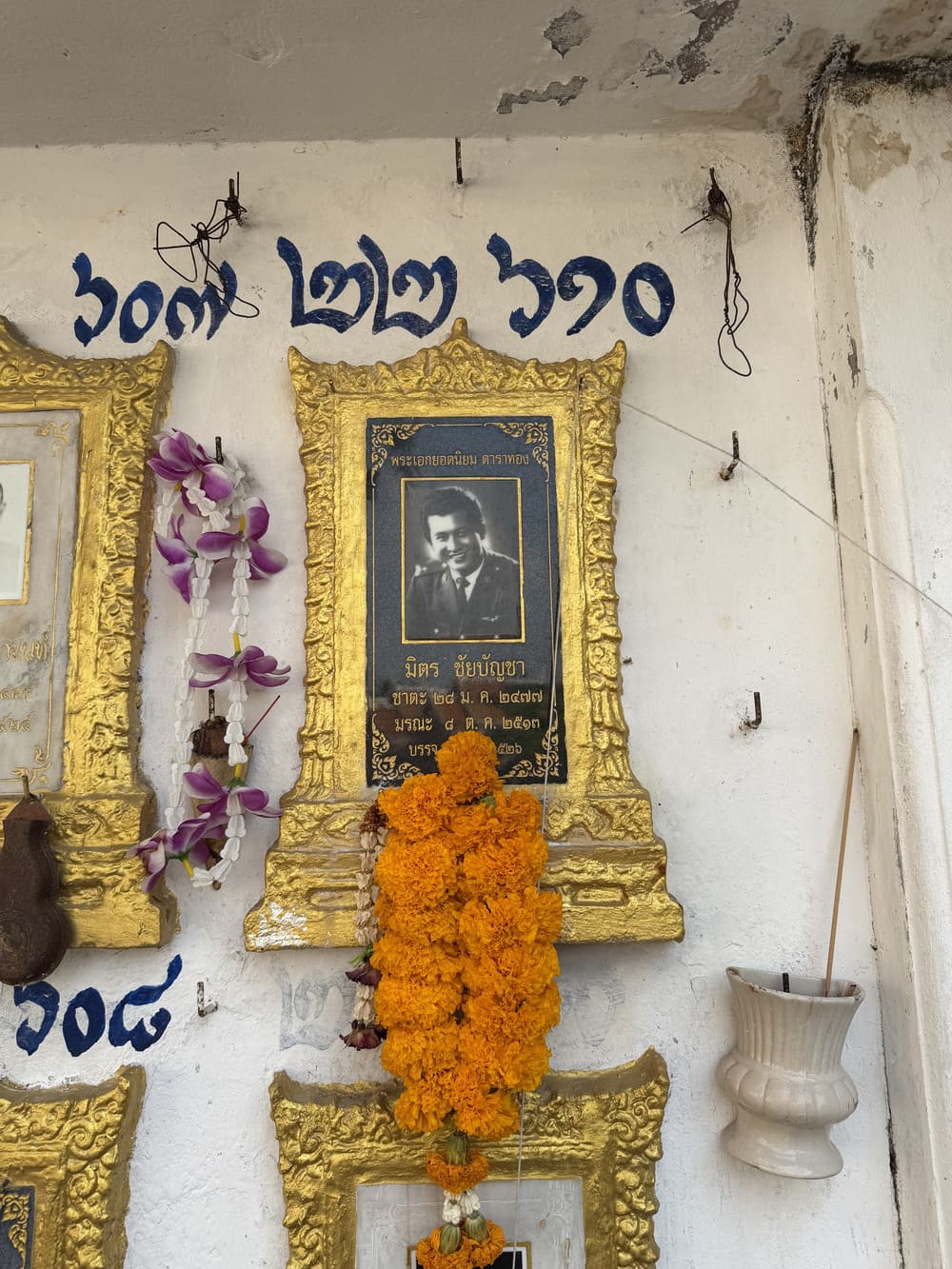
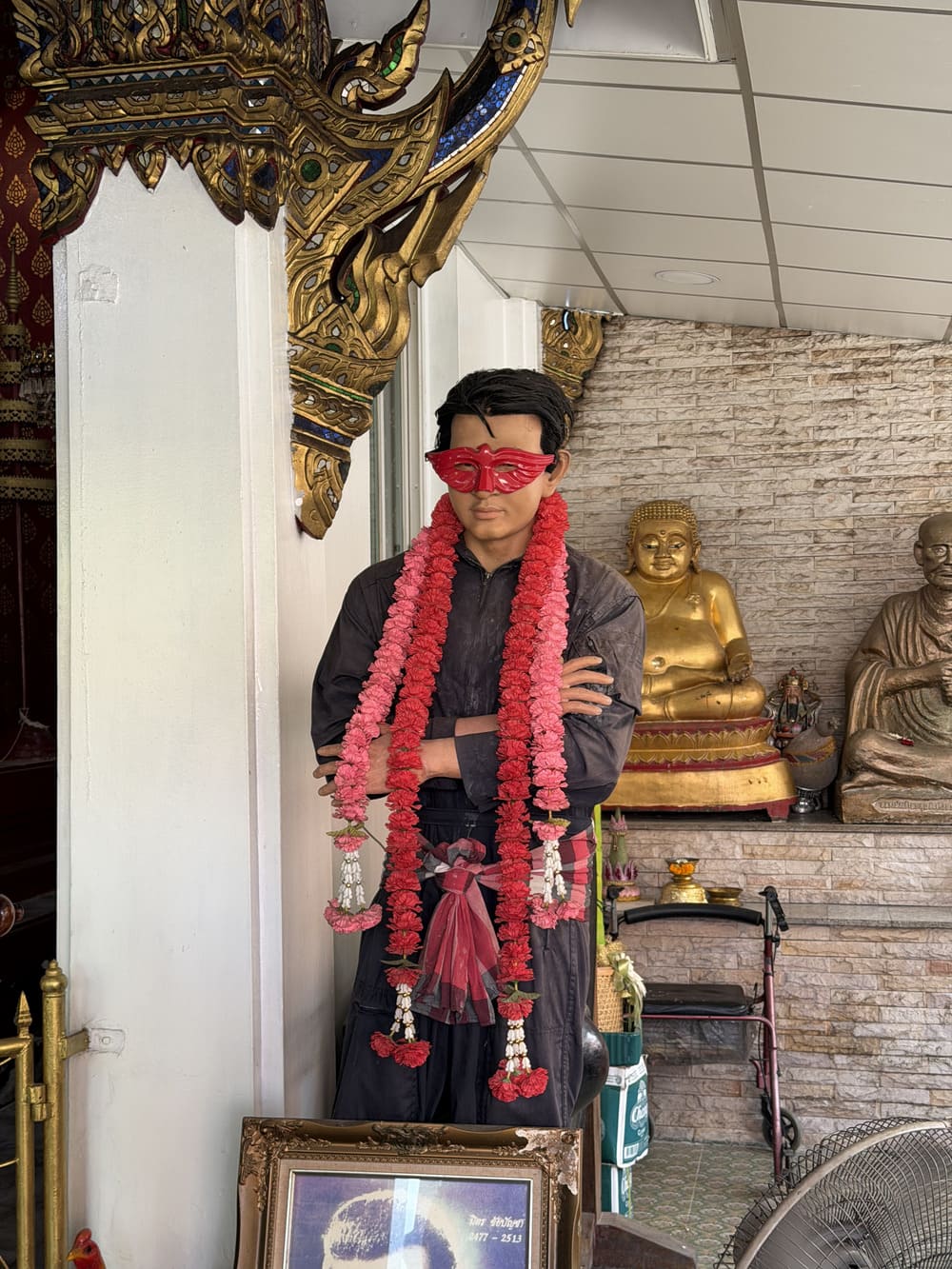
We walked a short distance to Wat Sunthon Thammathan, known locally as Wat Khae Nang Loeng, and the mood shifted. The temple felt more than religious; it was a social center where lives overlapped. One story kept returning: Mitr Chaibancha. Though not born here, he grew up in Nang Loeng and remained deeply connected, even at the height of his fame. His presence still felt tangible. He donated ten million baht to rebuild the temple’s main hall, a meaningful act that reflected a lasting sense of home. After his dramatic death during the filming of Insee Thong in Pattaya, his ashes were brought back here, where people continue to visit—not just for his fame, but for what he gave.
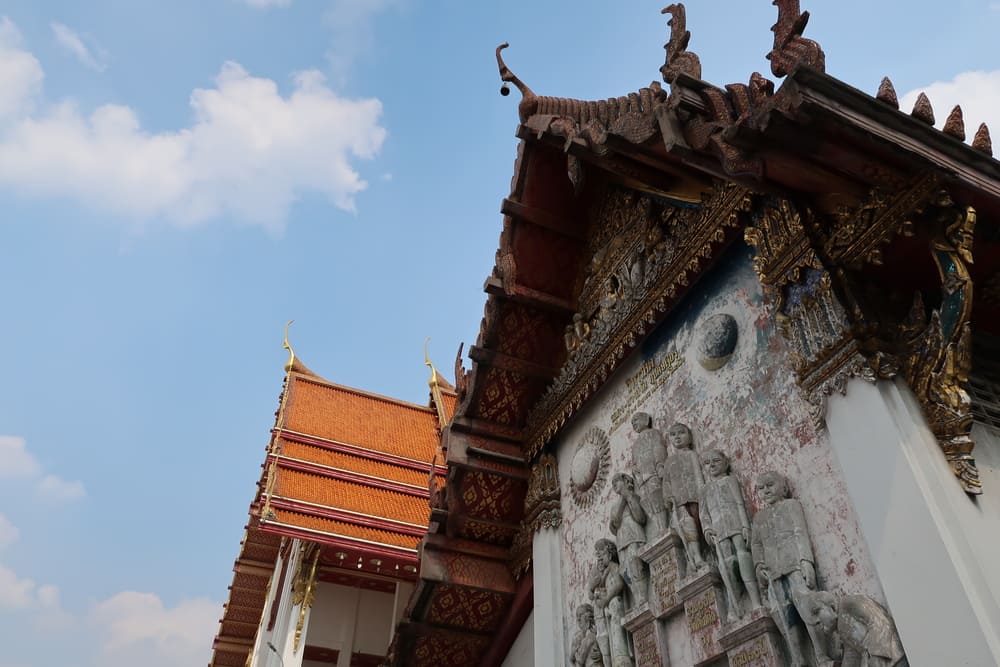
Built between 1964 and 1967, the ubosot reflects a shift in Thai architecture, with concrete enabling larger, more open spaces and simpler, geometric decoration. But the temple’s role extends beyond its structure. It long functioned as a cultural center, where southern migrants brought traditions like Lakhon Chatri and piphat music. Performers lived nearby, rehearsals unfolded within the community, and rituals like kae bon turned dance and music into acts of devotion. Just outside, films played at Sala Chaloem Thani. Here, performance, belief, and daily life were never separate.
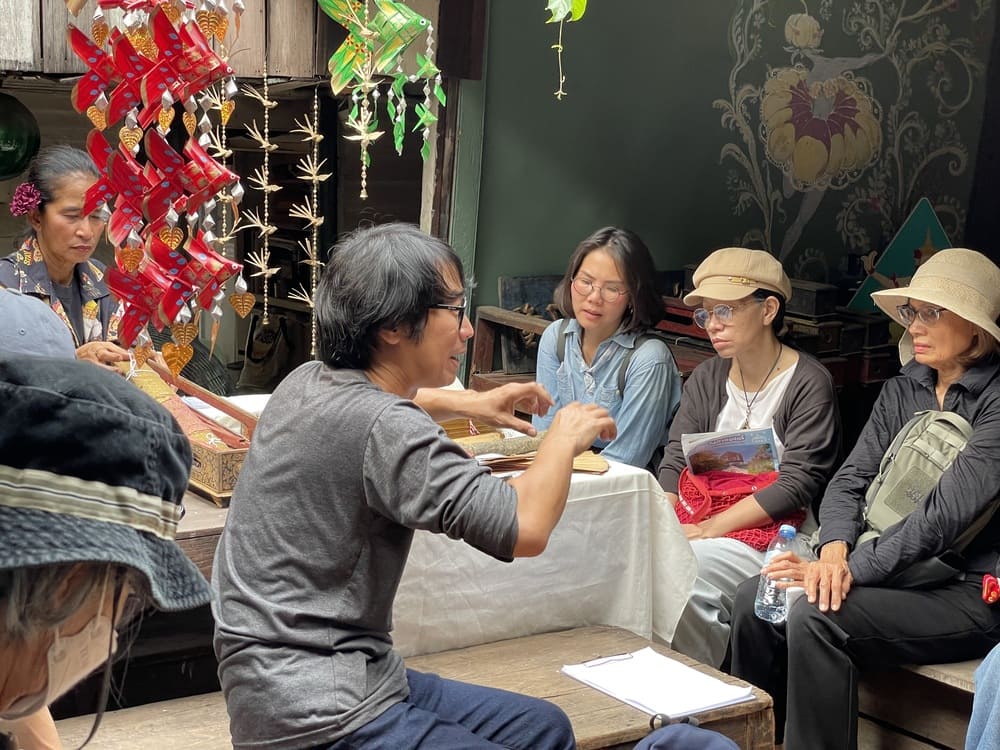
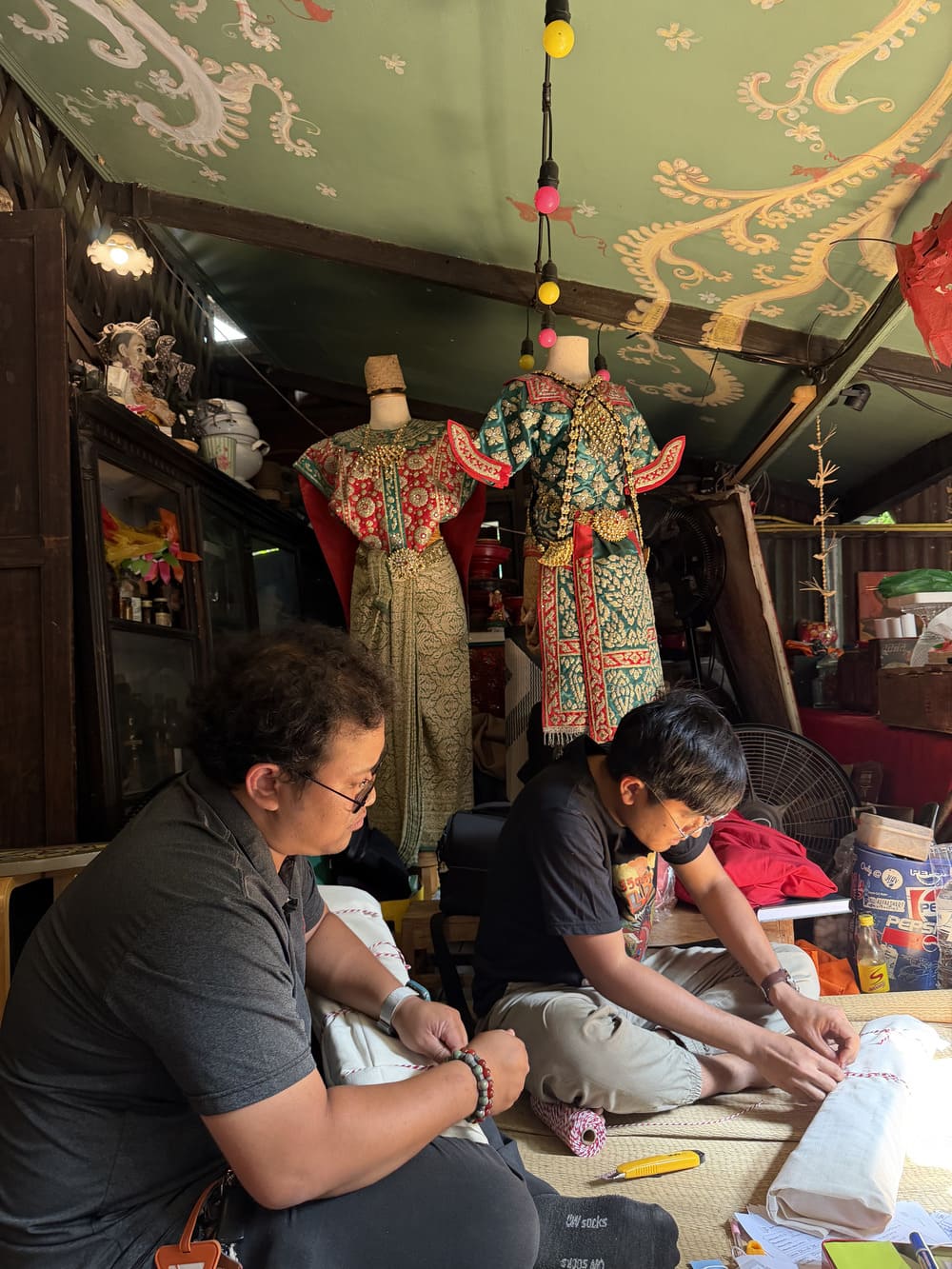
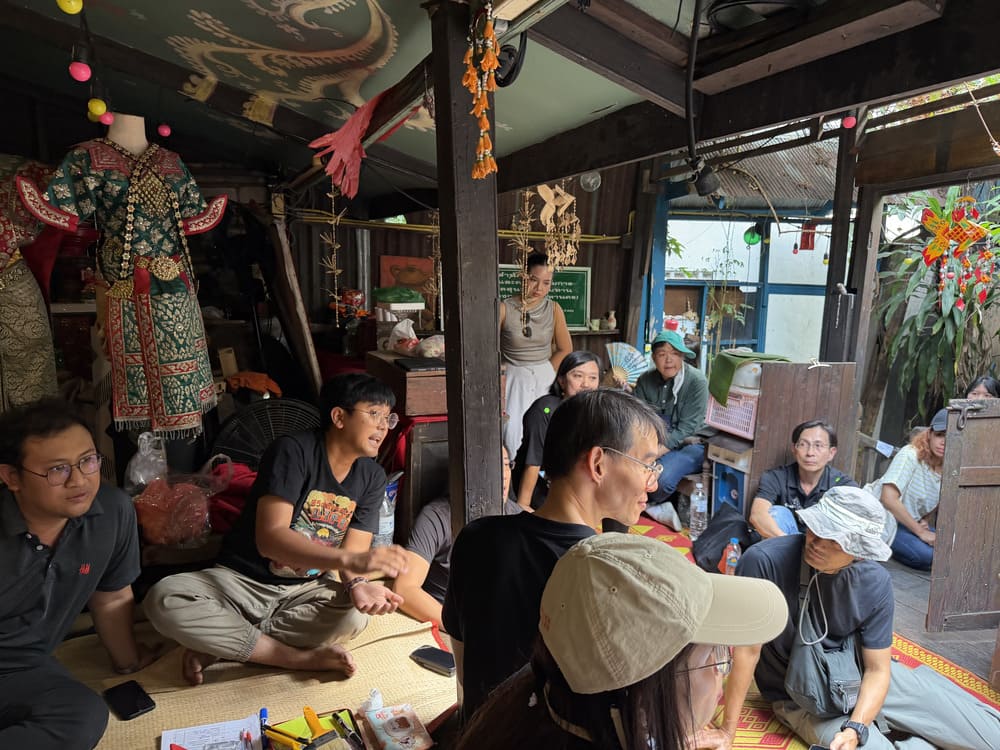
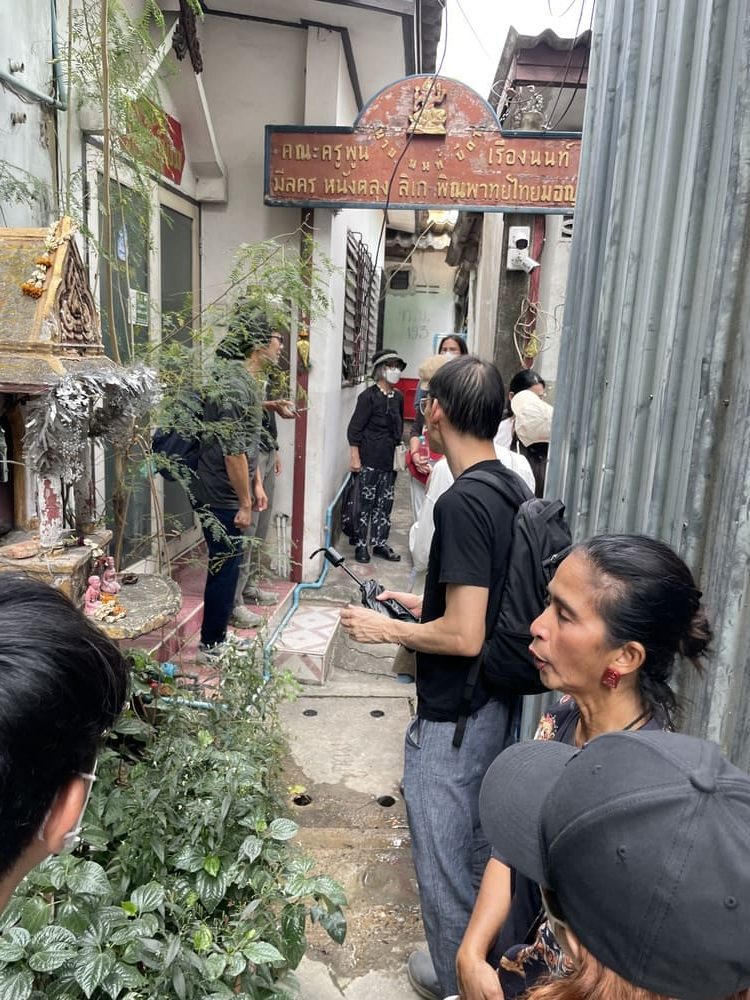
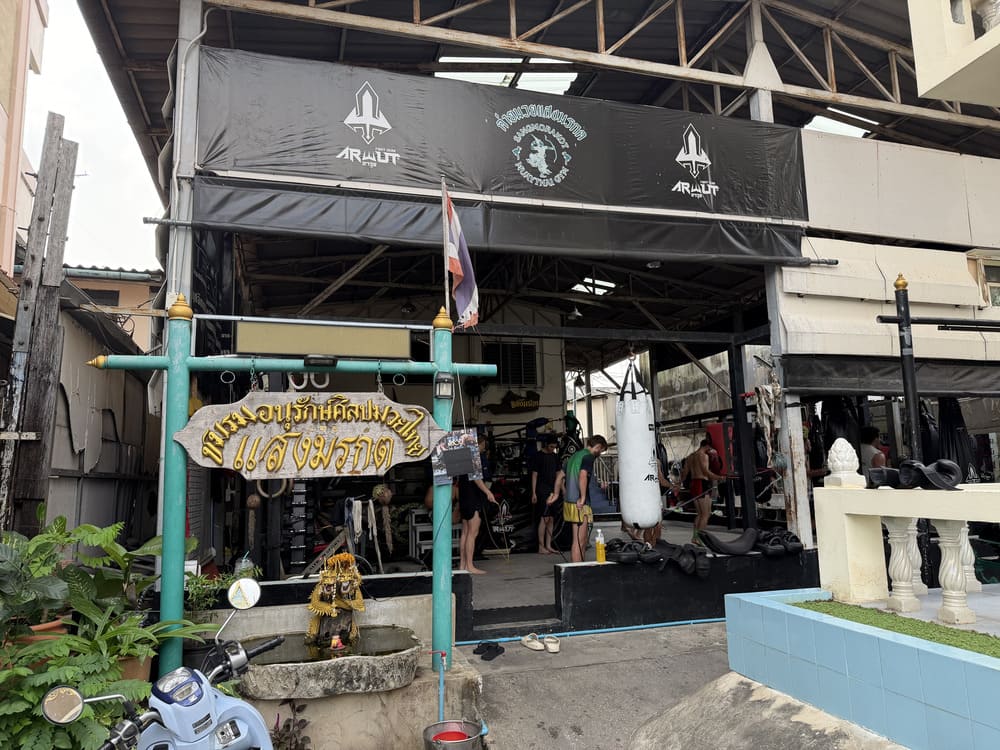
By the third stop, we turned into a small soi and arrived at a modest wooden house. Easy to miss from the outside, it shifted once inside. The space was filled with traditional costumes, puppets, and old objects, while students sat working through newly found documents from a nearby temple. It felt active, not curated. At the center was Pi Dang, a Nang Loeng community leader who spoke simply as someone who grew up there and stayed. She described how the area once felt more alive, with more performances and participation, before things gradually quieted. What she is doing now is not to recreate that past, but to keep something moving.
At the center of that is Lakhon Chatri, passed down through teachers like Pa Kanya, now in her 80s. The form came from the South, but what exists here has adapted over time. We were shown a few movements, then we tried. The “bird pose,” tha tua nok, looked light but required control and balance. As performances became less visible, they shifted into temples and rituals like kae bon, where dance and music are offerings. If the cinema held light and the temple held weight, this was where the neighborhood breathed—its real architecture made of gesture, rhythm, and memory passed from one body to another.
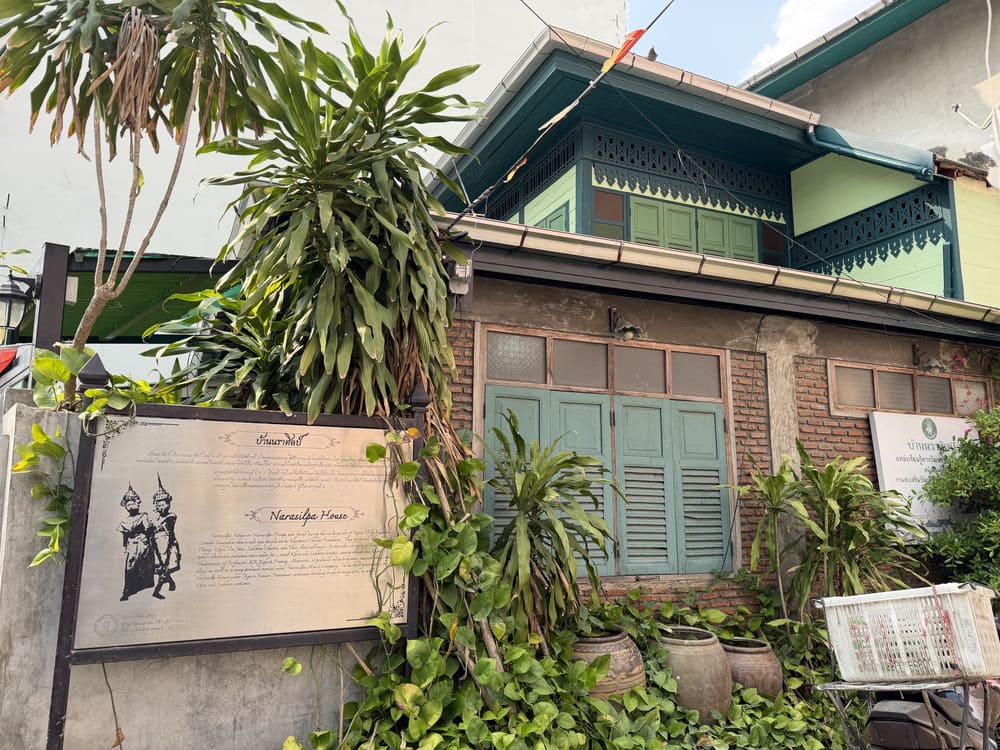
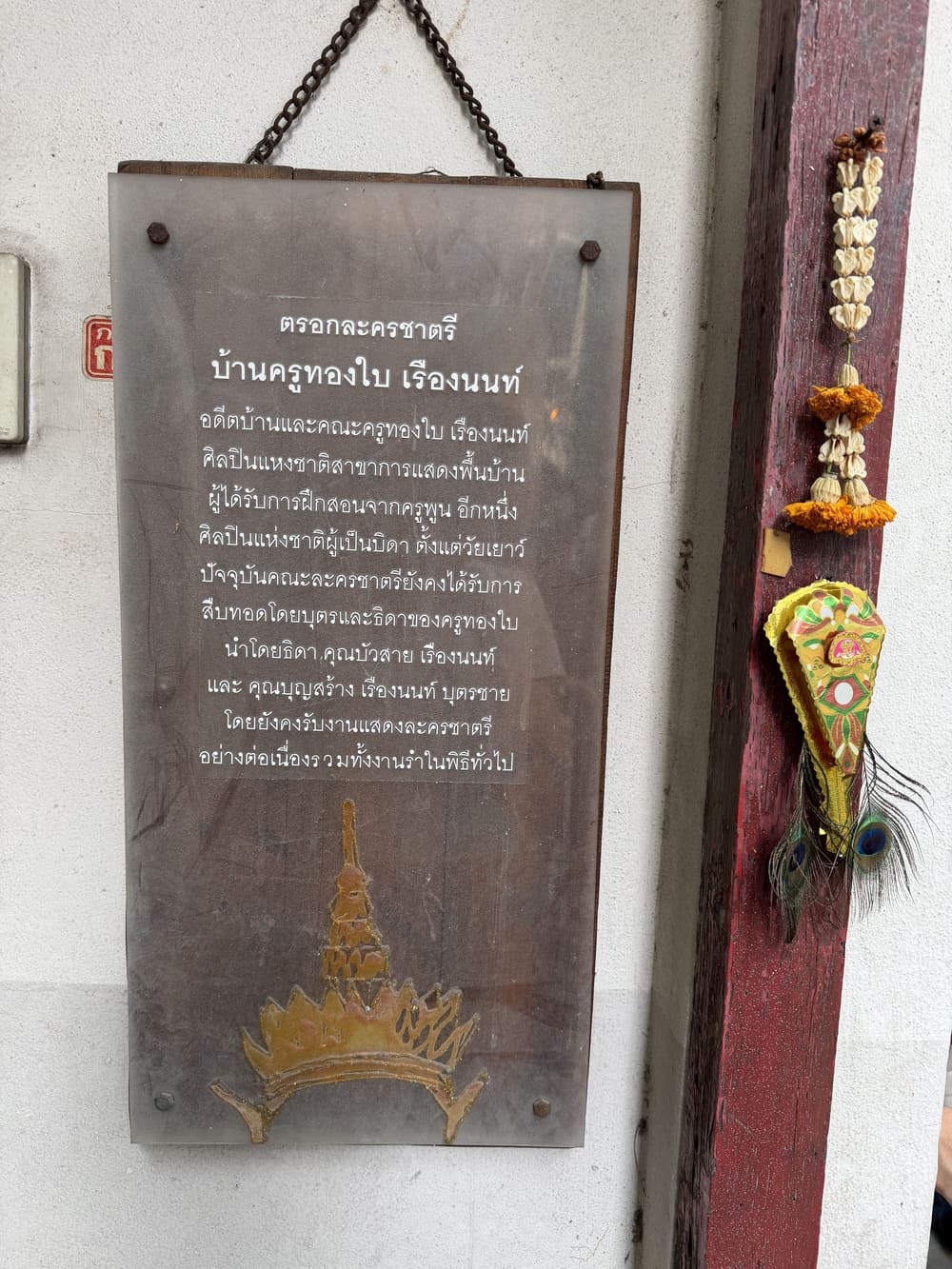
At the next stop, we moved deeper into the neighborhood near Baan Nang Loeng, where the focus shifted from performance to what sustains it. At Narasilp House, that meant costume. In Nang Loeng, costumes were constructed, not decorative—part of Ban Khruang, where households specialized in different elements of performance. The craft dates back to the reign of King Vajiravudh, when performance culture expanded. Materials came from Phahurat—threads, beads, fabric—then stretched and embroidered by hand, often over months. Work was divided across families: garments, headdresses like chada and mongkut, and masks. Even care was specific; costumes weren’t washed, only sun-dried and handled with care.
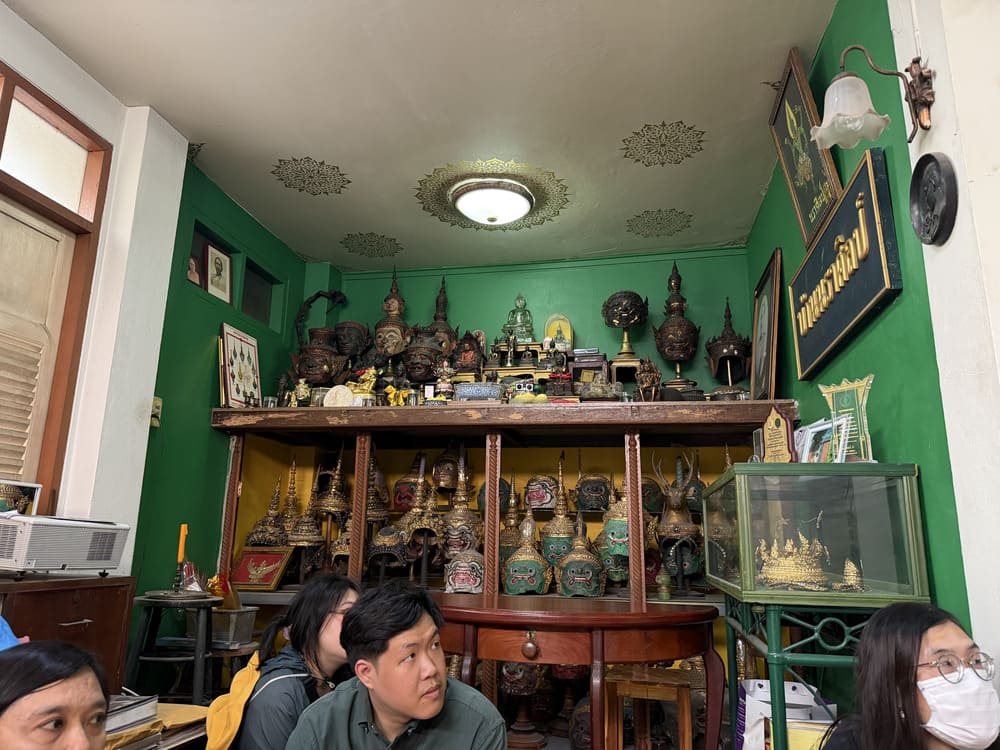
At Rueangnon Piphat House, the focus shifted to sound. Here, piphat music was practiced and passed on, forming the base of performances like Lakhon Chatri. The house traces back to Khru Phun Rueangnon, whose family continued the tradition through figures like Mae Phaen and Mae Kanya. At its peak, the neighborhood functioned as a connected system—makers, musicians, and performers working closely together. Today, it is smaller, but the structure remains, still quietly alive.
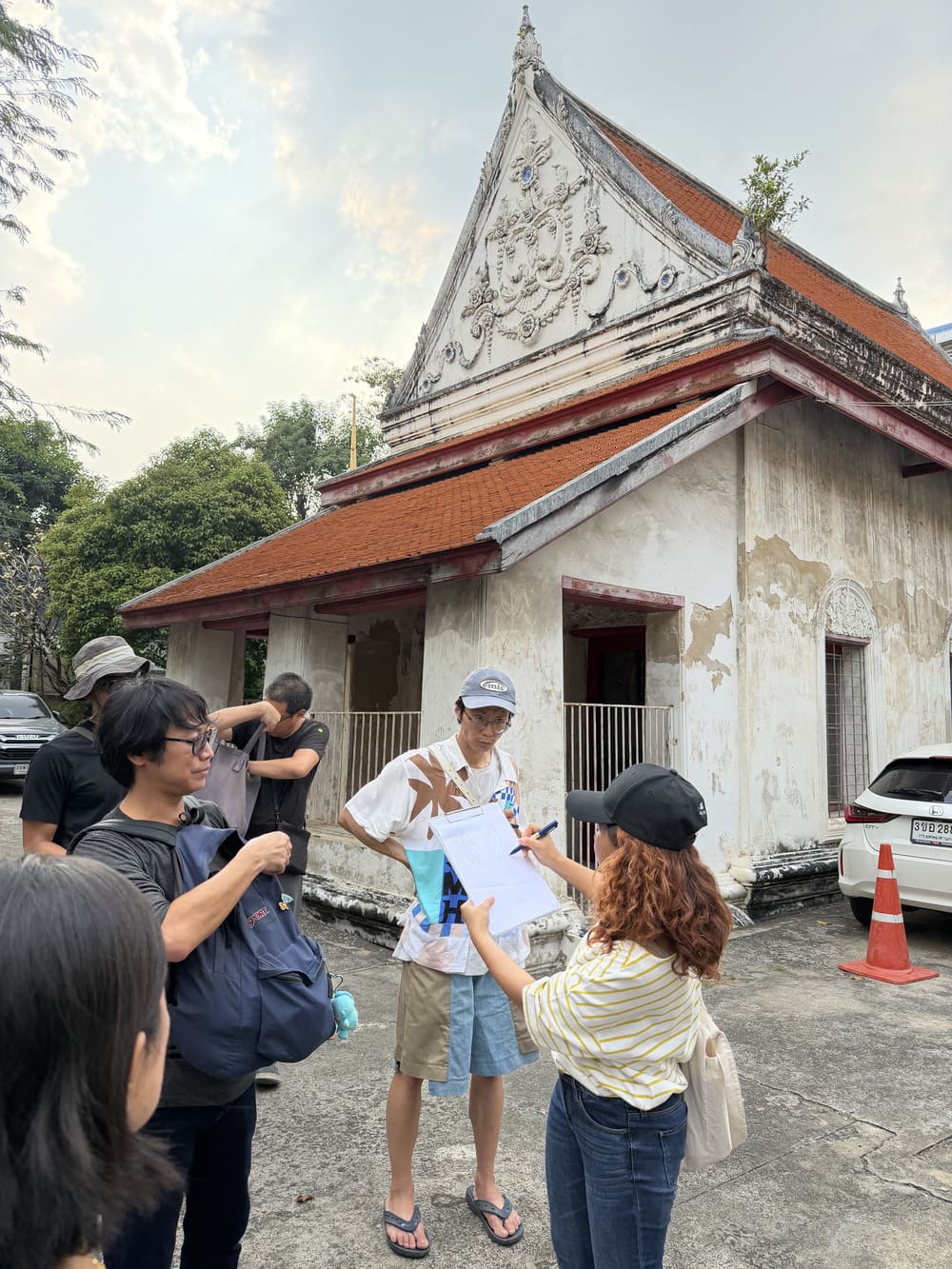
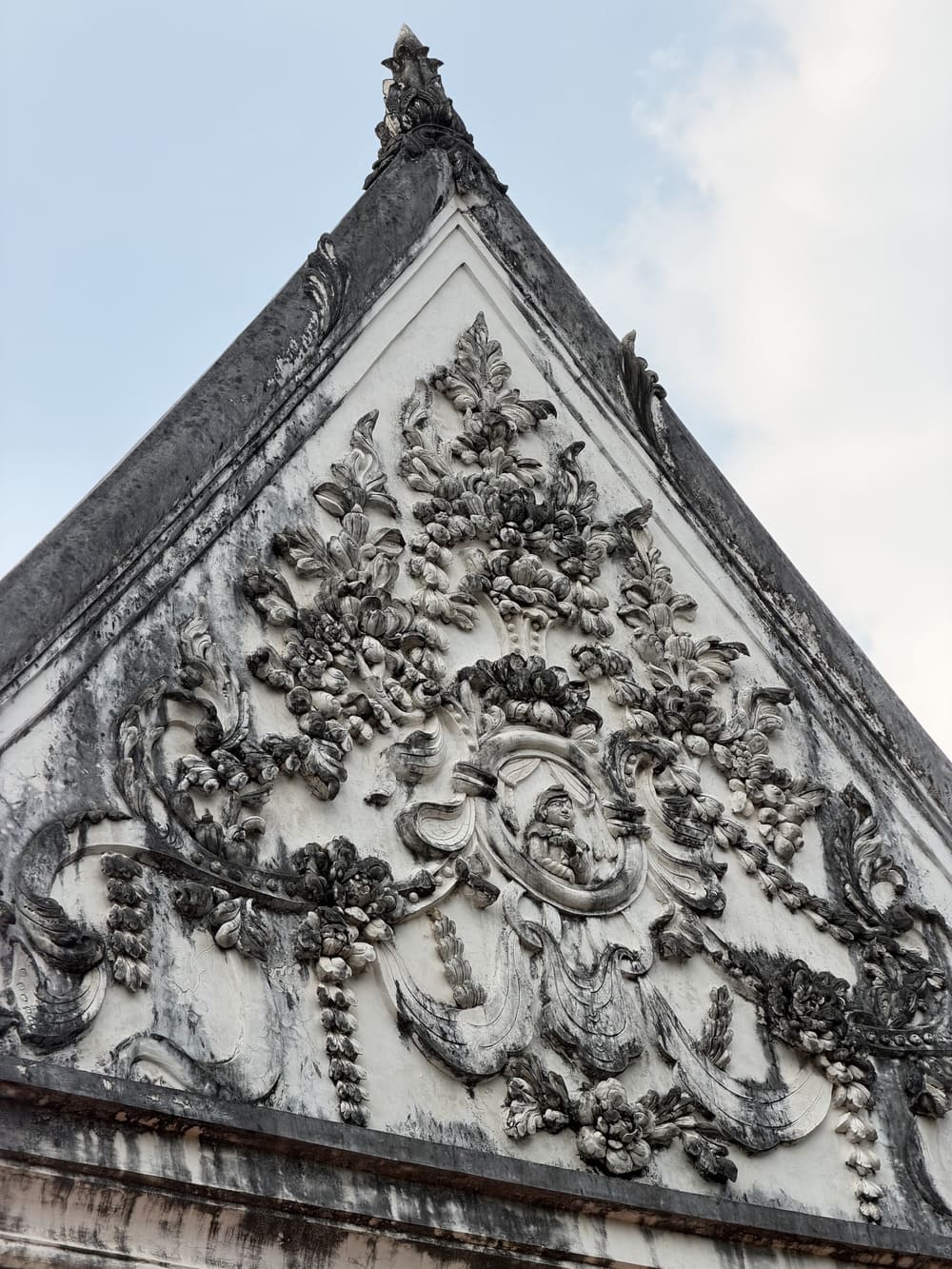
Near the canal, we arrived at Wat Sitaram, where the focus shifted from performance to combination. Originally known as Wat Khok Mu, the temple was tied to an earlier landscape of farmland and pig-rearing within a Chinese community. Its later name was formalized during the reign of either King Nangklao or King Mongkut, blending language and identity. Set alongside Khlong Mahanak, the buildings align with the water, making the canal part of the architecture itself. The base structure follows earlier Thai forms, but what defines the temple is the layering that came after.
Chinese-influenced stucco replaced traditional roof ornaments, with dense floral motifs like peonies, while Western details appeared in column capitals and pediments—acanthus leaves and figures resembling angels, interpreted locally as thevada farang. These elements were not directly imported but adapted from prints and objects, more translation than imitation. What makes the temple distinct is not any single style, but their coexistence—Thai structure, Chinese decoration, Western detail—mirroring the surrounding community, where Thai, Chinese, and Muslim residents have long shaped the area together.
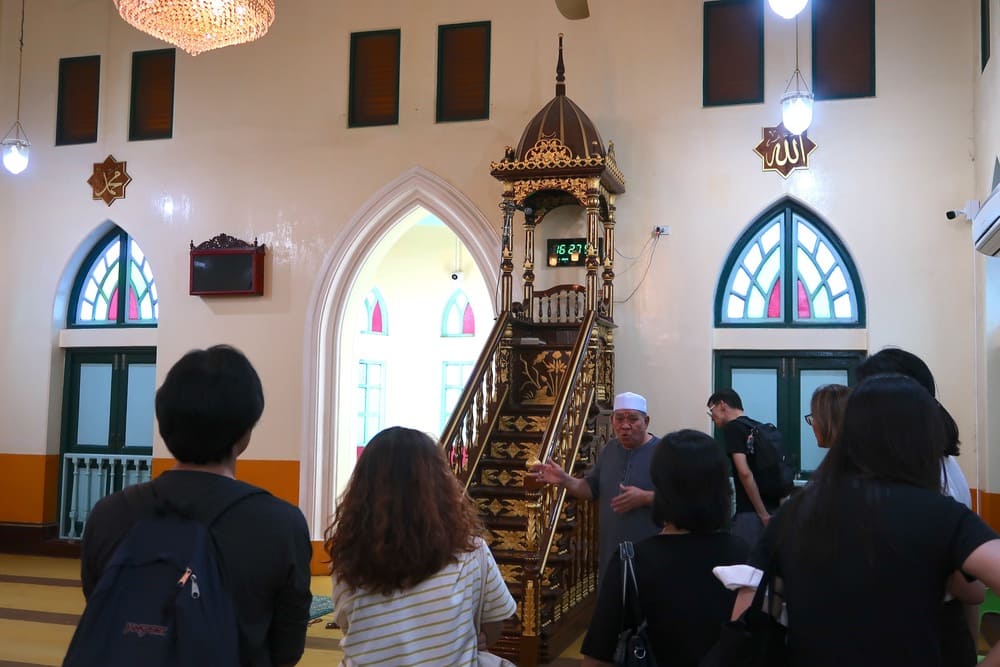
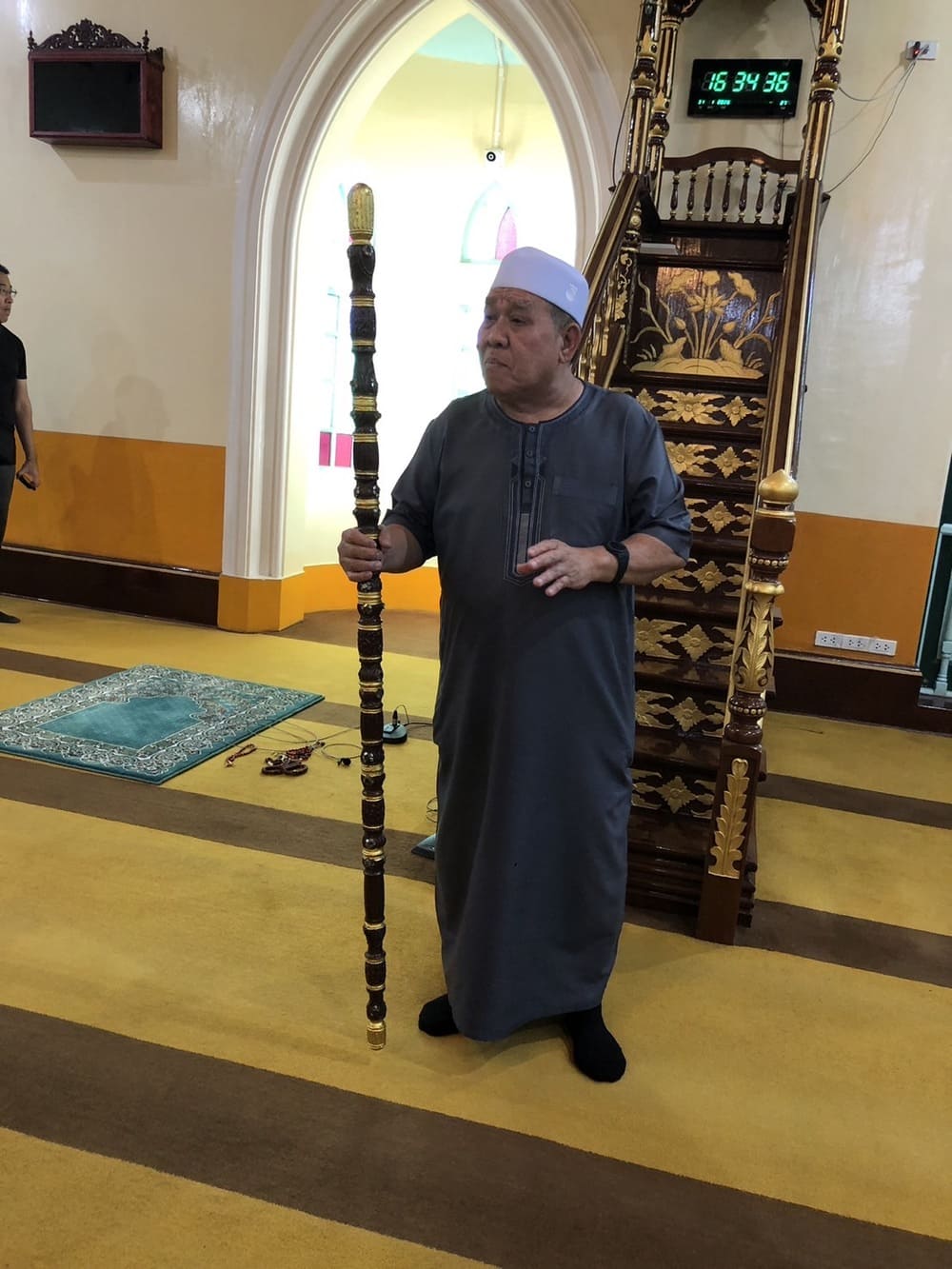
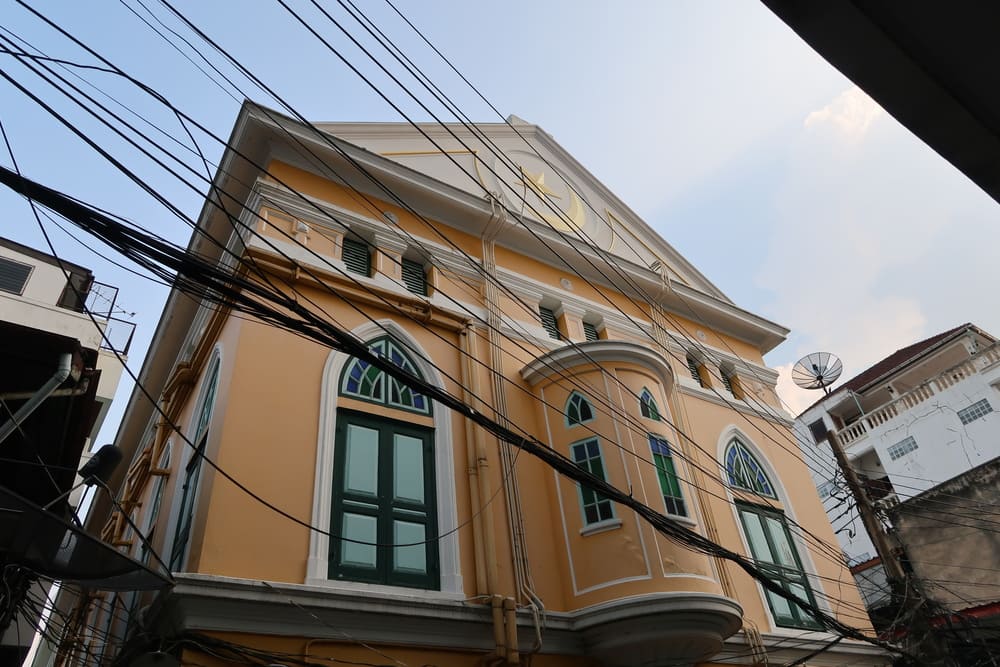
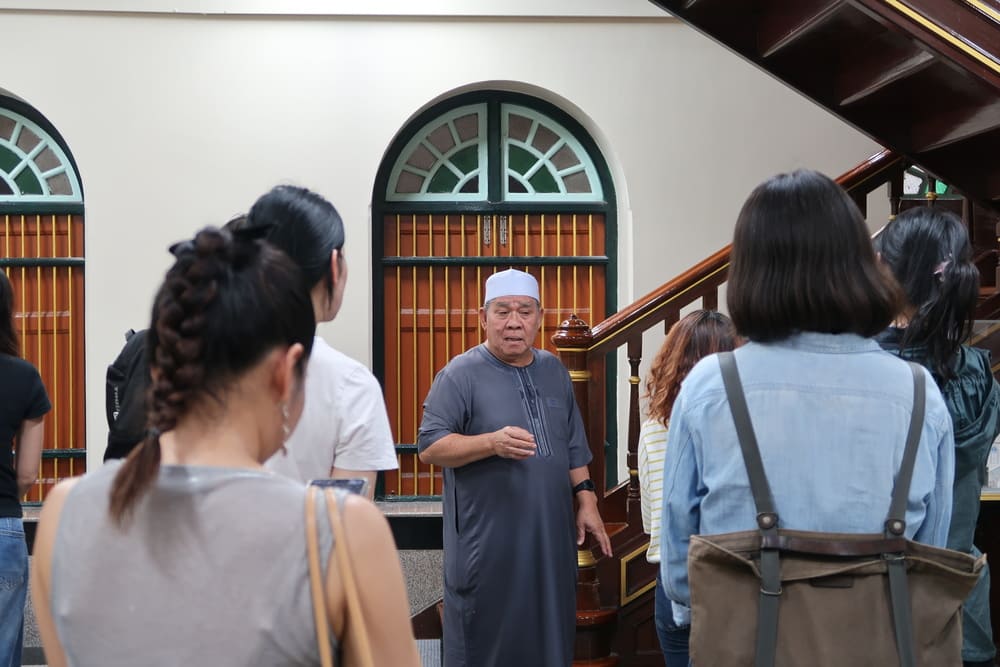
We crossed the canal and continued south to Masjid Mahanak, a familiar center of the Mahanak community, but this time we looked at it differently. The street opened, then narrowed, and the building appeared with quiet formality—symmetrical, measured, almost European at first glance. A two-story masonry structure, its façade is organized with horizontal moldings and capped by a triangular pediment. But the details shift. Instead of carved figures, the pediment holds a crescent and star. The form remains, but the meaning changes—classical structure, adapted to religious use.
The rest of the façade follows the same logic: balanced proportions, aligned openings, and an entablature beneath the roofline. On the ground floor, windows are rounded arches; above, they shift into pointed ones, subtly breaking uniformity. Like Wat Sitaram, the building reflects a period when Siam absorbed outside influences through adaptation rather than replication, particularly during the reigns of King Nangklao and King Mongkut. Set within a mixed community, it continues a familiar pattern—forms adjusted to fit, coexisting without needing to resolve into a single style.
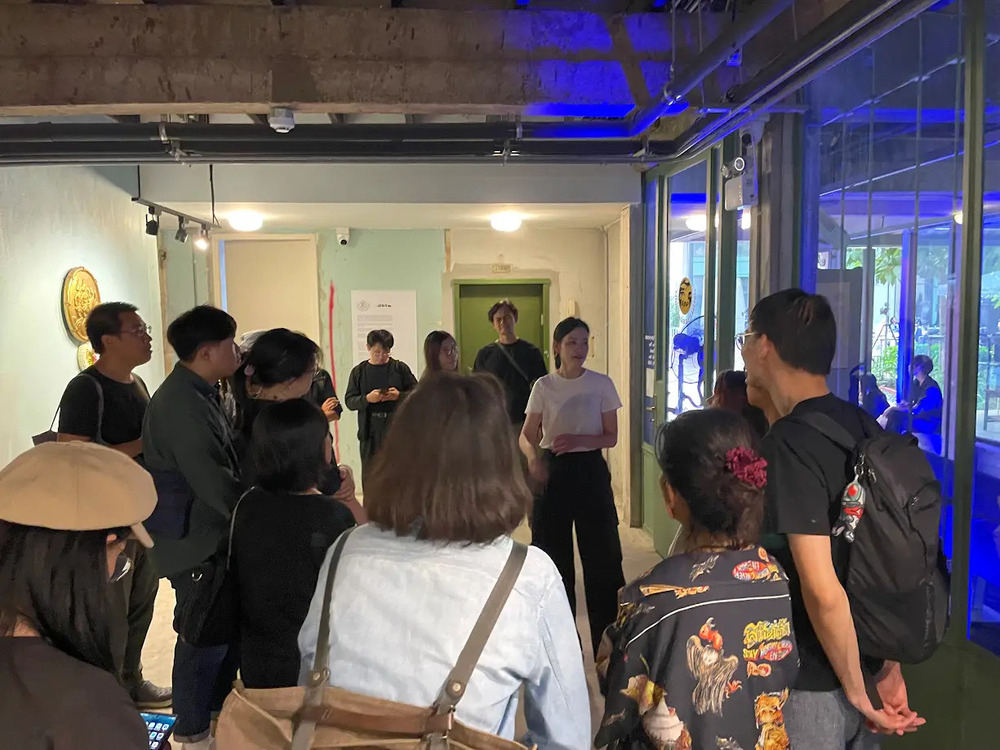
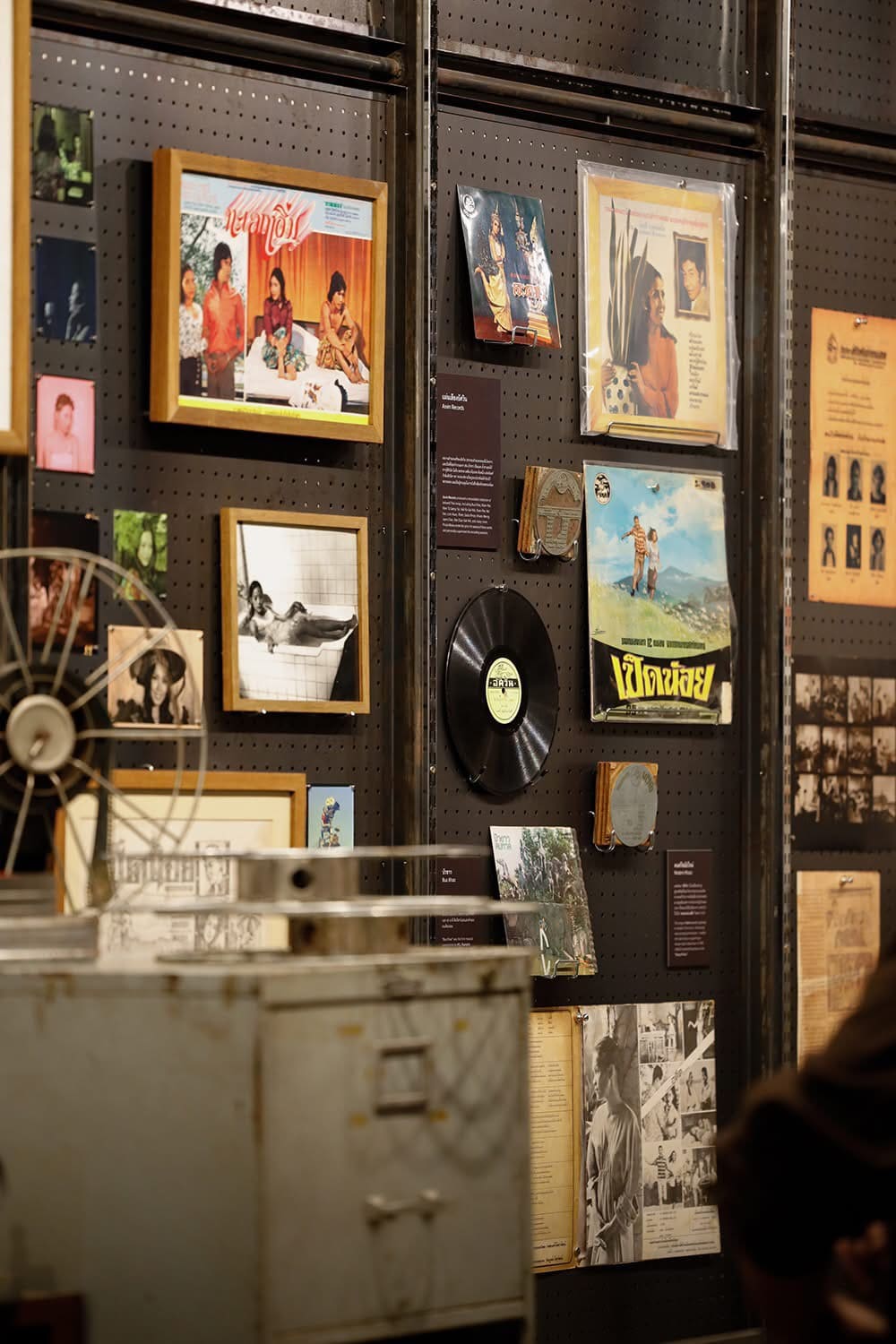
From Masjid Mahanak, the route narrows into smaller sois, passing the kubor before arriving at its final stop: Asvin. After sites of religion, performance, and gathering, the walk ends at a place of production, marking a more modern media landscape emerging around the Second World War. A four-story tower rises above a restrained base, its Brutalist geometry distinct yet not detached—an insertion into the existing fabric. Founded by Prince Bhanubandhu Yugala, this was not only an office but a working node where filmmaking intersected with music, performance, and narrative traditions already present in the area.
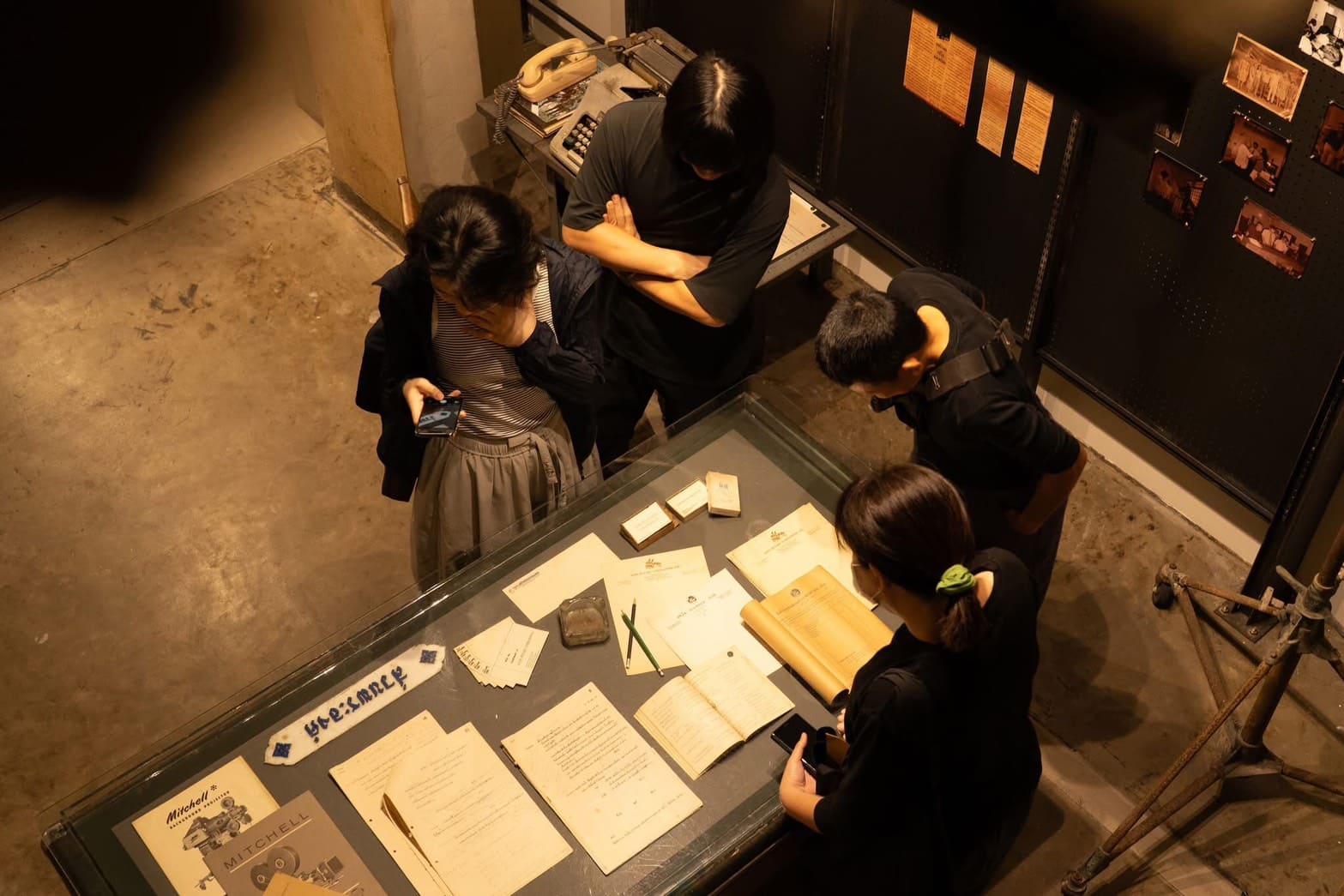
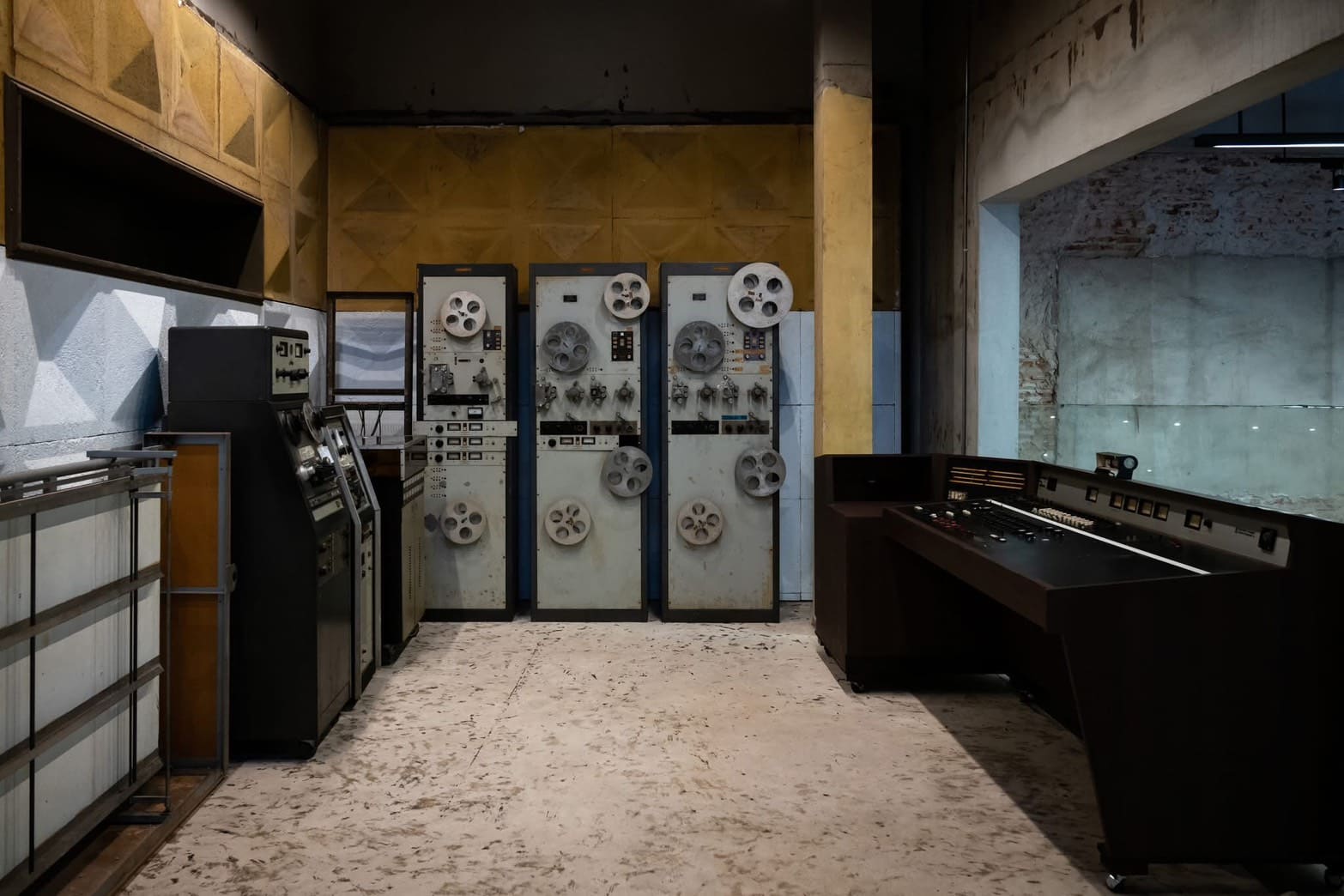
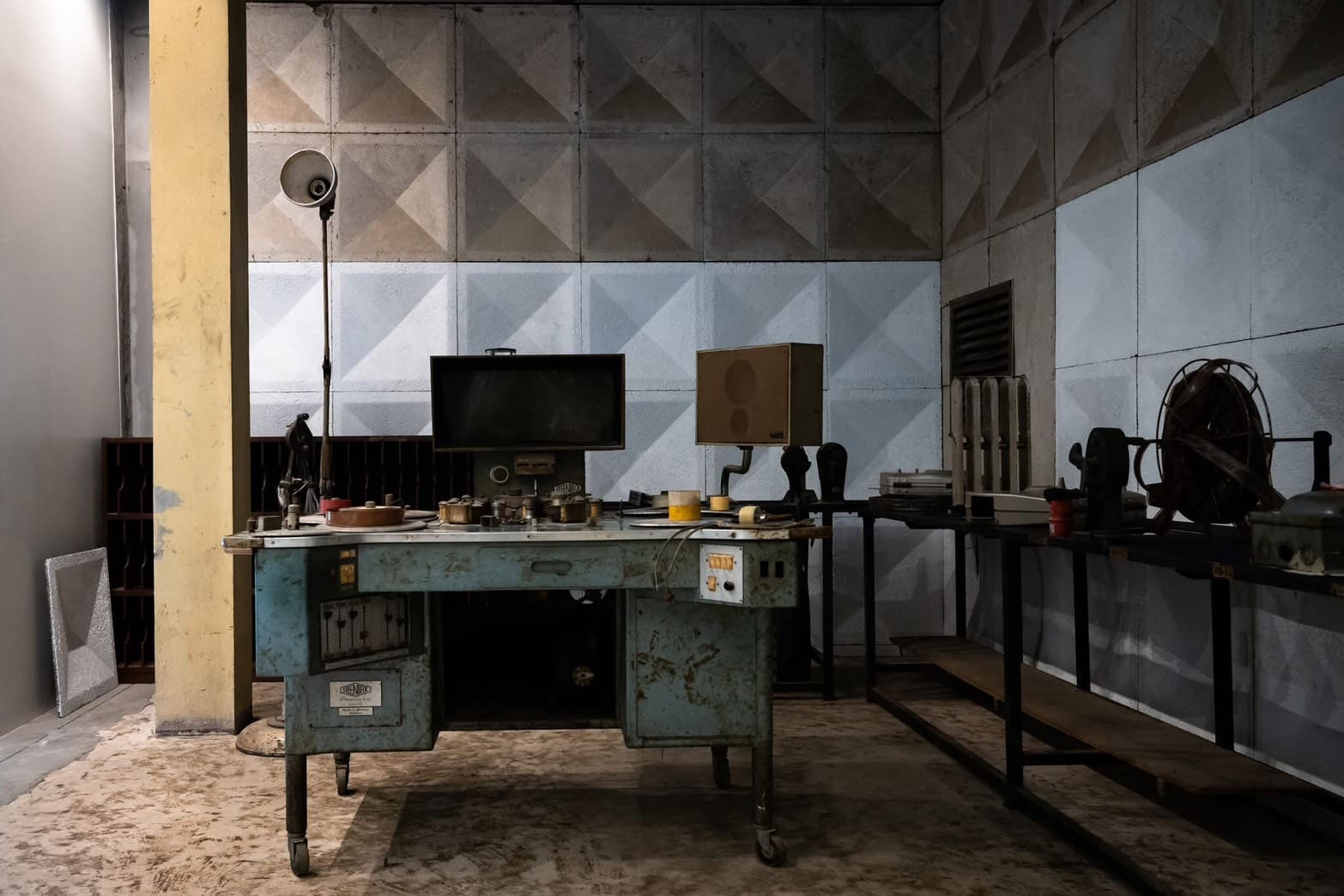
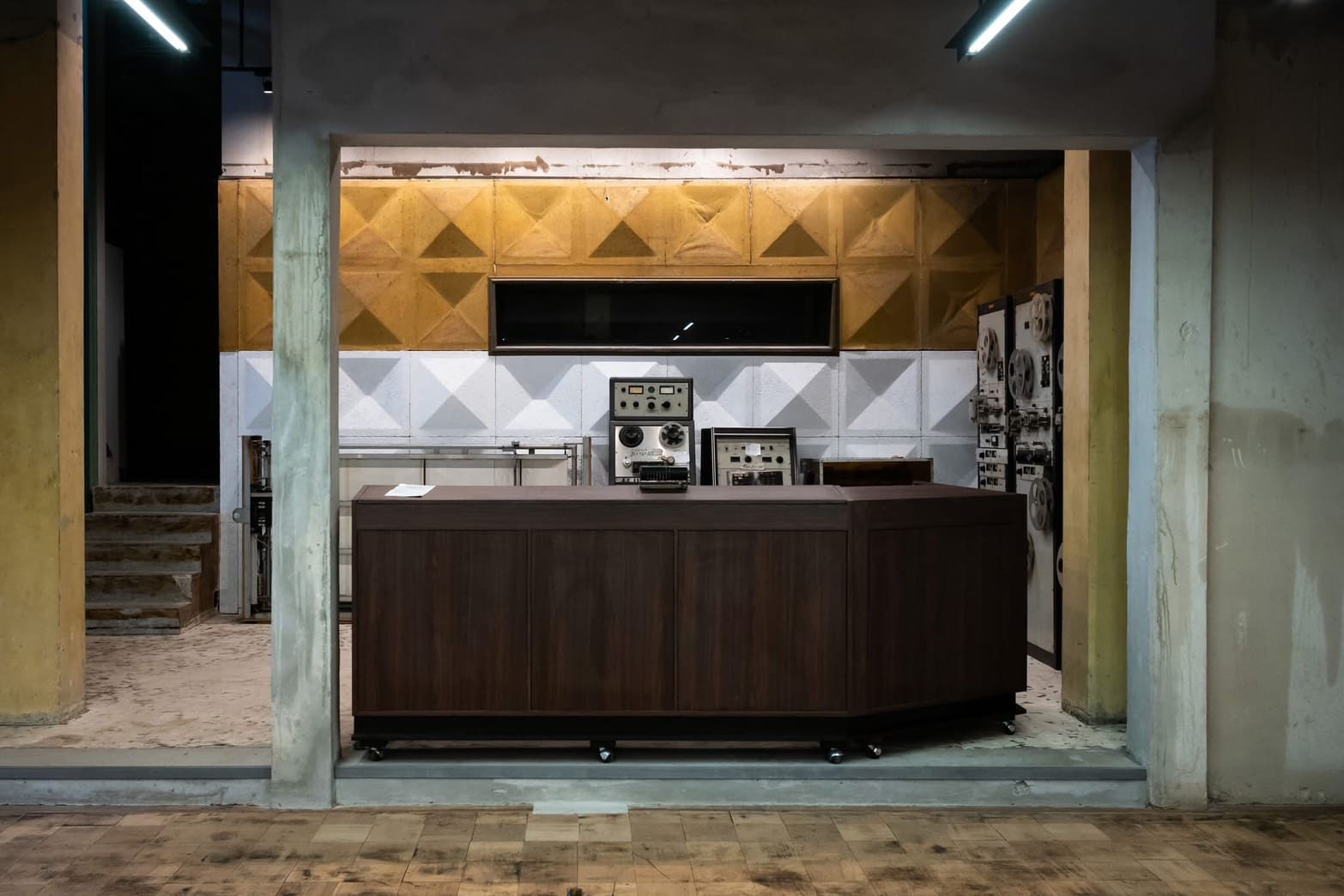
What remains is not reconstruction, but residue. Film reels, editing machines, recording equipment, and instruments still occupy the upper floor, left as they were—evidence of use, not display. After years of abandonment, the building has been reactivated under new stewardship, now combining a showroom, café, exhibitions, and cultural programming alongside production
The connection to earlier sites is not symbolic. Where Sala Chaloem Thani once exhibited films, Asvin Pictures once produced them, while along the route, performances were shared live, from person to person. What we have walked through is not a series of separate places, but a continuous system—one that absorbs, adapts, and carries forward. Today, as a contemporary art space, Asvin continues that trajectory in a different form. This final stop does not end the story; it repositions it. The walk concludes here, but the life of the neighborhood continues beyond it.